
KILLER ROBOTS

UN to debate rules for 'killer robots'
Countries will debate whether to start talks on binding rules for autonomous weapons systems -- dubbed "killer robots" by critics -- at the UN from Monday, as concerns grow about their increasing use on the battlefield. Given the opposition from leading international powers, observers say it looks unlikely agreement will be reached this week to start talks on binding rules. apo/ag/lpt/pdw/sbk/abs

'For the sake of humanity': Tech leaders urge UN to control the AI technology they created
Heads of AI firms, including Anthropic and OpenAI, urged the UN for global regulation on AI technology. They emphasized the risks of uncontrolled AI, highlighting the urgent need for international safeguards. Concerns include the potential for AI to make life-and-death decisions, especially in warfare. Various leaders, including Ukrainian President Volodymyr Zelenskyy, cautioned against the increasing role of autonomous machines.

Heads of AI firms tell UN Security Council that it could be a risk to all humanity
Both said the countries of the world, through the U.N. Security Council, where they testified Wednesday, have to set safeguards of some kind, which would be actual controls to prevent the technology from getting too powerful to rein in.

UN AI experts warn against 'apocalyptic' rhetoric on risks
Several experts on a United Nations artificial intelligence committee warned Monday against the apocalyptic rhetoric used by some professionals in the sector regarding AI risks. Yoshua Bengio, considered one of the fathers of AI and also a co-chair of the panel, said it was important to distinguish between what scientists actually know about AI risks and what can only be "plausibly extrapolated" from that evidence -- an area where experts still disagree.

AI moves to the frontline as India backs killer robots, drone swarms and cyberwarfare
As the landscape of warfare evolves, India's military is pioneering the use of artificial intelligence to redefine battle tactics. A newly unveiled policy focuses on cutting-edge developments such as self-operating weapon systems, coordinated drone swarms, and intelligent cyberattack strategies.

In AI race, ethics collateral damage?
As AI technology advances, its involvement in autonomous weapon systems has ignited a fiery ethical dispute. Anthropic, a leading AI firm, stands firmly against this trend, contrasting sharply with the Pentagon's endorsement of these innovations. The tug-of-war between political interests and corporate values has placed pressure on Anthropic, revealing the law's inadequacy in regulating such fast-evolving technologies.
- Go To Page 1

AI robots fill in for weed killers and farm hands
Oblivious to the punishing midday heat, a wheeled robot powered by the sun and infused with artificial intelligence carefully combs a cotton field in California, plucking out weeds. - Aigen has robots running in tomato, cotton, and sugar beet fields, and touts the technology's ability to weed without damaging the crops.

AI robots fill in for weed killers and farm hands
Aigen's solar-powered, AI-driven robot "Element" autonomously weeds fields without chemicals, offering a sustainable solution to labour shortages and herbicide resistance. Designed by former Tesla engineer Richard Wurden, the robot mimics human weeding and runs on sunlight. The robot's AI system takes in data from onboard cameras, allowing it to follow crop rows and identify weeds.

China shows a 0.6 cm spy drone that is smaller than your fingertip but can paralyse a large army: Watch video
China has unveiled a mosquito-like flying robot designed for stealth missions, sparking global concerns about potential misuse. Developed by the National University of Defense Technology, the insect-sized drone is designed for intelligence gathering and covert battlefield operations. Experts warn of hacking, spying, and biowarfare risks, drawing comparisons to dystopian scenarios.

Nations meet at UN for 'killer robot' talks as regulation lags
The UN is holding its first General Assembly meeting on autonomous weapons, aiming to revive stalled efforts to regulate AI-controlled arms amid growing use in conflicts like Ukraine and Gaza. Experts warn time is running out, urging legally binding global rules before an unchecked arms race escalates.

AI begins ushering in an age of killer robots
The latest iterations of technology enabling drones and other machines to operate autonomously owe their advancements to deep learning, an AI method utilising extensive data for pattern recognition and decision making. Although these systems aren't costly military-grade equivalents from the US, China, and Russia, their affordability, priced at just thousands of pounds or less, and widespread accessibility mark a significant development.

Ukraine brings AI weapons to front lines
Ukrainian tech firms are pioneering autonomous drone technology, leading to the development of deadly tools that can interpret real-time video footage. The region's innovation race is fueled by advancements in deep learning and artificial intelligence, turning drones into lethal weapons capable of autonomous attacks.

AI is making robots smarter. They’ll need boundaries
Robots are already roaming factory and warehouse floors, and AI will make them smarter and more agile. As is usually the case with new technology, the military is prodding innovation.

Oscars 2024 nominations: 'Oppenheimer', 'Barbie', 'Poor Things' - check full list of categories, nominees
Oscars 2024 nominations need to be checked before watching the Academy Awards tonight.

Elon Musk and Rishi Sunak chat China, killer robots and the meaning of life
Billionaire Elon Musk welcomed China's engagement on artificial intelligence safety and said he wanted to see Beijing aligned with Britain and the United States on the subject, speaking in London on Thursday alongside British Prime Minister Rishi Sunak.

In US-China AI contest, the race is on to deploy killer robots
One is pricey and slow: For a new force of up to 13 nuclear-powered attack submarines, the Australian taxpayer will fork out an average of more than AUD$28 billion ($18 billion) apiece. And the last of the subs won't arrive until well past the middle of the century.

In U.S.-China AI contest, the race is on to deploy killer robots
The Australian Navy is investing in two different submarine technologies to counter the rising power of China. One approach involves building expensive nuclear-powered submarines, while the other focuses on developing cheap and fast unmanned submarines powered by artificial intelligence (AI), known as Ghost Sharks. The Ghost Sharks, costing less than 1% of the nuclear submarines, will be delivered by mid-2025. The use of AI and automation is revolutionizing military power and could potentially reshape the rivalry between China and the US.

Will AI really destroy humanity?
Paperclips of doom - Most disaster scenarios start in the same place: machines will outstrip human capacities, escape human control and refuse to be switched off. "Once we have machines that have a self-preservation goal, we are in trouble," AI academic Yoshua Bengio told an event this month.

The next fear on AI: Hollywood's killer robots become the military's tools
In the military, AI-infused systems can speed up the tempo of battlefield decisions to such a degree that they create entirely new risks of accidental strikes, or decisions made on misleading or deliberately false alerts of incoming attacks.

The scientist and the AI-assisted, remote-control killing machine
Since 2004, when the Israeli government ordered its foreign intelligence agency, the Mossad, to prevent Iran from obtaining nuclear weapons, the agency had been carrying out a campaign of sabotage and cyberattacks on Iran’s nuclear fuel enrichment facilities. It was also methodically picking off the experts thought to be leading Iran’s nuclear weapons program.

Amazon, Microsoft may be putting humans at risk of killer AI; there's still hope from Google
The use of AI to allow weapon systems to autonomously select and attack targets has sparked ethical debates.

Humanoid robots won't just imitate humans, but learn problem-solving with help from AI
Recently, a humanoid robot named Erica stunned audience members in Madrid.

What if robots make men incapable of engaging in 'real' relationships?
Advances in robotics and AI have raised concern that sex robots may outperform men .

UN to host first talks on use of 'killer robots'
Proponents of a ban, including the Campaign to Stop Killer Robots pressure group, insist that human beings must ultimately be responsible for the final decision to kill or destroy.

Tech leaders warn against 'Pandora's box' of robotic weapons
"Once developed, they will permit armed conflict to be fought at a scale greater than ever, and at times scales faster than humans can comprehend," the letter read
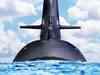
An autonomous submarine will hunt starfish on the great barrier reef for science
Currently, scientists have to recruit human divers to inject each tentacle of the starfish in order to kill it, a process that's expensive, time-consuming.

Here's why we should be building killer robots
Autonomous weapons would take human soldiers out of the line of fire and reduce the number of casualties. Robots would be better soldiers.

Five revolutionary things promised in five years time
Jeff Bezos, Elon Musk, Mark Zuckerberg, and other tech executives have chosen five as the magic number of years for their big predictions to come to fruition.

Google's Eric Schmidt snarks at the idea of killer robots
To anyone worried about killer robots taking over society, Google chairman Eric Schmidt says relax. "These fears are normal ," said Schmidt while speaking at an FT conference.
Load More

