
KENNEDY SPACE CENTER
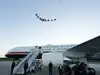
Trump vows new US air show will be biggest in the world
CapeWeek is set to take place at Kennedy Space Center in Florida and is designed to promote American aerospace leadership. The event aims to surpass major air shows hosted internationally while attracting business from around the world. Trump emphasized this initiative after encouraging space companies to forgo an upcoming summit in Paris. This new conference will add to an existing array of global aviation events.

Nvidia's web of AI bets: smart strategy or bubble risk?
Nvidia's $3 billion investment in Meta's share sale, announced Tuesday, is the latest addition to a portfolio of stakes, loans and guarantees that has made the chip giant what some analysts describe as the central bank of the artificial intelligence boom. Nvidia also has around $36 billion in cloud backstops and a guarantee of up to $105 billion linked to an OpenAI data center, according to US media.

AI giants' funding ambitions test Wall Street's appetite for risk
The heavyweights of the AI industry are facing a reckoning on Wall Street, reflecting concerns over who will bear the cost of the artificial intelligence buildout that has fueled much of this year's stock market gains.

Trump's cure for Republicans' midterm woes is more Trump. Will it work?
US President Donald Trump is actively campaigning in various states to energize Republican voters ahead of the midterm elections. His rallies are designed to focus on personal appeals and past grievances instead of upcoming policy proposals. Despite Trump's popularity among core supporters, Republican candidates may face challenges due to his low approval ratings on critical issues. Many voters, particularly independents, express strong opposition to Trump, which impacts Republican candidates' chances.
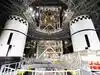
NASA adopting Apollo's urgency to build a moon base and land astronauts within two years
NASA plans to return astronauts to the moon with the Artemis III mission set for next summer. Following that, Artemis IV aims to accomplish a historic moon landing by 2028, marking the first since the Apollo missions. Administrator Jared Isaacman emphasized the importance of efficiency and a fast-paced approach similar to Apollo's playbook. Docking exercises with SpaceX and Blue Origin's landers will occur before the moon base establishment.
NASA may make a big announcement on Moon mission today. Here's what we know
NASA is preparing for a press conference to share important updates on the Artemis program. The focus will be on the upcoming Artemis III mission and its objectives. Additionally, details regarding future lunar landings under Artemis IV are expected to be unveiled. NASA aims to return astronauts to the Moon by 2028, exploring the lunar south pole for scientific research.
- Go To Page 1
World Space Week 2026: How the ‘Rocket Revolution’ is changing the cost, speed and future of space travel
World Space Week 2026 will highlight the increasing accessibility of space through the theme 'Rocket Revolution' this October. Celebrations will include events from schools, space agencies, and aerospace companies worldwide. Participants will explore technological changes in rocketry and their significance for future space exploration. Various activities, including model rocket launches, will occur across several countries. The week aims to inspire interest in STEM and promote international cooperation among attendees.
World Space Week 2026: Theme, history, how to celebrate and a special Pokémon twist- here's everything you need to know
World Space Week will occur from October 4 to October 10, 2026, themed 'Rocket Revolution'. This theme highlights advancements in rocket technology and commercial space launches. Events will include exhibitions, talks, and hands-on STEM activities for participants of all ages. A collaboration with Pokémon includes events to engage younger audiences in space exploration. Key astronomical occurrences, like the Draconid meteor shower, will also be observed during this week.

McDonald’s Monopoly returns with $1 million cash prize: Here’s how to play and what else you can win
McDonald’s Monopoly is back with a $1 million cash prize, 2027 Jeep Cherokees, cruises and other rewards. Here’s how the game works, where to find game pieces, how the McDonald’s app is used and when the promotion ends.
SpaceX's supersized Starship launches into orbit for the first time but flight ends early
SpaceX successfully launched its Starship spacecraft into orbit, marking a significant milestone for the company. The Starship delivered 26 advanced Starlink satellites with cheers from onlookers at the launch site. Although the mission was cut short, it demonstrated SpaceX's progress in achieving orbital capabilities. The spacecraft reentered over the Pacific Ocean before splashing down near Hawaii, showing careful flight management.
Success Lesson of the Day by legendary musician Stevie Wonder: “Just because a man lacks the use of his eyes doesn’t mean he lacks...” — What does it take to see beyond your limitations and define success on your own terms?
Success Lesson of the Day by Stevie Wonder explores a simple truth about ability, vision and human potential. His remarkable career shows how talent can grow beyond the limits others may see. From childhood music success to decades of global recognition, Wonder offers a useful perspective on resilience, confidence and seeing possibilities when circumstances appear limiting.

In 2020, NASA put seeds from 11 crops aboard an experimental spaceplane; after months in orbit, scientists brought them back to test whether they could still grow
In 2020, NASA put seeds from 11 crops aboard an experimental spaceplane; after months in orbit, scientists brought them back to test whether they could still grow. The research examined how microgravity and space radiation affect seed viability, germination, plant development and molecular changes. The study used the X-37B Orbital Test Vehicle-6 and included ground controls to compare space exposure with radiation simulations and Earth conditions.

Quote of the day by Richard Pryor: 'Marriage is really tough because you have to deal with feelings... and lawyers' - Witty life lessons on relationships, commitment, compromise, communication and why love alone cannot make a marriage easy by the legendary American comedian
Quote of the day by Richard Pryor: “Marriage is really tough because you have to deal with feelings... and lawyers,” uses humour to capture the emotional and practical challenges that can come with long-term relationships. The quote explores love, communication, conflict, commitment and the importance of handling both emotions and practical matters in a marriage.
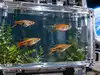
In 1998, scientists sent 4 pregnant swordtail fish and 200 babies into space; near the end of the mission, the fish suddenly began swimming in continuous loops
In an unprecedented experiment in 1998, swordtail fish were launched into orbit on the space shuttle Endeavor to explore how life persists without gravity. They initially thrived, swimming well in their custom habitat. However, by the ninth day, they began to exhibit looping movements, a reaction caused by the absence of gravity. Once back on Earth, the fish experienced a brief phase of clumsiness but quickly regained their swimming abilities.
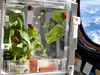
In 1999, NASA sent 4 ladybugs aboard Columbia for 5 days to chase aphids; the aphids lost their ability to escape by falling, and the ladybugs still caught and ate them
In 1999, four ladybugs embarked on an extraordinary journey aboard the space shuttle Columbia to investigate their predatory habits in a weightless environment. Researchers aimed to determine if ladybugs could effectively hunt aphids, which usually drop to evade their predators. Surprisingly, without gravity's pull, ladybugs adapted quickly, successfully preying on aphids that floated around them, providing insights into how animal behavior shifts in microgravity situations.
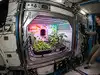
In 2017, a fully automated facility for plant bioscience research was launched to the International Space Station: What NASA studied in space?
In 2017, a fully automated facility for plant bioscience research was launched to the International Space Station. The Advanced Plant Habitat studied plant growth in microgravity and supported experiments lasting up to 135 days. It used more than 180 sensors and systems controlled from Earth. After years of plant research involving radishes, peppers, tomatoes and other studies, the facility is now returning to Earth for museum display.
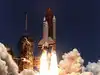
In 1994, NASA flew four Japanese red-bellied newts on STS-65 for nearly 15 days; two adults died, but 32 newt eggs hatched
Space Shuttle Columbia's 1994 mission studied animal reproduction in zero gravity. Four red-bellied newts and medaka fish were part of biology experiments. At least 32 newt eggs and 25 medaka fry hatched successfully during the flight. This experiment provided crucial data on embryonic development without gravity. The findings confirmed life's ability to start and multiply far above Earth.

In 1961, Liberty Bell 7 sank after Gus Grissom's flight; 38 years later, crews recovered the capsule from more than 15,000 feet beneath the Atlantic Ocean
For thirty-eight years, astronaut Gus Grissom's Liberty Bell 7 spacecraft lay lost beneath the waves. A skilled salvage expert ventured into the deep ocean to locate the capsule, utilizing advanced sonar technology and a remotely operated vehicle. Inside, technicians had cleverly placed souvenir Roosevelt dimes before its launch. Today, this historic artifact can be viewed by the public in Kansas, a testament to space exploration.
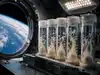
In 1983, NASA flew Neurospora bread mold on STS-9 to test its body clock; the rhythm persisted, but faded out in 25% of flight tubes before light restored it
In 1983, NASA conducted research on fungal circadian rhythms aboard the Space Shuttle Columbia, observing the bread mold Neurospora crassa. While some cultures maintained a consistent rhythm under space conditions, others lost this pattern until they were exposed to regular light. This experiment marked an early demonstration of biological clocks operating in microgravity, reinforcing the notion that factors beyond Earth's rotation may influence these rhythms.
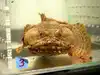
In 1998, NASA sent oyster toadfish into space on Space Shuttle Columbia; over 16 days in orbit, researchers studied how their balance systems adapted to microgravity
In 1998, saltwater toadfish participated in the Columbia's Neurolab mission, offering insights into the effects of microgravity on the nervous system. Their inner ear adaptations revealed how their vestibular system modified its sensitivity in the absence of gravity. Upon returning to Earth, the adjustments mirrored the disorientation experienced by astronauts, further enhancing our understanding of balance and safety in space exploration.
In 1998, NASA flew crickets on Neurolab to study how spaceflight affects developing nervous systems; across the 16-day mission, they joined about 2,000 animals in space
During the Neurolab mission, the space shuttle Columbia hosted 2,000 animals, crickets being one of them, to examine spaceflight's impacts on brain and nervous system development. By focusing on the crickets' fundamental gravity-sensing mechanisms, scientists identified key alterations in cellular processes. These discoveries on neuropeptide and interneuron dynamics are vital to comprehending how space travel affects human balance and the challenges faced by astronauts.
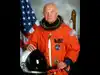
NASA sent a 77-year-old payload specialist back into space in 1998, 36 years after he became the first American to orbit Earth - not just to make history again, but to study how an older human body responds to microgravity, becoming the oldest person ever to fly in space
John Glenn returned to space aboard the shuttle Discovery in 1998. He became the oldest person to travel into space at age seventy-seven. NASA utilized his flight to study aging and spaceflight connections. The mission conducted over eighty scientific experiments during its nine days. Glenn's journey marked a historic return to the environment that made him a hero.
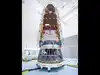
NASA’s Nancy Grace Roman Space Telescope set to investigate the universe’s biggest mysteries - Check launch date, time, mission goals and what to expect
NASA's Roman Space Telescope is set for a Sunday launch to explore cosmic mysteries. This powerful observatory will investigate dark energy and map dark matter distribution. It will also search for distant planets using advanced gravitational microlensing techniques. After its journey, the telescope will orbit the Sun near the James Webb Space Telescope. Roman's mission aims to deepen our understanding of the universe's expansion and evolution.
SpaceX launch today: Record-breaking Falcon 9 mission set to kick off busy Space Coast schedule
Florida's Space Coast is preparing for a busy launch schedule. SpaceX will launch Starlink satellites using a reusable Falcon 9 rocket. NASA's Roman Space Telescope will launch aboard a powerful Falcon Heavy rocket. Crewed missions and commercial satellites will also fill the autumn manifest. Spectators should monitor weather and range updates for viewing opportunities.

In 1986, Challenger broke apart 73 seconds after liftoff; 36 years later, a TV dive team found a shuttle artifact with 8-inch tiles off Florida
Divers found a large, tiled object while filming a documentary series. This unexpected discovery was later identified as space shuttle Challenger debris. NASA confirmed the find as the largest piece recovered in decades. The discovery serves as a poignant reminder of the 1986 tragedy. It also highlights the ongoing importance of spaceflight safety protocols.
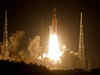
NASA gets 3 electric vans to shuttle Artemis crew to launchpad
NASA has received three fully electric and environment friendly crew transportation vans that will take Artemis crews on the final Earth-bound leg of their journey to the Moon before boarding their rocket and spacecraft. The zero-emission vehicles, developed by California-based Canoo Technologies as part of a contract awarded by NASA in April 2022, were delivered to the space agency's Kennedy Space Center in Florida.

SpaceX launches satellite with third reused rocket
The rocket's first stage for the mission previously supported previously supported SpaceX's 10th resupply mission to the International Space Station in February of this year.

Musk on brink of 'Wright Brothers moment' with reused rocket
The rocket originally flew in April 2016 before landing successfully on an unmanned drone ship bobbing in the Atlantic Ocean.

Noida school shines at NASA competition
A 12-member team from Amity International School, Noida, won the 20th Annual International Space Settlement Design Competition.
Load More

