
ISRO ROCKET DEVELOPMENT

India poised to become a major global space power, says Skyroot CEO Pawan Chandana
Pawan Kumar Chandana emphasized India's potential in the global space sector during the 45th Vikram Sarabhai Memorial Lecture. He highlighted that India's first privately developed rocket, Vikram-1, marks the beginning of a larger ecosystem for private space companies. Chandana predicted that the next decade would witness rapid technological advancements surpassing the achievements of the past 200 years.

GalaxEye orders Bellatrix Aerospace propulsion systems for 30 satellites
Under a multi-year contract, Bellatrix will design, manufacture and deliver its Arka Hall-effect electric propulsion systems for GalaxEye’s upcoming Drishti Gen-II constellation. The systems will help position satellites in their designated orbits, maintain their formation, avoid collisions with space debris and eventually deorbit them at the end of their operational life.

Gaganyaan mission not delayed, preparations in final phase: ISRO Chairman V Narayanan
ISRO Chairman V Narayanan stated that the Gaganyaan mission is in its final phase and all rocket components are ready. He emphasized the importance of private sector involvement in India's expanding space program, highlighting recent changes in vehicle production. Narayanan discussed the growth of India's semiconductor capabilities through collaboration on the Vikram processor.
India’s rocket ambitions need a little more space to grow
India space news: India is enhancing its space sector by promoting private involvement and easing investment rules for startups. Current challenges include the need for better infrastructure and local production of critical components. Initiatives like shared testing facilities and collaborations with ISRO aim to support the growing number of space startups. The government projects significant growth in the space economy by 2040, targeting global competitiveness.

Opening space sector unlocked new avenues for private players, startups: PM Modi
Prime Minister Narendra Modi said opening up India’s space sector to private companies and startups has created new opportunities for young innovators to build rockets and launch satellites. Speaking at the inauguration of the COSMOS-Mysuru Planetarium in Mysuru, he highlighted India’s progress in space exploration, including the Chandrayaan-3 lunar landing, the Aditya-L1 solar mission and its space docking capabilities.

60-year-old takes ChatGPT advice on not paying rent to landlord; AI says losing home is 'legally impossible', now he is homeless and suing OpenAI
A Danish man has sued OpenAI, claiming ChatGPT encouraged him to withhold rent during a dispute with his landlord and later convinced him they were business partners building a billion-dollar venture. He says he was evicted and ended up sleeping behind a rented car with his two dogs before moving into a campsite cabin.
- Go To Page 1

Astrobase to invest Rs 800 crore in Andhra Pradesh to expand rocket testing facility
The company has signed a memorandum of understanding with the Andhra Pradesh Economic Development Board to add 339 acres to the facility. The expanded infrastructure will support launch vehicle stage development, static hot-fire testing, stage-level hop tests and reusability validation.

Astrobase, Bayer to invest Rs 700 crore in Karnataka, creating nearly 1,500 jobs
Astrobase and Bayer have announced a combined investment of Rs 700 crore in Karnataka. Astrobase will invest Rs 500 crore to set up a manufacturing facility for rocket engines. This project aims to create approximately 1,250 jobs in the region. Bayer plans to invest Rs 200 crore to establish a Global Capability Centre, generating around 220 jobs. Both investments reflect a growing interest in expanding industrial capabilities in Karnataka.
ISRO's GSLV-F18 successfully places NVS-03 satellite into orbit to strengthen NavIC
Isro successfully launched its GSLV-F18 rocket carrying the 2,250-kg NVS-03 satellite from Sriharikota and confirmed its successful injection into orbit. The mission marks a step towards strengthening India's indigenous NavIC navigation system, with the satellite featuring an indigenous atomic clock and the addition of the L1 frequency signal.
New 'eye in the sky'! India's GPS gets a major upgrade tonight; 5 things to know about what ISRO's NVS-03 satellite will change
ISRO is scheduled to launch its GSLV-F18 rocket carrying the NVS-03 navigation satellite at 11:51 pm on October 30 from Sriharikota. The mission aims to strengthen India's NavIC network with an additional L1 navigation signal and improved timing capabilities through an indigenous atomic clock.
ISRO to launch NVS-03 navigation satellite on October 30: Why the mission is crucial for NavIC
On October 30, ISRO will launch the NVS-03 navigation satellite using its GSLV-F18 rocket. This mission aims to enhance the Navigation with Indian Constellation (NavIC) system, which currently struggles with aging satellites and insufficient atomic clocks. Successful deployment of NVS-03 is crucial for reviving reliable positioning services in India, with future launches, NVS-04 and NVS-05, planned to further solidify the system's dependability.

India aims to expand space economy from USD 8.4 billion to USD 44 billion amid rising private participation: IN-SPACe official
Rising demand for low Earth orbit satellites is expected to enhance India's space industry growth. A new Small Satellite Launch Vehicle launch pad will increase launch capacity in Tamil Nadu. The government's reforms have facilitated increased private participation in space activities. Various funds and technology transfers aim to support startups and enhance their capabilities. The Indian space economy is targeted to expand significantly over the next decade.

Sat Sovereign, Not Satrapi: Why India can't get locked in with one side in satcom battle
Elon Musk argues that Starlink can benefit underserved rural areas of India through improved connectivity. The ongoing debate surrounding satellite communications in India is focused on pricing and market control. Countries are competing for access to low-Earth orbit frequencies and altitudes, which are limited resources. India has an opportunity to create a non-aligned satcom policy to ensure equitable access.
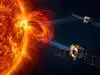
One solar eruption raced at 645 km/sec, another crawled at 145 km/sec: Bengaluru scientists uncover new clues about the Sun
A Bengaluru research team combined observations from India's Aditya-L1 and Europe's Proba-3 to study two solar eruptions. One CME travelled at 645 km per second, while the other moved at 145 km per second. The study also revealed differences in density changes and energy distribution.

Defence stocks: Time to change strategy in a bearish market? An ecosystem with down and upside potential of -39% to plus 37%
The current fall is both at the level of the indices and the broader market. And when the selling is this broad, almost every sector is affected. But they do not all feel it equally, and it is worth knowing why every sector behaves differently at different points of time. Stock Reports Plus, powered by Refinitiv, is a comprehensive report that evaluates five key components of 4,000+ listed stocks – earnings, fundamentals, relative valuation, risk, and price momentum – to generate standardised scores. The simple average of the above-mentioned five component ratings is normally distributed to reach an average score.

"Gaganyaan prioritises human safety, reliability over optimum performance": ISRO's K Sivan
K Sivan, the former Chairman of ISRO, underlined the critical need for safety and reliability in the upcoming Gaganyaan human spaceflight mission. This ambitious program aims to transport astronauts to a low Earth orbit of approximately 400 kilometers. Before the crewed mission slated for 2027, significant technological developments and several test missions, including a technology demonstrator, are being organized to ensure success.

Space-tech’s missing link: The skilled talent powering India’s $100 billion ambition
Space job news: India's space industry is undergoing significant changes, with an increasing presence of private startups contributing to its growth. The government anticipates a boom in the sector, estimating it will reach $100 billion by 2040. However, companies are struggling to find skilled workers with specialized expertise required for various roles. Initiatives to bridge the skills gap include the introduction of SpaceTech courses and enhancing industry-academia collaborations.

India Mobile Congress 2026 launches 'Viksit Tech 47' platform to build Indian technology brands for global markets
India Mobile Congress 2026 has introduced Viksit Tech 47 to aid Indian technology firms in achieving global prominence. This platform aims to support companies in several technology sectors, including artificial intelligence and IoT. A flagship report assessing over 200 Indian tech companies will be released at the event. Viksit Tech 47 will also implement the Dr Zarabi Indigenisation Award for startups in hardware development.

Orbital Shift: India's space sector undergoing biggest transformation; pvt firms handle rockets, ISRO focus on more ambitious missions
India's space sector is undergoing significant changes as private companies engage in rocket production and management. The Indian Space Research Organisation is shifting its focus towards more ambitious missions and projects. This transition follows the introduction of the Indian Space Policy 2023, which emphasizes private sector participation. Concerns have been raised by ISRO employees regarding the agency's future and potential loss of capabilities.
India's journey towards 'Viksit Bharat' being written in rockets built on Indian soil: ISRO chief
India's journey towards becoming a developed nation includes significant advancements in its space program by ISRO. The country has developed cryogenic propulsion systems independently after being denied this technology. Chandrayaan-3 made India the first nation to land successfully near the Moon's south pole. Upcoming projects include the Gaganyaan human spaceflight program and further lunar missions by 2040.
'Cannot be done only by ISRO': ISRO chief V Narayanan calls for greater industry role to scale India's space sector
"Today we are having only 56 space assets serving from space. But the need is huge. At least 200 to 300 satellites have to be built and launched in maybe 6 to 7 years' time frame. And this cannot be done only by ISRO," Narayanan said.

ISRO takes NASA route, plans to outsource routine rocketry
The proposed shift has triggered concerns within the space agency, with nine employee associations writing to the Department of Space in a letter on September 4, seeking clarity on reports that production of its rockets SSLV, PSLV and LVM3 could eventually move to the private sector, along with routine satellite manufacturing and the operation of new launch infrastructure.

Space, the final private sector frontier
ISRO has outlined its evolving role in response to the commercialization of India's space sector. With private enterprises now contributing to the production of components for ISRO's launch vehicles, the nation is focused on promoting technology transfer and establishing a dynamic commercial space ecosystem. This transition enables private firms to take on significant responsibilities in space exploration, while ISRO remains dedicated to ongoing research and development.

Astrobase in talks to raise $40-50 million led by Peak XV at $300 million valuation: sources
The talks come weeks after Astrobase unveiled Everest, an 80-tonne-class, 800 kN full-flow staged combustion (FFSC) rocket engine, in what the company described as India's first such engine. The engine uses liquid oxygen and methane, and is being developed for reusable launch vehicles.

India's new eye in the sky: Everything to know about ISRO's GSLV-F17 launch of first geostationary imager on Sept 4
India's space agency ISRO is preparing to launch its GSLV-F17 rocket soon. This rocket will carry the EOS-05 satellite into a specific orbit. The EOS-05 satellite will provide continuous Earth observation imagery. This advanced satellite will monitor weather and support disaster management efforts. It also aims to enhance security and strategic observation capabilities.

ISRO eyes next generation launch vehicle for heavier payloads
Another ISRO official said the new rocket would be helpful as India plans to have its own space station by 2035 and was also eyeing deep space missions, human space flights, cargo missions and putting multiple communication satellites into orbit at the same time. The NGLV is envisioned as a simple, robust machine designed for bulk manufacturing that will make space transportation more cost effective.
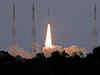
ISRO successfully demonstrates Inflatable Aerodynamic Decelerator technology
The IAD was initially folded and kept inside the payload bay of the rocket. At around 84 km altitude, the IAD was inflated and it descended through atmosphere with the payload part of sounding rocket. The pneumatic system for inflation was developed by Liquid Propulsion Systems Centre (LPSC).

Isro to help Skyroot to build its small rocket
Skyroot signed a non disclosure agreement with the Department of Space that will allow it to access Indian Space Research Organisation (Isro) facilities and technical expertise to build its rocket.

ISRO working on green fuels like hydrogen peroxide for rockets
ISRO Chairman said that the Indian Space Research Organisation (ISRO) is looking at green propulsion through hydrogen peroxide in its rocket that would take Indians into the space under its 'Gaganyaan' mission.
Load More

