
INTERSTELLAR MEDIUM

In 2008, a spacecraft was launched by NASA to study how our heliosphere, the magnetic bubble surrounding our Sun and planets, interacts with interstellar space
In 2008, a spacecraft was launched by NASA to study how our heliosphere, the magnetic bubble surrounding our Sun and planets, interacts with interstellar space. The Interstellar Boundary Explorer, or IBEX, was sent into Earth orbit to map the boundary of the solar system. It uses energetic neutral atoms to study how solar wind meets interstellar space and has produced maps of this region.
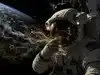
Astronauts returning from spacewalks say space leaves a smell on their suits; NASA crews have compared it with metal, gunpowder, and ozone
After returning from spacewalks, astronauts frequently describe an odd aroma, reminiscent of burnt gunpowder or charred meat. This mysterious scent, which has baffled researchers for many years, is currently the subject of investigation. One hypothesis points to the interaction of oxygen atoms with spacesuits in orbit, while another suggests the involvement of soot-like particles from dying stars. This enigma underscores our limited understanding of essential elements of space exploration.

Space jam: 'Raspberry sugar' discovered near the centre of the Milky Way; what scientists say about life's building blocks forming before planets existed
A sugar molecule found in raspberries has been detected near the Milky Way's center. This marks the first time the molecule has been identified beyond our Solar System. Researchers identified erythrulose in a giant cloud of gas and dust. The findings suggest essential ingredients for life may be common across the universe. This discovery strengthens the idea that prebiotic chemistry begins well before planets develop.

What Cosmic Dust on Earth Reveals About Ancient Supernovas
Earth acts as a cosmic archive, collecting microscopic dust from distant stellar explosions. Scientists found iron-60, a remnant of supernovas millions of years ago, in deep-sea sediments and polar ice. This discovery reveals our planet's close encounters with ancient star deaths, potentially influencing life's evolution and confirming our solar system's passage through interstellar debris clouds.
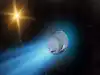
Comet 3I/ATLAS loaded with World War I chemical weapon? Harvard scientist drops bombshell claim as cosmic visitor nears Earth
As interstellar comet 3I/ATLAS is approaching Earth, Harvard scientist is debating whether the cosmic visitor is a friendly visitor or ‘serial killer’ sent to poison us. Researchers have found that comet 3I/ATLAS is both rich in metals and chemically uneven inside and is even loaded with hydrogen sulfide, once used as chemical weapon during the World War I.
3I/ATLAS carrying weapons of mass destruction? New findings explain shocking hydrogen cyanide and methanol signals. Here's all details
3I/ATLAS carrying weapons of mass destruction? This explainer presents all scientific observations about methanol and hydrogen cyanide found near interstellar comet 3I/ATLAS. It covers ALMA data, biological links, chemical behaviour, panspermia discussions, the comet’s origins, discovery timeline, naming rules and NASA’s statement on threats to Earth.
- Go To Page 1
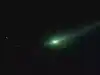
Interstellar comet 3I/ATLAS sent by advanced civilizations to 'seed' life on Earth? Harvard scientist's big claim
Harvard scientist Avi Loeb has claimed that interstellar objects like 3I/ATLAS have been sent by advanced civilizations to 'seed' life on Earth. In a blog post, the renowned scientist suggested that the unusual trajectory and physical characteristics of 3I/ATLAS may indicate it is a technological artefact. NASA has confirmed that 3I/ATLAS is the third known interstellar object after 1I/‘Oumuamua and 2I/Borisov.
3I/ATLAS moving faster than human-made spacecraft? Here's complete truth, interstellar comet speed data, Juice probe observations and Jupiter path explained
3I/ATLAS moving faster than human-made spacecraft? The interstellar comet 3I/ATLAS moves on a hyperbolic path and will reach Jupiter long before ESA’s Juice spacecraft. This explainer covers discovery, origin, observations, speed, data release timeline and why 3I/ATLAS is classified as an interstellar visitor from outside our solar system.

3I/ATLAS: Harvard astrophysicist spots unusual objects surrounding interstellar visitor's 'Sunward Anti-Tail' - Are they rocky fragments or something else?
An astrophysicist has observed a peculiar 'Sunward Anti-Tail' around interstellar visitor 3I/ATLAS, potentially a swarm of objects. These companions, unlike ATLAS, might not be affected by solar acceleration, causing them to appear closer to the Sun. Researchers are eager to determine if these are rocky fragments or something more unusual, offering insights into alien object behaviour.

3I/ATLAS interstellar comet post-perihelion maneuver unnatural? New observations raise questions about energy needs, mass loss calculations
3I/ATLAS interstellar comet post-perihelion maneuver unnatural? New images show the comet as a single body after its perihelion passage. The new findings raise questions about its jets, mass loss, energy needs, and possible non-natural explanations. Researchers examine data, distances, jet structures and energy calculations in detail.

Did 'intact' 3I/ATLAS gain speed from the Sun’s gravity and pick up pace toward Earth? What Harvard scientist thinks about spacecraft's post-perihelion maneuver
Interstellar comet 3I/ATLAS remains intact, dispelling breakup rumors, according to Harvard astrophysicist Avi Loeb. Recent images confirm it's a single, stable body, not fragmented after its close solar approach. The comet has developed a sunward-pointing anti-tail, a puzzling but natural phenomenon. Scientists are closely monitoring its trajectory, which poses no threat to Earth.

3I/ATLAS image released by Japanese space agency? Interstellar object’s shocking visual sparks global interest
3I/ATLAS image claimed to be released by Japanese space agency has gained attention online. The alleged visual of the interstellar comet was shared on social media. The image, said to be based on spectrum analysis, remains unverified till now but has raised curiosity about 3I/ATLAS, its discovery, interstellar origin, observation methods and scientific importance.

Comet 3I/ATLAS surrounded by mysterious jet structure? Scientists stunned as second interstellar object C/2025 V1 appears
New images reveal interstellar comet 3I/ATLAS sporting complex jet structures, fueling speculation about its artificial origin. While some suggest thrusters, others point to ice pockets. Another object, C/2025 V1, is unlikely to be connected. 3I/ATLAS is set to reappear in the pre-dawn sky on November 11, 2025, requiring a telescope for viewing.
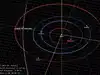
3I/Atlas has 10 anomalies - What does Avi Loeb say about it being an alien technology from another civilization in Milky-Way galaxy; Interstellar object's true nature to be revealed around December 19
Harvard professor Avi Loeb has identified ten anomalies in interstellar object 3I/ATLAS, suggesting it could be an extraterrestrial technological product. Its unique trajectory, composition, and behavior deviate significantly from known comets, prompting Loeb to consider the possibility of alien origin. Further observations around its December 19th closest approach are expected to reveal its true nature.
3I/Atlas unaffected by solar storms but altered path? New allegedly leaked but unverified images of interstellar object will shock you
3I/ATLAS unaffected by solar storms but altered path? New allegedly leaked but unverified images have raised questions about the mysterious interstellar object. Despite intense solar activity, 3I/ATLAS showed no visible tail or dust, sparking debates about its true nature and composition as scientists analyze fresh data and amateur astronomers share surprising visuals.
3I/ATLAS changed color again and what is it this time? Interstellar comet shocks astronomers with new anomaly. Here's what triggered change and how to watch visitor
3I/ATLAS changed color again and what is it this time? The interstellar comet has shown a new blue hue after its recent brightening event behind the Sun. This is the third color change noted by the astronomers, raising questions about the gases and materials that make up this rare cosmic visitor.

3I/ATLAS Live Viewing: Can you see the Interstellar object from Earth? Here’s how to spot it tonight
Interstellar Comet 3i Atlas NASA: The interstellar comet 3I/ATLAS is not just a visual spectacle but also a scientific treasure. As the third such interstellar object to be detected, it provides valuable clues about the composition of celestial bodies that form beyond our solar neighborhood.
3I/ATLAS: Trump-fav US lawmaker presses NASA for answers on ‘interstellar visitor’ comet 3I/ATLAS, urges public release of images
3I/ATLAS: Congresswoman Anna Paulina Luna has asked NASA for more information on comet 3I/ATLAS. This interstellar visitor passed Earth recently. Scientists detected ice and nickel alloy in the comet. This has sparked discussions about its origins and potential for extraterrestrial life. Luna wants NASA to use the Juno mission for further study. Releasing this data is crucial for scientific understanding.
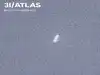
3I/ATLAS surprising nickel detection and NASA covering something up about interstellar object? Here's unusual chemical findings, Harvard scientist’s warning, anomalies, distance and orbit
The interstellar object 3I/ATLAS has shown surprising signs of nickel vapor, confusing scientists and raising questions about its origin. NASA and IAWN are studying the object’s unusual behavior as it travels through the solar system, while speculation grows about its mysterious composition and the potential link to alien technology.

Interstellar comet 3I/ATLAS could be alien technology zooming through solar system? NASA ponders
An interstellar comet named 3I/ATLAS moves through our solar system. Harvard astrophysicist Avi Loeb suggests it could be alien technology. This is due to its significant mass and size. NASA scientists state the object is a natural comet. They confirm it poses no threat to Earth. The comet is larger than previous interstellar visitors.

3I/ATLAS interstellar object shows green glow, anti-tail and unusual gas composition. Here's more details
3I/ATLAS interstellar object has shifted from red to green-blue glow, produced an anti-tail, and revealed unusual gas composition dominated by carbon dioxide. New telescope data highlight unique properties unlike previous interstellar visitors.

Interstellar Object 3I/ATLAS Nucleus Size Specifications Explained: What is gas plume around it? Here's new telescope data, anomilies, plume shape, dynamics, Hubble image findings
Interstellar object 3I/ATLAS nucleus size remains one of the biggest mysteries in astronomy. Scientists are analyzing telescope data and preparing spacecraft observations to determine its true size, activity and composition.

Interstellar object 3I/ATLAS unusual path or trajectory raises questions about natural or technological origin. See its size and brightness
Interstellar object 3I/ATLAS has sparked debate in the scientific community worldwide about whether its path is natural or designed. Researchers have studied its trajectory, brightness, and size to understand its possible origin.

Voyager hits a 'Wall of Fire': NASA probe finds a furnace at the edge of the solar system
NASA’s Voyager 1 spacecraft has uncovered a scorching “wall of fire” at the edge of our solar system. This thin shell of superheated plasma, detected near the heliopause, reaches temperatures of 30,000–50,000 Kelvin—far hotter than expected. Though invisible and barely dense, this region marks where the solar wind crashes into interstellar space. Voyager’s sensors recorded plunging solar particles and twisting magnetic fields, challenging decades-old theories and offering critical insight for space weather prediction and future deep-space missions.
NASA selects mission to study cosmic rays in heliosphere
Washington, June 2 (IANS) NASA is targeting 2024 for the launch of a new mission to learn more about the generation of cosmic rays in the heliosphere, a sort of magnetic bubble surrounding and protecting our solar system.
Freon found around infant star deals blow to search for aliens
New York, Oct 3 (IANS) In a big blow to finding signs of life on other planets, astronomers have detected faint molecular fingerprint of methyl chloride, also known as Freon-40 which was believed to be a marker of life, around an infant star system and a comet.
NASA CHESS mission to probe interstellar cloud
Washington, June 24 (IANS) The third flight for the NASA-funded CHESS mission to probe how the interstellar cloud is structured is scheduled to take place on June 27.
NASA mission to study cosmic material between stars
Washington, March 26 (IANS) NASA has announced plans to launch a balloon-borne observatory to study the emissions from the cosmic material found between stars, known as the interstellar medium.

Mystery of Voyager 1's journey into space solved
Scientists have answered why NASA's Voyager 1 observed a magnetic field that was inconsistent with that derived from other spacecraft.
Load More

