
INTERSTELLAR GAS
Interstellar comet 3I/ATLAS has 13 times more deuterium than a famous Solar System comet, hinting at its 7-billion-year-old origins before Sun was born
Interstellar object 3I/ATLAS may have formed more than 7 billion years before our Sun was born. A new study using NASA's James Webb Space Telescope has uncovered unusual chemical clues that could reveal the comet's ancient origins and the conditions in which it formed. Its deuterium-to-hydrogen ratio was also 13 times higher than that of comet 67P/Churyumov-Gerasimenko.
Interstellar Object 3I/ATLAS: 3I/ATLAS may have come from a star system older than our sun, James Webb Telescope observations suggest
Recent findings from the James Webb Space Telescope have unveiled intriguing chemical signatures surrounding the interstellar object 3I/ATLAS. This comet likely originated in a stellar nursery billions of years prior to the Sun's birth. Its significant methane presence hints at a primordial formation, coupled with low metallicity and high cosmic ray exposure. The uncommon water-ice grains shed light on the icy building blocks of other star systems.
Interstellar comet 3I/ATLAS has a surprising chemical link to icy worlds beyond Neptune? What James Webb discovered and what it reveals about planets around other stars
A comet from another star system is giving scientists a fresh look at how planets form. NASA’s James Webb Space Telescope found chemical similarities between interstellar comet 3I/ATLAS and some icy objects beyond Neptune. The finding may help researchers understand whether distant planetary systems share similar building blocks, even when they formed around different stars.
Interstellar comet 3I/ATLAS, on its way out, surprises with something strange about our Solar System
Researchers have made groundbreaking observations of interstellar comet 3I/ATLAS using NASA's James Webb Space Telescope. This comet exhibited remarkable traits in its ice grains and dust, especially noteworthy was the diversity in water ice states compared to typical comets. The findings indicate that icy bodies from other systems may share traits with those in our solar system, deepening our insight into planetary formation across different stars.
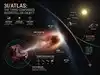
In 2025, astronomers discovered 3I/ATLAS, only the third confirmed interstellar object. 1 year later, its heavy water revealed clues to a cold alien planetary system
In 2025, astronomers discovered 3I/ATLAS, only the third confirmed interstellar object. 1 year later, its heavy water revealed clues to a cold alien planetary system. ALMA and the James Webb Space Telescope found high deuterium levels in its water. The result suggests that its ice formed below about 30 kelvin and preserved chemical evidence from another planetary system for billions of years before entering the Solar System.

Sagittarius existed in real dimensions but over the past approximately 6 billion years, Milky Way has been absorbing dwarf galaxy
Whether the Milky Way's early growth was fueled by homegrown star formation or a galactic merger has been a matter of debate, according to researchers. The new study indicates that the merger infused the Milky Way early in its history with a large volume of stars and interstellar gas that feeds star formation, as well as the mysterious substance called dark matter.
- Go To Page 1

Our Milky Way devoured a galaxy 11.8 billion years ago. Another crash may happen in 4.5 billion years
The Milky Way swallowed a smaller dwarf galaxy about 11.8 billion years ago, marking the earliest known merger in its history. Scientists used Hubble and Gaia observations to trace stars linked to the ancient galaxy, named Low-energy-Kraken-Heracles. The Milky Way later absorbed other galaxies and may collide with Andromeda in about 4.5 billion years.

3I/ATLAS interstellar comet or alien spacecraft? See it yourself today as it makes closest approach to planet
3I/ATLAS interstellar comet or alien spacecraft? NASA released new images of comet 3I/ATLAS after a rare flyby near Earth. Scientists explain what the object is, how to see it today, and why it matters for future space missions.

Mystery deepens as interstellar comet 3I/ATLAS is getting greener and brighter as it nears Earth. Scientists reveal reason behind stunning colour change
Interstellar comet 3I/ATLAS has once again baffled scientists and astronomers with its increasing brightness and striking green hue as it nears Earth. Comet 3I/ATLAS will reach its closest point to Earth on December 19 and astronomers expect it to shine even more at that time. This change in colour of comet 3I/ATLAS reveals interstellar composition and early star system origin.
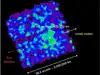
3I/ATLAS emanates unusual X-rays? Here's complete truth and expert analysis as interstellar comet reveals new anomalies in XRISM observations
3I/ATLAS emanates unusual X-rays? Scientists report new X-ray activity from interstellar comet 3I/ATLAS during XRISM observations. The glow may link to charge-exchange reactions between solar wind and comet gas. Researchers plan more analysis to confirm the origin and understand its behavior before it exits the solar system next year.
3I/ATLAS carrying weapons of mass destruction? New findings explain shocking hydrogen cyanide and methanol signals. Here's all details
3I/ATLAS carrying weapons of mass destruction? This explainer presents all scientific observations about methanol and hydrogen cyanide found near interstellar comet 3I/ATLAS. It covers ALMA data, biological links, chemical behaviour, panspermia discussions, the comet’s origins, discovery timeline, naming rules and NASA’s statement on threats to Earth.
3I/ATLAS mysterious video surfaces online? Alleged interstellar comet clip makes heads turn and sparks global interest as scientists look to explain anomalies
A mysterious video of 3I/ATLAS interstellar comet has gone viral, with online users claiming it is an alien spacecraft. Astronomers, however, say the object is natural. Radio signals from 3I/ATLAS are linked to water molecule breakdown, confirming normal cometary behavior rather than alien technology.

Comet 3I/ATLAS showed sudden increase in speed and changed colour? New revelations about interstellar object leave scientists surprised
Interstellar comet 3I/ATLAS is surprising astronomers with a sudden speed increase and color change. Scientists are closely watching this cosmic visitor. Its unusual behavior, including a possible mass loss and a missing tail, is prompting discussions. NASA and ESA will continue to track 3I/ATLAS as it moves through our solar system.
3I Atlas: Scientist says Interstellar Object did not change color, decodes mystery behind Blue-Green claims
The interstellar object 3I/ATLAS, which recently drew attention for its supposed color shift during its close pass by the Sun, did not, in fact, experience any actual change in colour.
3I/Atlas unaffected by solar storms but altered path? New allegedly leaked but unverified images of interstellar object will shock you
3I/ATLAS unaffected by solar storms but altered path? New allegedly leaked but unverified images have raised questions about the mysterious interstellar object. Despite intense solar activity, 3I/ATLAS showed no visible tail or dust, sparking debates about its true nature and composition as scientists analyze fresh data and amateur astronomers share surprising visuals.

3I/ATLAS huge breakthrough: NASA detects Fingerprint of Water — Does it confirm life beyond Earth?
The comet 3I/ATLAS, discovered on July 1, 2025, by the Asteroid Terrestrial-impact Last Alert System (ATLAS) in Hawaii, marks the third recorded interstellar object, following the discoveries of 1I/‘Oumuamua in 2017 and 2I/Borisov in 2019.
3I/ATLAS Interstellar Comet: When will it return — and did NASA detect signs of life beyond Earth after its October 29 observation?
As interstellar comet 3I/ATLAS races away from the Sun, astronomers are working to decode its story. Each observation adds to the understanding of how matter travels between star systems, carrying with it the potential ingredients for life.
3I/ATLAS surprising nickel detection and NASA covering something up about interstellar object? Here's unusual chemical findings, Harvard scientist’s warning, anomalies, distance and orbit
The interstellar object 3I/ATLAS has shown surprising signs of nickel vapor, confusing scientists and raising questions about its origin. NASA and IAWN are studying the object’s unusual behavior as it travels through the solar system, while speculation grows about its mysterious composition and the potential link to alien technology.
3I/ATLAS to reveal itself to Earth on October 29 and are we safe? Here's how close will interstellar object come to earth, can it be seen with naked eye, visibility, observation tips
3I/ATLAS to reveal itself to Earth on October 29 and are we safe? — Scientists confirm the interstellar comet will make its closest approach to Earth, showing rare features and posing no threat.

3I/ATLAS Interstellar object to become super active in 2 days — Here’s how the alien visitor will be different from the last photo
3I/ATLAS Interstellar object: Astronomers and enthusiasts can only wait as Interstellar object 3I/ATLAS passes behind the Sun’s glare. By the time it reappears in November, it may look dramatically different.
Interstellar Comet 3I/ATLAS spews massive jet toward Sun: Is it unusual? Experts explain what it’s made of and if it’s dangerous for Earth
Newly unveiled images of the interstellar object 3I/ATLAS have revealed a spectacular cosmic event, a massive jet of gas and dust erupting toward the Sun. First detected in late June and later confirmed by NASA in early July, 3I/ATLAS is thought to have journeyed from a remote and unidentified star system

Interstellar Comet 3I/ATLAS stuns scientists again: New images reveal giant jet blasting toward the Sun. Is it a threat to Earth?
A rare interstellar comet, 3I/ATLAS, is approaching its closest point to the Sun on October 30. Scientists are excited to study this alien object, which appears to be ejecting gas and dust. This event provides a prime opportunity to understand comets from other solar systems. The comet will be observable again in early December.
Where will 3I/ATLAS be on October 29? Interstellar comet's closest point to the Sun is... All details here
Where will 3I/ATLAS be on October 29? The interstellar comet 3I/ATLAS will reach its closest point to the Sun at 1.4 au. It poses no threat to Earth and will reappear by early December, providing opportunities for renewed observation by astronomers and ground-based telescopes.
3I/ATLAS ‘a threat to humanity’? Why astronomers and planetary defense teams is tracking the rare black swan interstellar object that could harbor alien technology
Astronomers are launching a major international effort to study a mysterious visitor from another star system, 3I/ATLAS. This object shows unusual characteristics, prompting scientists to consider even the possibility of alien technology. The campaign will run from late 2025 into early 2026. Researchers aim to understand its trajectory, composition, and any potential signs of advanced origins.
Comet 3I/ATLAS streaks past Mars: European orbiter captures stunning interstellar flyby. See pictures
Interstellar comet 3I/ATLAS, the third of its kind discovered, has baffled scientists with its rare visit to our solar system. Captured by spacecraft on Mars, the comet's nucleus and coma are now being studied, though no tail is yet visible. It will pass closer to the sun than Earth, becoming observable again in December.

3I/ATLAS interstellar object shows green glow, anti-tail and unusual gas composition. Here's more details
3I/ATLAS interstellar object has shifted from red to green-blue glow, produced an anti-tail, and revealed unusual gas composition dominated by carbon dioxide. New telescope data highlight unique properties unlike previous interstellar visitors.

Interstellar Object 3I/ATLAS Nucleus Size Specifications Explained: What is gas plume around it? Here's new telescope data, anomilies, plume shape, dynamics, Hubble image findings
Interstellar object 3I/ATLAS nucleus size remains one of the biggest mysteries in astronomy. Scientists are analyzing telescope data and preparing spacecraft observations to determine its true size, activity and composition.

Alien Spacecraft or Interstellar Comet 3I/ATLAS Biggest Revelation: See what NASA has found
Alien spacecraft or interstellar comet 3I/ATLAS biggest revelation came when NASA’s SPHEREx telescope detected a carbon dioxide coma and water ice in its nucleus, helping scientists study interstellar comet origins.
NASA mission to study cosmic material between stars
Washington, March 26 (IANS) NASA has announced plans to launch a balloon-borne observatory to study the emissions from the cosmic material found between stars, known as the interstellar medium.
Load More

