
INDIA TARIFF REFORM

Diwali Patakha from China: The world's fireworks capital is reinventing its centuries-old industry
Liuyang in China's Hunan province is a significant hub for global fireworks production. The county supplies around 60% of the domestic fireworks market and 70% of exports. This industry has evolved to incorporate advanced technology, like digital ignition and AI. Although safety measures have improved since past catastrophic incidents, risks still exist.

Investors in other markets would be envious of India multiples: Rich Handler, chief executive of Jefferies
Jefferies CEO Rich Handler believes Indian equities remain reasonably valued despite the market correction and says easing long-term capital gains taxes could attract foreign investors. He sees opportunities in India's AI and data centre sectors, argues that global capital outflows reflect external pressures, and believes concerns about an AI bubble warrant a healthy pause rather than alarm.

Budget 2027–28: ASSOCHAM calls for tax reforms to boost investment, manufacturing, ease of doing business and tax certainty
ASSOCHAM has called for a series of Direct and Indirect Tax reforms in the Union Budget 2027–28 to boost investment, strengthen domestic manufacturing, attract foreign capital and improve ease of doing business.

India wants more factories, fabs and data centres. Where will the water come from?
India's ambition to become a developed nation by 2047 is constrained by growing water resource challenges. Industries across sectors, including thermal power and semiconductor manufacturing, face water scarcity issues that could hinder growth. Many regions are already experiencing severe water stress, impacting economic development plans drastically. Adopting recycling and reuse technologies will be crucial for managing water in industries effectively.

India, EU discuss FTA implementation, customs cooperation and market access in Brussels
India and the European Union engaged in discussions regarding the implementation of their Free Trade Agreement. Commerce Secretary Rajesh Agrawal held meetings with various senior European Commission officials in Brussels, focusing on market access and customs procedures. The FTA is expected to eliminate tariffs on the majority of exports from both regions. Both parties are working towards the proposed signing and full ratification of the agreement.

Diwali 2026: 77 stocks knock down D-St bears to deliver multibagger returns of up to 4,700% in a year
With Diwali 2026 on the horizon, 77 stocks have thrived despite market fluctuations, marking exceptional returns. Mrugesh Trading showcases an astonishing gain of 4,657%, while Axis Solution follows closely with 1,081%. Other strong performers are Sterlite Technologies and Cupid, each demonstrating impressive growth. Analysts are hopeful for a market rebound thanks to falling crude oil prices, which could positively impact sectors such as automotive, capital goods, and pharmaceuticals.
- Go To Page 1

With G-sec yields rising, countries have no alternative but to increase their bullion holdings
In India yield on T-year G secs has increased by 0.4 percentage points over the same period. Unfortunately, governments are confronting these higher borrowing costs precisely at a time when debt is elevated, with global public debt expected to exceed 100% of GDP by 2030, a level last reached in the immediate aftermath of WW2.

Democratic wins would shift Congress' trade debate but fall short of US tariff rollbacks
If Democrats gain control of Congress, they will challenge many of Trump's tariffs through legislation and oversight. The party aims to repeal tariffs impacting communities on both sides of the Canadian border. However, Trump's veto power will hinder their efforts to pass significant reforms. Executive actions on trade may become more prominent under the Trump administration's agenda. Overall, the evolving dynamics in Congress will shape future trade discussions and policies.
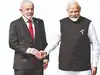
Lula's 4th term offers fresh push to India-Brazil ties
Luiz Inacio Lula da Silva's fourth Presidential term is expected to enhance India-Brazil relations significantly. His personal commitment to strengthening ties with New Delhi aligns with the need for UN Security Council reforms. Brazil's National Security Advisor, Celso Amorim, visited India to solidify their strategic partnership after the BRICS Summit. Lula's past state visit initiated landmark cooperation, particularly in rare earth resources critical for India's growth.

Government should support both job-creating and frontier industries: EAC-PM chairman Dev
S Mahendra Dev highlighted the importance of supporting job-creating and frontier industries for future economic growth. He mentioned that sectors like textiles and technology can significantly enhance India's industrial landscape. The need for improved competitiveness and product quality in various firms was also emphasised. Furthermore, land availability and global supply chain shifts present unique opportunities for India. Overall, addressing these challenges is crucial for the country's industrial transformation ahead.

From Dhirubhai to Akash Ambani, Reliance made stocks popular with Indians
Jio Platforms’ IPO is putting the Ambani family’s relationship with India’s retail investors on a new footing, almost five decades after Dhirubhai Ambani took Reliance Textile Industries public in 1977. The Rs 30,213-crore issue was fully subscribed within two hours of opening, but Jio’s long-term success as a listed company will depend on whether it can turn its massive telecom and digital reach into sustained earnings growth and investor returns.

India-NZ FTA in force: Over half of New Zealand’s exports to India now tariff-free, Wellington also eyes Brazil, Canada
New Zealand is working to strengthen trade relations with Brazil and Canada in response to economic uncertainties. The country expects to complete the first New Zealand-Brazil Trade and Investment Dialogue after upcoming elections. A new free trade agreement with India has been implemented, making more than half of exports tariff-free. The agreement will benefit various products, including sheep meat and wool, as well as local businesses.

Vietnam's export boom offers India six lessons for growth
Vietnam’s export success offers India six lessons: simplify tariffs, strengthen top-level industry engagement, expand free trade access, ease local content rules and ensure predictable taxes to attract global supply chains and boost exports.

‘For global trade’s sake, hope our US deal is inked soon’: FM Nirmala Sitharaman
Nirmala Sitharaman expressed optimism regarding the speedy conclusion of the India-US trade agreement during her recent interaction. She highlighted challenges in trade relations with China due to non-tariff barriers causing problems for Indian exporters. The Finance Minister advocated for promoting rupee-denominated trade settlements to assist nations experiencing hard currency shortages. Sitharaman emphasized the importance of public investment in infrastructure to bolster economic growth despite global disruptions.

Dr Doom, who predicted global financial crisis, has a forecast for India
Economist Nouriel Roubini, known as “Dr Doom” for predicting the 2008 Global Financial Crisis, sees India emerging as a major growth story over the coming decades. He believes easing US tariffs, deeper trade ties, friendshoring and continued reforms could strengthen India's economic prospects. However, India must accelerate growth towards 9% to create enough jobs for its young workforce as artificial intelligence reshapes employment and global manufacturers diversify beyond China.

Markets will push the US to act constructively: Nouriel Roubini
Nouriel Roubini highlighted the significance of India's emerging economy during a recent event in Dubai. As the US seeks a constructive trade relationship with India, economic pressure is expected to guide policymaking. India is seen as vital due to its large domestic market and skilled workforce. The country needs to achieve near 9% growth to address job creation challenges amid AI advancements.

Catch a bully by its horns: How India can turn the latest round of US visa curbs affecting Indian techies to its advantage
Visa restrictions imposed by the US on Indian IT companies may impact individuals working on temporary visas. Many Indian workers may now have to return to India due to these restrictions. Despite these challenges, returnees present opportunities for India in emerging technologies and industries. Additionally, India's relationship with the US requires strategic actions to maintain balance in trade and diplomacy.

IMF's bullish call: Why is India sprinting when the world stumbles?
The IMF has raised India's growth forecast to 7% for both FY27 and FY28, highlighting the country's resilience despite higher oil prices and a slowing global economy. Strong domestic consumption, infrastructure spending, recovering private investment and AI-related capital expenditure are supporting growth, though inflation, energy costs and weaker rural demand remain risks.

PM Modi's free trade push could lead to $140 billion GDP gain for India
A more protectionist US could unexpectedly benefit India as New Delhi expands its free-trade agreements (FTAs) to diversify export markets and attract investment. A World Trade Organization-based model estimates that India’s concluded and proposed trade deals, including agreements with the EU and New Zealand, could add about $140 billion to GDP by 2035, lifting it 1.7% above the baseline.

‘We have all of those elements’ in India, says BP CEO Meg O’Neill as firm weighs oil and gas bids under Samudra Manthan scheme
India's government has introduced the Samudra Manthan policy to enhance energy security through increased oil exploration. BP's CEO Meg O'Neill highlighted India's attractive conditions for foreign investment and exploration. This policy involves significant funding to support the development of discovered resources. BP is actively exploring current opportunities, aiming for growth and development in its portfolio. The company intends to remain independent while adapting to evolving global energy landscapes.

Will EU press the ‘kill switch’ on China? Trade war looms over talks
EU officials are raising alarms over the escalating trade deficits with China, exceeding one billion euros on a daily basis. The spike in Chinese hybrid-car exports underscores possible gaps in EU tariff policies. Although talks are underway, China shows little willingness to engage in voluntary export restrictions for select products. EU leaders are now considering a 'kill switch' mechanism.

Growth hinges on local reforms, not protectionism: Indermit Gill
India holds a unique opportunity to enhance its economic growth but must address internal challenges effectively. Rapid reform and the efficient use of resources are key to achieving this growth. The country needs to adopt artificial intelligence to improve productivity across various sectors. Expanding trade and eliminating barriers will be essential for attracting foreign investment. Policymakers must focus on enhancing domestic conditions to fully realize India's economic potential.

World Bank bumps up FY27 India growth outlook to 7.1%
The World Bank has increased the growth forecast for India's FY27 to 7.1% from earlier estimates. This revision is attributed to strong domestic demand and solid exports, despite global challenges. Growth is expected to moderate later in FY27 but rebound in the medium term. However, risks such as higher global oil prices and El Nino-related disruptions could impact performance.

'US deal could spur further liberalisation'
India's economic growth remains strong, with foreign direct investment continuing to show promising figures. Arvind Panagariya emphasizes the need for deeper trade liberalization, increased privatization, and judicial reforms. He highlights the importance of attracting long-term productive investments, especially from private equity. Trade agreements with the UK and European Union are expected to further bolster India's economy.

Private capex revival takes hold, capital formation at 3-year high: Economic Affairs Secretary Anuradha Thakur
Private investment in India is experiencing a revival, with growth in capital formation noted in early financial reports. Economic Affairs Secretary Anuradha Thakur highlighted an increase in corporate project commitments across various key sectors. First-quarter gross Foreign Direct Investment inflows reached approximately USD 30 billion, emphasizing strong foreign investment in India's economy.

Piyush Goyal meets EU Trade Commissioner, discusses progress on signing FTA
In a significant meeting, Commerce Minister Piyush Goyal engaged with European Trade Commissioner Maros Sefcovic to review the status of the India-EU Free Trade Agreement. Following discussions at the G20 Trade Ministers' gathering, they emphasized the anticipated signing of this agreement by year-end, which seeks to boost market access and diminish trade barriers, facilitating yearly trade exceeding 180 billion euros between India and the EU.

Foreign capital is slipping away. Can India lure investors back?
India faces a tougher battle for foreign capital as FPI outflows rise and global investors shift money towards AI, semiconductors and manufacturing hubs in Taiwan and South Korea. India’s FDI prospects remain resilient, but policy uncertainty, tariffs, regulation and weak manufacturing competitiveness could determine whether it can attract long-term global investment.

US indifference to terrorism from neighbour impacts ties: Jaishankar
India's external affairs minister S Jaishankar addressed concerns regarding bilateral relations with the United States. He highlighted that India's issues with cross-border terrorism should be understood by its partners. Jaishankar also noted that greater empathy regarding India's security challenges is necessary for the relationship to flourish.

Global economy is shifting East, Global South must seize the moment: Shaktikanta Das
The Principal Secretary-2 Shaktikanta Das outlined the challenges and opportunities facing Global South economies during recent discussions. Energy shocks, trade barriers, and geopolitical uncertainties pose significant risks for these nations as they adapt. Strategies focused on food security, trade diversification, and job creation are essential for future resilience. Additionally, rising protectionism complicates access to global markets and technologies for low- and middle-income countries.
Load More

