
INDIA SUBSIDIES

Optimising to win, capture market share in InstaHelp: Urban Company CEO Bhal as firm reports 57x jump in net loss
Home services platform Urban Company reported a 57-fold jump in net loss to Rs 161 crore in the March quarter of FY26, primarily due to increased spending on its InstaHelp segment. The company is prioritizing market share over short-term profitability in this competitive on-demand domestic help market.

Fuel price hike on the cards as India struggles to absorb soaring crude costs
India is grappling with significant economic challenges due to elevated global fuel prices. The government has absorbed substantial daily losses to shield consumers. However, the ongoing West Asia crisis and disruptions to energy supply routes are making this unsustainable. Tough decisions loom regarding fuel price adjustments to manage the financial burden and ensure energy security for the nation.

Petrol, Diesel Price Today May 9: Check Delhi, Mumbai, Gurugram rates as reports of a hike next week emerge
Petrol Diesel Price Today in India: Domestic petrol and diesel prices remained stable across most major Indian cities on Saturday, despite firm global crude oil markets driven by geopolitical tensions. India's oil marketing companies and the government have absorbed rising costs for over two months to prevent retail price hikes, though this arrangement is under strain.

Skyroot Aerospace, KreditBee among latest startups to enter unicorn club
India's startup scene is experiencing significant growth. Several new companies have achieved unicorn status, valued at over $1 billion. Skyroot Aerospace, a space-tech firm, and KreditBee, a digital lending platform, are among the latest entrants. This expansion highlights increasing investor interest and digital adoption across various sectors in India.

Fiscally disciplined states to get priority access to ₹3,000 crore SASCI incentive pool
States that manage their finances prudently will receive priority for a ₹3,000 cr incentive fund. The Centre's new scheme rewards states for strong debt management, borrowing discipline, and fiscal transparency. This initiative aims to encourage better fiscal governance and debt sustainability across states.

The crisis of multilateralism and the imperative of WTO reform
The World Trade Organization's role as a global commerce pillar is weakening. Imbalances and unfair practices are challenging its principles. Trade is now seen as strategic power, not just economic exchange. India advocates for balanced reforms to ensure WTO's relevance in a changing world. This includes integrating plurilateral agreements and addressing developmental needs.
- Go To Page 1

Govt extends subsidy scheme for companies flagging merchant ships until FY31
India's shipping ministry has extended a vital subsidy scheme for Indian companies flagging merchant ships. This initiative will now run until the financial year 2030-31. The scheme aims to boost India's maritime fleet and global shipping presence. It provides financial support to Indian shipping companies bidding for government cargo tenders.
RBI may have to bear forex risk to boost foreign money inflows
India may need central bank support to attract dollar investments, potentially through forex deposit schemes, to cover exchange risks and offer competitive yields. Economists suggest higher subsidies from the RBI might be necessary to make such initiatives attractive for banks, especially given current global interest rates.

Energy shock strains India’s growth, fiscal outlook: S&P report
India faces economic challenges from Middle East conflict. Energy prices and supply constraints strain finances. Rising bond yields, inflation, and a weakening rupee affect growth. Experts highlight energy and food security, and economic reforms as priorities. Self-sufficiency and diversification are crucial for India's resilience and investment appeal.

Petrol-diesel price hike coming soon? Why IMF says it must
Speculation mounts over potential petrol and diesel price hikes as assembly elections conclude, despite government assurances. The IMF urges India to pass on higher crude oil costs to consumers, arguing it would temper demand and allow market adjustments, while advocating for targeted subsidies for vulnerable populations.

ADB warns Asian economies against broad fuel subsidies, tax cuts amid oil price risks
The Asian Development Bank advised Asian economies to avoid broad fuel subsidies and excise duty cuts, warning they could strain public finances amid elevated crude oil prices. The lender suggested targeted cash transfers for vulnerable populations and a shift to green energy, while urging central banks to monitor inflation expectations before tightening monetary policy.

RBI mulls new move using foreign bonds to prop up rupee
Reserve Bank of India is considering allowing state-run banks to issue foreign-currency bonds to attract capital inflows and support the rupee, reviving a strategy last used decades ago. The proposal, still in early stages, may involve bonds with around five-year maturities.

Nepal to procure 80,000 tonnes of fertiliser from India as Iran disrupts global supply chains
Nepal will purchase 80,000 tonnes of fertilizer from India through a government-to-government deal to mitigate the impact of global supply disruptions and rising prices on its farm output. This one-time purchase aims to address a projected shortfall for the upcoming paddy transplantation season, as escalating global costs have reduced Nepal's overall import capacity.

Sustained reforms will help India maintain growth momentum, says ADB’s Albert Park
India's economy shows strong growth prospects despite global challenges. The Asian Development Bank highlights the need for continued reforms to enhance business and trade. Inflation remains a key concern, potentially impacting interest rate decisions. Strategic focus on renewable energy and targeted subsidies will bolster resilience. India is poised to benefit from AI advancements with proper skill development.

Global Markets | Resilience Tested: Asian economies balance buffers against rising oil shock
Asian economies are scrambling to manage an energy shock caused by the Iran war, with soaring oil prices and supply disruptions hitting the region hard. Governments are deploying subsidies, tapping reserves, and imposing controls, but at rising fiscal costs. Growth forecasts have been cut while inflation expectations have increased, reflecting higher energy prices.

Fertiliser subsidy bill set to overshoot budget estimate of Rs 1.71 lakh cr amid West Asia crisis
India's fertiliser subsidy bill for fiscal 2026-27 is set to surpass its budget. Rising costs of imported urea and other fertilisers are driving this increase. Despite global supply chain issues, fertiliser availability for the kharif 2026 season remains strong. Domestic production and imports are being managed to meet demand. States are actively stocking fertilisers in advance.

EVs moving at faster speed in premium lane
India's electric car market is seeing growth in premium segments. Carmakers are launching more expensive models, with sales in the ₹20-30 lakh bracket rising significantly. The share of cars below ₹10 lakh has decreased. Luxury EV demand is also strong. This trend suggests the market is expanding upwards, potentially limiting mass adoption.

Petrol price today 3 May 2026: Check latest rates in Delhi, Mumbai, Chennai, Kolkata and Bengaluru
Petrol price today :Indian petrol prices change daily. This dynamic pricing depends on global crude oil costs, the rupee's value against the dollar, and market supply and demand. Taxes, dealer commissions, and refining expenses also affect the final price. Consumers in cities like Chennai, Hyderabad, Mumbai, Pune, and Kolkata pay varying rates per litre.

‘We are not like India...’: Pakistan minister admits on live TV country has no strategic oil reserves, says stock only for five to seven days
Pakistan's energy vulnerability is highlighted as Petroleum Minister Musadik Malik revealed that Islamabad possesses only a few days of crude supplies. He said Pakistan is not like India which has 60-70 days of reserves and can release it with just a single signature. He also admitted that Pakistan does not have strategic petrol reserves even for a single day

EVs ring in new fiscal on strong note
India's electric vehicle market began the new fiscal year with robust sales in April. Electric cars and two-wheelers saw significant year-on-year growth. This surge was fueled by new model introductions, increased consumer interest, and worries about fuel prices. While sales dipped from March's peak, the overall trend indicates strong momentum for electric mobility in the country.

India's EV transition needs a China-style ecosystem push; scale, policy, charging infra boost: Nomura
India's transition to electric vehicles (EVs) will depend critically on how quickly it can build out a robust charging ecosystem, with infrastructure readiness emerging as the key trigger for mass adoption, according to a Nomura report.

PM Modi’s Ujjwala at 10 marks shift from access to empowerment, says education minister Dharmendra Pradhan
Ten years on, the Pradhan Mantri Ujjwala Yojana has provided clean cooking fuel to over 10 crore women. This initiative has significantly improved household health and reduced time spent on fuel collection. Women are now participating more in economic activities, gaining a stronger voice.

India invokes WTO peace clause for FY25 rice subsidies for farmers
India has once again utilized the World Trade Organisation peace clause. This is the seventh time the country has invoked this provision. It allows India to exceed the 10% subsidy limit for rice farmers. The government informed the WTO about providing subsidies worth $7.6 billion. This represents about 11.85% of the total value of rice production.
West Asia conflict raises inflation risks; India's domestic strength offers cushion: Finmin report
India faces supply shocks from the West Asia conflict. This impacts inflation and trade. However, strong domestic demand and policy measures provide resilience. The economy is forecast to grow robustly. Government actions aim to manage costs in key sectors. Trade performance is being boosted by new schemes and agreements. India is positioned to leverage global shifts for economic gains.

Oil firms selling petrol at Rs 14 a litre loss, diesel at Rs 18
Indian oil companies face substantial losses on petrol and diesel sales. Elevated crude oil prices are squeezing marketing margins. Cooking gas LPG is projected to incur an Rs 80,000 crore under-recovery this fiscal. Fertiliser subsidies are also set to rise significantly. These pressures impact profitability across various sectors, with relief contingent on easing global tensions and supply chain normalisation.
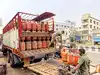
LPG under-recoveries may hit Rs 80,000 crore in FY2027 amid West Asia disruptions: ICRA
Indian oil companies face significant financial strain. LPG under-recoveries may reach Rs 80,000 crore by FY2027. Supply disruptions and high global prices impact profitability. Fertiliser costs are rising sharply, requiring increased government subsidy. Chemical and gas sectors also see margin pressures. Elevated costs will affect downstream sectors in FY2027.

India weighs induction cooktop subsidy amid Iran war energy crisis
India is exploring incentives for induction cooktops. This move aims to transition households from LPG to solar electricity. The government is discussing support under the PM Suryaghar Muft Bijli Yojana. This initiative seeks to boost the adoption of electric cooking. Tax cuts and reduced import duties are also being considered to make these appliances more affordable and increase local production.

No LPG, no worry: This village in Kolhapur cooks food without cylinders, wood or coal
In Maharashtra's Kolhapur district, families are cooking with biogas, a clean fuel derived from local waste like cattle dung and kitchen scraps. This innovative system, adopted by hundreds of households, offers a stable energy source, shielding them from LPG price hikes and shortages. Government subsidies have fueled its widespread adoption, though funding delays have impacted recent installations.

India needs to reduce the strategic importance of fertilisers through a bold agricultural policy
Global events like the West Asia conflict and El Nino threaten governments. Rising fertilizer prices create a fiscal and political crisis for India. The nation faces a future scarcity fear, leading to panic buying. Bold agricultural policy is needed to reduce fertilizer reliance. This will optimize usage and ensure food security for the future.
Load More

