
INDIA PORT CAPACITY

India, Dutch port authorities weigh digital push to boost logistics: Piyush Goyal
Commerce and industry minister Piyush Goyal and Port of Rotterdam CEO Boudewijn Siemons held discussions on advancing port-led growth, logistics efficiency, supply chain connectivity and unlocking new opportunities for trade and investment.


India aims to quadruple port capacity by 2047, eyes stronger maritime cooperation with Rotterdam: Piyush Goyal
India intends to increase its port capacity significantly by 2047 to support economic growth and trade. Union Minister Piyush Goyal emphasized collaboration opportunities with the Port of Rotterdam for sustainable development. The Sagarmala initiative aims to enhance India's maritime infrastructure and connectivity effectively. A major maritime education institution will be established in Mumbai to train skilled seafarers. These efforts highlight India's commitment to bolstering its position in global maritime trade.

A little Nashik goes a long way in Italy
This month saw a Nashik company make waves by exporting wine equipment to Italy, a clear demonstration of India's burgeoning potential in the wine sector. The success of this small consignment is emblematic of an industry on the rise. Analysts predict domestic market expansion, particularly with relaxed state regulations, could see India's wine market soar to $2.6 billion by 2033, alongside a trend in non-grape wineries shaping the future.
FICCI seeks Dutch investment in mfg, tech; calls for project-level follow-up
FICCI has called for enhanced Dutch investments in India’s manufacturing and technology sectors during Piyush Goyal's visit. The discussions may lead to manufacturing partnerships and technology collaborations which would strengthen bilateral trade. Greater emphasis is placed on supply chain integration to meet Dutch quality and sustainability standards. The upcoming India-EU free trade agreement is expected to facilitate deeper commercial ties.

Union Minister Sarbananda Sonowal invites Polish firms to ‘build, innovate and grow with India’
Union Minister Sarbananda Sonowal addressed the India-Poland Business Forum, emphasizing stronger business ties between the nations. He highlighted Poland's strengths in engineering and clean energy and India's market potential and skilled workforce. Sonowal proposed initiatives to enhance collaboration in sectors like AI, quantum computing, and smart manufacturing. He called for Indian and Polish companies to innovate and invest together for mutual growth. Trade between India and Poland has reached $6.36 billion.
- Go To Page 1

Marco Rubio meets Adani, Tata chiefs before heading to Jamnagar for Reliance refinery visit
US Secretary of State Marco Rubio met Adani Group chairman Gautam Adani and Tata Sons chairman N Chandrasekaran in Mumbai before travelling to Jamnagar to visit Reliance Industries' oil refinery, Vantara and its planned clean-energy manufacturing complex. The visit comes as India and the US explore deeper cooperation in energy, manufacturing and technology.

Deendayal Port Authority issues LoA to Essar Ports Ltd. to develop Multi-Purpose Cargo Terminal at Tuna Tekra
Deendayal Port Authority has issued a Letter of Award to Essar Ports Ltd. for developing a Multi-Purpose Cargo Terminal. This terminal will be located at Tuna Tekra port in Gujarat and is part of a Public-Private Partnership initiative. The project will operate on a Build-Operate-Transfer basis for a 30-year concession period. Essar Ports emerged as the highest bidder, offering a royalty to DPA.
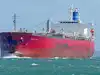
Russia ships the least crude oil in a month as major Baltic port halts
Russian crude shipments have dropped to a month low due to maintenance work disrupting operations at the Primorsk port. Despite a reduction in Ukrainian attacks on refineries, oil production facilities are still under threat. Notably, shipments to Asia, including significant customers like China and India, are declining, mirrored by a substantial fall in export values, signaling a downturn in demand.
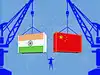
Drill, baby, drill: China turns the screws, India looks for own tools
China’s new export controls on tunnel boring machines (TBMs) have highlighted India’s reliance on overseas suppliers for specialised infrastructure equipment even as the government moves towards a $1.2 billion incentive scheme to expand domestic manufacturing. The proposed package aims to attract $1.8 billion in investment over seven years, but the bigger challenge will be building local capabilities in high-value components and machinery rather than simply replacing Chinese imports.

Why India's steel demand is defying global weakness
India’s steel prices are rising despite weak global markets, supported by infrastructure spending, manufacturing growth and higher input costs. While Chinese oversupply pressures international prices, robust domestic consumption and capacity utilisation underpin India’s outlook, with cheaper imports remaining a key risk.

National highway projects awarded rise 62.9% during April-Sept: MoSPI
National highway projects awarded experienced a 62.9% increase in distance during the April-September period. Electronic toll collection transactions also rose significantly, indicating increased digital use. Air cargo movement increased by 12%, and foreign tourist arrivals grew as well. The telecommunications sector expanded, adding over 29,000 kilometers of optical fiber cable. Overall, performance indicators across multiple infrastructure sectors have shown positive trends in FY27.

DP World eyes $5 bn India investment, warns West Asia crisis is rewiring global trade
DP World is ready to increase its investment in India between USD 3 billion and USD 5 billion in the coming years. The company urges for faster infrastructure development and quicker project approvals to unlock trade potential. Despite challenges, Narayan believes that India remains attractive due to its growing economic scale. Enhanced logistics capacity is critical for supporting India's manufacturing and export growth.

‘Russian diesel won’t help US, it shows double standards on India’: Margarita M. Balmaceda, Professor at Seton Hall University
Margarita M. Balmaceda examines the hidden dynamics of energy dependency between Russia and other nations. The discussion highlights Russia's role as a 'Trojan horse' in energy politics. Recent diesel deals between the US and Russia may have limited short-term benefits for American consumers. Additionally, the implications of these deals could adversely impact Ukraine's situation. This situation reflects a troubling double standard in international energy relations.

DP World bidding for all assets on offer: CEO Yuvraj Narayan amid West Asia conflict
DP World is increasing its focus on the Indian port sector to explore new opportunities. The company plans to expand its capacity at Tuna Tekra and aims to renew concessions in Mumbai and Mundra. Significant disruptions in West Asia have heightened global supply chain costs and influenced capacity planning within logistics. As companies shift away from just-in-time supply chains, larger inventories are now prioritized for resilience.

These mid-caps have ‘strong buy’ & ‘buy’ recos and an upside potential of over 25%, according to analysts
Why should one be careful of the market at this juncture? One reason is that stocks are still not cheap. Even after all the nervousness of the past over two years, valuations have not come down to levels where you can say you are getting a bargain. When you buy something that is not cheap, you have less room for error, because the price already assumes things will go well.

Aegis Logistics to acquire 89.8% stake in Dubai-based Tristar Holdings for $809 million
Aegis Logistics is set to acquire 89.8% stake in Tristar Holdings, based in Dubai, for $809 million. The deal seeks to strengthen Aegis's global footprint in liquid logistics and creating new avenues for business growth. The acquisition is expected to complete by the fourth quarter of FY27.

No love for the middle: CPHI Milan exposes India’s pharma scaling challenge
Indian pharma and chemical companies at CPHI Milan say the China+1 opportunity is real, but a “missing middle” in the MSME ecosystem, marked by financing gaps, limited scale and technology constraints, is holding back export growth.

IMF's bullish call: Why is India sprinting when the world stumbles?
The IMF has raised India's growth forecast to 7% for both FY27 and FY28, highlighting the country's resilience despite higher oil prices and a slowing global economy. Strong domestic consumption, infrastructure spending, recovering private investment and AI-related capital expenditure are supporting growth, though inflation, energy costs and weaker rural demand remain risks.

Shipping ministry launches 2 credit risk insurance products for ship building industry
These policies include the Shipbuilding Project Credit Risk Insurance Policy for export projects and the Business Credit Shield Policy for domestic projects. The central government will subsidize insurance premiums and support insurers for shipyard claims. This initiative aims to alleviate financial stress and ensure smooth operations for shipyards.
Crude oil crisis in Hormuz: Much more than just price and quantity
The conflict in Iran has closed the Strait of Hormuz, severely impacting global oil shipments and market dynamics. While oil availability has seemingly increased, a logistics premium affects shipping costs and insurance. This situation has led to heightened risks, causing delays in transit times and increased tanker requirements. Diesel shortages are also rising, with prices escalating significantly as supply chains are disrupted.

India’s Rs 34,284-crore Basmati trade gets a logistics boost with Iraq shipping plan
IREF has introduced a bulk-shipping initiative aimed at cutting freight costs for Basmati rice exports to Iraq. This initiative will lower costs from USD 350 to USD 90 per tonne, significantly improving competitiveness in the Middle East market. The collaboration with Eximwala Solutions Pte. Ltd. involves bulk shipments totaling 1,02,210 metric tonnes. The initiative is part of efforts to strengthen India’s position in global rice exports.

India's tech push: five things to know
India has committed billions of dollars in semiconductors, electronics manufacturing and artificial intelligence in a bid to become a global technology powerhouse. India's electronics production rose from about $31 billion in 2014-15 to $133 billion in 2024-25, according to the government, which wants the country to become a tech manufacturing hub.

Black Sea attacks hit yellow peas, sunflower oil supplies to India
Russia's exports of yellow peas and sunflower oil to India have been disrupted by ongoing conflicts. As a result, prices for yellow peas have risen from ₹40 to ₹46 per kg in the last two months. Importers report that shipments from Russia have not occurred recently, affecting the availability of yellow peas. Meanwhile, sunflower oil shipments are also hindered, causing expectations of higher prices in the near future.

Saudi Arabia expresses interest to invest in India’s port projects: Sarbananda Sonowal
In a recent dialogue, the Saudi Ports Authority expressed a strong desire to invest in India's maritime sector. Key discussions revolved around the Vadhavan and Galathea Bay port projects, underscoring potential financial support. Their cooperation would also encompass shipbuilding, seafarer training, and sustainable supply chain development. Additionally, India is partnering with Belgium on a green shipping initiative and improving connectivity through the Brahmaputra River with Bhutan.

ET Evoke: ‘Shipping, moving 80% world trade, is far more volatile than stocks,’ says Harvard University's Myrto Kalouptsidi
Myrto Kalouptsidi, Harvard professor of international economics, explains how shipping disruptions at chokepoints such as Hormuz, Suez and Ukraine can sharply reduce effective fleet capacity, trigger volatile freight rates and raise goods prices. She also discusses empty ships, global trade imbalances, China’s shipbuilding dominance and climate change risks to maritime infrastructure.

Cochin Shipyard gets order to build 40 ships from US, Germany, Norway, other nations: Sarbananda Sonowal
Cochin Shipyard Limited has triumphantly secured more than 40 shipbuilding contracts from leading countries like the US, Germany, and Norway. Shipping Minister Sarbananda Sonowal emphasized the importance of cultivating a strong ecosystem for shipbuilding in India. Notably, Russian businesses showed interest in collaborating with local shipyards, and Belgium demonstrated a desire to join forces with India on shipbuilding ventures.
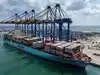
Sharjah eyes $3 billion Indian investment as ports shift amid Hormuz disruption
Sharjah is anticipating significant investment from India, targeting $3 billion between 2026 and 2027. The expansion of Khorfakkan port is crucial for attracting Indian manufacturers and logistics companies. With the current disruptions in shipping routes, Sharjah presents a strategic location for trade. The Khorfakkan port is also set to increase its container handling capacity significantly. Indian companies are showing heightened interest in Sharjah as a business gateway to the region.

Building the route to India: Russian oil and mineral water producers expand overseas
Ecooil and Akva-Kristall are strategically enhancing export ties with Indian buyers. Leveraging their strong infrastructure for production, quality assurance, and logistics, Ecooil is set to boost sunflower oil exports, while Akva-Kristall is launching its premium mineral water to Indian consumers. The success of these ventures hinges on reliable delivery and maintaining high-quality standards, emphasizing the rising demand for Russian products in India.
Load More

