INDIA PAKISTAN RELATIONS

India slams Pakistan at UN, questions report for overlooking religious discrimination in developed nations
India criticised Pakistan at the United Nations over alleged discrimination against religious minorities, citing shrinking minority populations and violations of their rights. Indian diplomat Bhavika Mangalanandan also questioned a UN report on funeral rights during exceptional circumstances, accused it of selective treatment and recalled Pakistan’s refusal to accept soldiers’ bodies during the 1999 Kargil conflict.

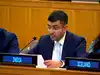
India hits out at UN rapporteur Ben Saul for bias in counter-terror report, affirms Dawood Ibrahim in Pakistan
India expressed serious concern over the UN rapporteur's report, claiming it contained factual inaccuracies regarding Dawood Ibrahim. Indian diplomat Raghoo Puri highlighted that Ibrahim is a wanted criminal residing in Pakistan. Puri noted that the report overlooked key facts, which harms the UN's legitimacy. He criticized the use of human rights frameworks to justify terrorism and reaffirmed India's stance on Jammu and Kashmir.

Pakistan ties can help US 'discourage' things India is worried about: Marco Rubio
Marco Rubio confirmed the US commitment to condemning global terrorism while explaining relations with Pakistan. He noted the importance of maintaining diplomatic ties due to Pakistan's nuclear arsenal and strategic location. Rubio stated that communication with Pakistan could help mitigate Indian security concerns. He acknowledged the challenges of balancing such diplomatic relationships while managing US foreign policy. Ongoing engagement with countries like Pakistan remains essential to American international strategy.
- Go To Page 1
Ecosystem of terrorism must be firmly and collectively 'dismantled': Rajnath Singh at SCO meet
Defence Minister Rajnath Singh emphasized the urgent need to dismantle the entire ecosystem of terrorism during the SCO meeting. He firmly stated there is no place for those who finance or shelter terrorists. Singh highlighted the severe threats posed by terrorism to peace, development, and the opportunities for youth. India supports the action plan for 2026 to 2030 regarding Multilateral Trade and Economic Cooperation.
Any terrorist act originating from Pakistan will draw even stronger response: Rajnath Singh
Defence Minister Rajnath Singh emphasized India's shift towards proactive measures against terrorism originating from Pakistan. He noted that the effectiveness of India's security forces in neutralizing threats within a year is significant. Singh highlighted the importance of individual vigilance in combating lone-wolf attacks and other emerging security threats. He called for integrating advanced technologies with traditional defense strategies to address evolving challenges.
It's been our consistent position that UNMOGIP outlived its relevance after Simla Agreement: MEA
India's Ministry of External Affairs emphasized that the United Nations Military Observer Group in India and Pakistan (UNMOGIP) has lost its relevance since the signing of the Simla Agreement in 1972, which aimed to establish peace between the two nations. During his recent visit to Pakistan, UN Secretary-General Antonio Guterres recognized the challenging role of UNMOGIP and commended its professionalism. Meanwhile, India continues to focus on improving relations with Pakistan.
India can launch surgical strikes on Pakistan, but can't hold talks: Mani Shankar Aiyar
Mani Shankar Aiyar criticised the BJP-led government for avoiding dialogue with Pakistan despite military actions taken. He proposed holding discussions at the Attari-Wagah border to facilitate continuous communication between both nations. Aiyar emphasised the importance of addressing unresolved issues through dialogue rather than arguing about the past. He highlighted the need for political unity among non-Hindutva factions to influence Delhi's policies.
India summons Pakistan envoy over alleged cross-border infiltration, rejects Ferozepur claims
India has summoned the Chargé d'Affaires of the Pakistan High Commission due to continued illegal cross-border infiltration. The Ministry of External Affairs highlighted an incident involving individuals breaching the border despite warnings from the Border Security Force. India urged Pakistan to investigate these infiltration and drug-smuggling activities being facilitated by armed syndicates. The Indian government rejected Pakistan's accusations regarding the border incident and called for measures to prevent future occurrences.

India's SCO coordinator highlights regional connectivity, trade & transit in Pakistan
India's SCO National Coordinator Alok A Dimri emphasized regional connectivity and trade discussions during the SCO meeting. The meeting aims to prepare for the upcoming SCO Council of Heads of State summit in August 2027. Dimri highlighted that a cultural dialogue would take place in New Delhi on November 20. He expressed his intentions to explore various cities in Pakistan as part of SCO initiatives.
India working towards developing sixth-generation fighter jets: Defence Minister Rajnath Singh
Union Defence Minister Rajnath Singh announced that India is developing sixth-generation fighter jets. He said modern warfare encompasses multiple domains and is not restricted to soldier versus soldier. The minister also said that India successfully conducted a flight trial of a long-range hypersonic missile as well as testing a long-duration scramjet engine.

Pakistan a regime of army, by army and for army: India
India's diplomat Petal Gahlot addressed the UN General Assembly in response to Pakistan Prime Minister Shehbaz Sharif's remarks. Gahlot highlighted Pakistan's hypocrisy regarding terrorism, referencing Osama bin Laden's presence in the country. She reiterated India's stance that continued terrorism support would have serious consequences for Pakistan. Additionally, Sharif discussed the Kashmir issue and the Indus Waters Treaty during his speech.

"Blood and water cannot flow together": Former diplomat Veena Sikri blisters Pakistan PM's UNGA speech
During the UN General Assembly session, Veena Sikri firmly denounced Pakistan's assertions regarding Kashmir and the Indus Waters Treaty, attributing regional tensions to Pakistan's own issues of internal mismanagement and its history of fostering terrorism. India reiterated its right to respond to cross-border terrorism, highlighting the suspension of the Indus Waters Treaty until Pakistan halts its support of terrorist activities.
'A terrorist country is asking me that question, come on': Jaishankar's blunt retort to Pakistani reporter at UN briefing in New York
S Jaishankar firmly responded to a heckling question from a Pakistani reporter at a press conference. The event was held during the High Level Week at the 81st Session of the United Nations General Assembly. India continues to emphasize Pakistan's role in cross-border terrorism and urges credible actions against it. Recent attacks, including the Pahalgam terror attack, were acknowledged internationally for their severity.
India tears into Pakistan at UN, accusing Islamabad of terror, deceit & ‘regime of the army'
India launched a strong response to Pakistan at the UN General Assembly regarding claims of terrorism and Kashmir. India's First Secretary highlighted the Pakistani regime's military dominance and treatment of minorities. The statement referenced the historic presence of Osama bin Laden near a Pakistani military site. India reiterated its stance on Jammu and Kashmir as an integral part of the country.
Pakistani PM Shehbaz Sharif refuses to answer questions on Hafiz Saeed, LeT during UNGA visit
During the 81st United Nations General Assembly, Pakistan Prime Minister Shehbaz Sharif avoided questions about Hafiz Saeed. Reporters asked him multiple times about his stance on terrorism and Saeed's prosecution. India's representative criticized Pakistan for its focus on terrorism rather than addressing economic struggles. The remarks highlighted issues in Pakistan-occupied Kashmir, drawing attention to humanitarian crises and suppression of civilians.

Pakistan must act against cross-border terrorism before world believes it would do what it says: MEA
The Ministry of External Affairs said Pakistan must demonstrate a firm commitment and take “credible action” against cross-border terrorism before its assurances are believed internationally. MEA spokesperson Randhir Jaiswal made the remarks in response to Pakistan Chief of Defence Forces Field Marshal Asim Munir’s comments that the country’s armed forces were determined to tackle the growing threat of militancy.

Indus Waters Treaty: The 1960 pact that refuses to leave the limelight of India-Pakistan tensions
Indus Waters Treaty Explained: The Indus Waters Treaty faces strain over India's hydropower projects and Pakistan's objections. Following an attack, India placed the treaty in abeyance, which led to military confrontation. An international court ruled the treaty remains in force, but India rejected this decision. India seeks to modify the treaty due to changed circumstances and its water needs. The treaty remains a crucial framework for Pakistan and a point of contention for India.

Experts back India's stand on Indus Waters Treaty at UNHRC sidelines conference
Experts at a UNHRC conference backed India's Indus Waters Treaty stance. They argued for examining the treaty in the context of security and human rights. Pakistan's conduct affected the treaty's spirit, according to one speaker. Domestic factors contribute to Pakistan's water challenges, it was noted. The conference highlighted community water rights beyond bilateral agreements.
Pakistan acknowledges India's participation in anti-terrorism meeting, calls terrorism a common challenge
Pakistan acknowledged India's participation in a recent regional anti-terrorism meeting. Terrorism was described as a common challenge for both nations during the event. Pakistani officials denied reports of Sikh pilgrims being stopped from traveling to India. They stated the visas were not covered under the existing bilateral protocol. The pilgrims may be allowed to travel via the Wagah Border crossing.

Pakistan requests AHF to shift its ACT hockey matches from India to neutral venue
Pakistan Hockey Federation requested a neutral venue for the Asian Champions Trophy matches. This request stems from a sensitive bilateral situation with host nation India. The federation seeks to ensure uninterrupted and full participation for its players. A safe and dignified environment for national players and officials is paramount. The decision aims to address prevailing security conditions and bilateral tensions.
'A different kind of war': Former CDS Gen Anil Chauhan outlines new threats facing India, from cognitive colonialism to Pakistan, China
General Anil Chauhan highlighted evolving geopolitical shifts and technological advancements impacting national security. He discussed warfare's changing nature, including information as a weapon and cognitive colonialism. India's response requires strengthening national capacity across traditional and emerging domains. Future conflicts will increasingly involve cyber and information warfare, not just physical attacks. Pakistan and China pose distinct, long-term security challenges to India's borders.

Pakistan will remain major security concern, threat for times to come: ex-CDS Chauhan
Former CDS Anil Chauhan expressed concerns about Pakistan's new defense agreement. He stated that such accords might induce overconfidence and lead to miscalculations. Pakistan will remain a significant security concern for India in the future. Operation Sindoor and other measures aim to induce behavioral change in Pakistan. India must maintain credible deterrence against terrorism and proxy war.
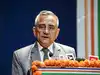
Pakistan will remain major security concern, threat for times to come: ex-CDS Gen Anil Chauhan
Former CDS Gen Anil Chauhan has raised concerns regarding Pakistan's possible overconfidence stemming from new defense agreements. He emphasized that Pakistan continues to pose a serious security threat to India. Strategies like Operation Sindoor are part of India's efforts to drive behavioral changes in Pakistan. The stability-instability paradox underpins Pakistan's reliance on proxy warfare and terrorism, necessitating India to uphold strong deterrence across all fronts to thwart these dangers.
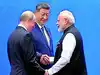
Dismantle ‘entire ecosystem of terrorism’: PM Modi says no country should use terror as strategic asset
At the Shanghai Cooperation Organisation summit in Bishkek, Prime Minister Narendra Modi called for dismantling the “entire ecosystem of terrorism”, saying no country should use terrorism as a “strategic asset”. Speaking in the presence of Pakistan Prime Minister Shehbaz Sharif. Modi also urged stronger action against terror financing, recruitment, radicalisation and safe havens. The SCO Declaration condemned terrorism and backed greater cooperation against cross-border threats. India also welcomed new regulations for the SCO’s security centre. Modi called for dialogue to resolve the West Asia crisis and stronger cooperation against drug trafficking.
Load More