
INCOME INEQUALITY
The CEO's new clothes: Who's paying for all that executive vanity?
Recent analyses reveal a growing disparity in compensation between CEOs and average employees in India. According to the findings, large corporations continue to prioritize executive salaries despite stagnant wage growth for regular workers. Historical perspectives suggest that this trend of exorbitant pay is not new and reflects deeper issues in corporate governance. Various economic theories highlight the pitfalls of linking executive pay to performance metrics.

India: Less unequal than anyone else
India's extreme poverty rate and consumption inequality have drastically decreased, showcasing improvements in economic well-being. The country's GDP growth is expected to remain strong, with projections of 7% in the current fiscal year. Recent export milestones reflect an increase in international demand, particularly in the gem and jewellery sector. Investment and net exports are becoming significant contributors to GDP growth post-pandemic.

Fairness, churn, and India's rise: India has lifted millions out of poverty, but the next big challenge is helping people climb further
India's poverty rate has fallen sharply, with nearly 496 million people moving above the World Bank's lower-middle-income poverty line between 2011-12 and 2023-24. However, the next challenge is to expand economic mobility, improve wages and create opportunities. The article examines why growth, fair access and social mobility matter more than focusing on inequality alone.
India lifted 496 million people out of poverty between 2011 and 2023, says World Bank
Between 2011 and 2023, India successfully elevated about 496 million people from poverty, showcasing a significant reduction in those living below the poverty threshold. A steep decline in extreme poverty reflects improved living conditions. However, income inequality lingers across different job sectors and regions. The World Bank forecasts ongoing reductions in poverty levels, but at a more gradual rate than before.

When it comes to Trump's economy, these are the numbers that matter before mid-term elections
United States President Donald Trump attempted to convince voters before the upcoming mid-term elections that the American economy is growing. However, voters have maintained the negative effects of inflation caused by the Iran war. The economy is seeing slowing job growth and widening income inequality, with high interest rates encumbering housing and automobile purchases.

New York’s Staten Island Ferry runs 5.2 miles across the harbor for free, 24 hours a day; the 25-minute ride carries well over 16 million passengers a year
Experience the charm of New York City with a complimentary ride on the Staten Island Ferry, a beloved tradition spanning nearly thirty years. This service connects millions of tourists and commuters, allowing them to glide across the harbor effortlessly. Not only does the fare-free transit attract many, but also its consistent operations ensure a seamless journey while offering breathtaking views of the city's iconic skyline and landmarks.
- Go To Page 1

In 1996, a Colorado ski town opened a free gondola as public transit; nearly 30 years later, it still carries about 3 million riders a year between two towns
In Colorado, a unique gondola system has been enhancing connectivity between two towns since 1996, allowing passengers to traverse effortlessly while avoiding congested roads. With almost three million annual trips logged, this fare-free service demonstrates how eliminating transit costs can lead to a remarkable increase in ridership. Additionally, its low-emission design sets a precedent for sustainable urban transit solutions.

Billionaires abound in California. Why not tax their wealth?
No state may be a more natural fit for a tax on billionaires than California. The state leans left politically, needs funds for healthcare and is home to as many as 250 billionaires collectively worth upwards of $2 trillion.

Rs 9,580 for a 22-minute cab ride: Indian man in Norway explains the real reason taxi fares are higher. ‘No rich and poor.’
An Indian man living in Norway recently shared his expensive taxi ride, which cost more than Rs 9,000. The experience shed light on Norway’s high cost of living and its distinctive wage structure. In Norway, people across different professions tend to earn relatively similar incomes, helping ensure a dignified standard of living. This stands in contrast to India, where income gaps between professions can be substantial. The expat questioned whether India could move towards a more equitable society, where differences in earnings across occupations are less pronounced.

View: Budget 2025 provides hope to address the challenges of income inequality
In the 75th year of the Constitution, GoI unveiled Budget 2025, a roadmap to a more inclusive and equitable future. Key provisions aim to bridge economic gaps that families like Ravi's have faced for generations. The budget allocates increased funds for small farmers, promising better irrigation, access to low-interest credit and subsidies for organic farming.

Income inequality declining with support from Govt initiatives: Report
Income inequality in India has declined over the years, aided by government initiatives such as NREGS and DBT. The income share of the top 10% relative to the bottom 50% decreased from 1.82 times in 2004-05 to 1.34 times in 2022-23, although disparities briefly increased during the Covid-19 pandemic.

How income inequality significantly contributes to corruption in all its forms
The Gallup World Poll Survey (2019-23) revealed a rise in income inequality and corruption in India, with the top 1% earning 22.6% of total pre-tax income. Corruption perceptions increased, with more respondents believing it was prevalent in both businesses and government. The judiciary showed mixed effectiveness in addressing the issue. Higher education correlated with lower income inequality but greater awareness of corruption. Fiscal policies in the recent budget did not target increased taxation on the rich, missing an opportunity to fund crucial reforms for health and education in India.
Tax policies to have major role in tackling income inequality: Economic Survey
Tax policies will play a crucial role in addressing income inequality as technology, such as AI, threatens employment and income, according to the Economic Survey. Global disparities are a key challenge for policymakers, with India's top 1% earning 6-7% of total income and the top 10% earning one-third. The government is focusing on job creation, formal-informal sector integration, and female labor force expansion to combat inequality, emphasizing the need for effective tax policies to address the impact of technology on income and employment.

India's economic growth masks deepening income inequality & sectoral disparities
The Indian economy is experiencing robust GDP growth, macroeconomic stability, and significant foreign capital inflows. However, there is a stark disparity in growth rates between the top 20% and the rest of the population. Despite a GDP growth rate of 8% for FY24, domestic consumption growth remains sluggish at 4%, highlighting income inequality as the wealthiest 20% accumulate 92% of the country's savings.

Gotta fix those inequality gaps
Since 1947, India has experienced considerable economic expansion, yet the advantages of this growth have not been evenly spread. The era of economic liberalization brought forth fresh avenues and prosperity, but it also contributed to a surge in inequality, a trend further magnified by recent economic upheavals, such as the pandemic. In 1967-68, the top 10% of the population accounted for 36.49% of the total national income.
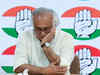
'Income inequalities increasing under Modi Govt,' alleges Jairam Ramesh
Congress MP Jairam Ramesh has accused the Modi government of widening the income gap between the ultra-rich and the middle class in India. He claims that an analysis of income tax returns from 2013-14 to 2021-22 shows increasing income inequalities. The income growth of the ultra-rich has consistently outpaced that of the middle class.
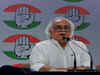
Congress attacks government on issue of income inequality
The Congress has accused the Modi government of widening the gap between the ultra-rich and the middle class in India. Congress general secretary Jairam Ramesh cited publicly available data on income tax returns from 2013-14 to 2021-22 to support his claim. According to Ramesh, the top 1% of income tax payers made 17% of all income in 2013-14, which increased to 23% in 2021-22.

View: India's elite are quite influential but what the country needs from them is empathy
India is increasingly becoming home to the oligarchs. In business, there is a reasonable dominance (sixth) of the biggest industries and well-controlled trusts. India’s industries have strong threeyear listed firms’ turnover (sixth) and developed venture capitalism (eighth), with the minority’s interests in the shareholding of firms well protected (sixth).

View: It's time to scrutinise the link between poverty and income inequality
Why does the rise of crorepatis cause poverty to increase? Much of their wealth gains are due to property and stock market booms, which do not translate into greater employment opportunities. Worse, these gains accrue at the expense of those at the bottom of the wealth ladder. The distributions of wealth and power also affect the allocation of investment opportunities.

Jamie Dimon laments income inequality, won’t assail CEO pay
“I think the wealthy have been getting wealthier too much, in many ways,” Dimon said.
Income inequality to rise further, jobs remain a chimera: Study
The study added that even though per capita income stands at $1,850, it is "shockingly" low at $400 for the bottom 660 million or 50% of the total population.

Slashing CEO pay won't eliminate income inequality: JP Morgan chief Jamie Dimon
JP Morgan CEO Jamie Dimon says cutting down on executive compensation wouldn't help eliminate income inequality.

Income inequality in India lowest among emerging nations: OECD
India had the lowest income gap, of the nine emerging economies studied by OECD, followed by Russia, Indonesia, Columbia and South Africa.

Checking income inequality key to fighting poverty in India: Report
According to the report, India could end extreme poverty for 90 million people by 2019 if income inequality was reduced.

Generational justice: Target poverty reduction than income inequality
The developed country angst about inequality stirred by Thomas Piketty’s book Capital in the Twenty-First Century is irrelevant for India.
Obama vows to strengthen middle class, fight income inequality
Obama also said the widening income inequality and the lingering effects of the financial crisis have frayed America's social fabric and undermined Americans' belief in opportunity.
India's income inequality has doubled in 20 years
Inequality in earnings has doubled in India over the last two decades, making it the worst performer on this count of all emerging economies.

We must learn to live with growing income inequality
We should be clearer and less sanctimonious about inequality. Poverty is an absolute concept. Inequality is relative.
Gap between high and low wage earners widened since 1990: study
The gap in income inequality has considerably widened around the world since the early 1990s despite strong economic growth that created millions of new jobs, a new UN report says.
Load More

