
HUMAN MACHINE COLLABORATION

His grandfather died of pancreatic cancer: This Hyderabad startup founder is using AI to develop a personalised cancer vaccines
Hyderabad-based biotech startup PopVax, founded by Soham Sankaran, is developing AI-powered personalised cancer vaccines using mRNA technology. Inspired partly by his family's experience with pancreatic cancer, he aims to help the immune system identify and attack cancer cells using treatments designed around individual patients' tumour genetics.

Redefining corporate leadership and enterprise growth with CFOs and CHROs
The role of CFOs and CHROs is shifting from basic management to high-level strategy. Today’s business leaders need to stay flexible and bridge the gap between their workforce’s potential and smart financial decision-making to drive real, lasting growth.

Who sent $2 bn military equipment to Iran past US blockade? More than 5,000 agencies
Iran has developed a clandestine network involving over 5,000 agencies to import military equipment and evade sanctions. This network functions despite ongoing US naval blockades and sanctions since the war began. Extensive investigations reveal significant transactions and military logistics supporting their activities. The secretive agencies have been linked to the Islamic Revolutionary Guard Corps and elite controlled businesses.
India is addressing Wall Street’s favourite ‘elephant’ in the room to its own advantage
The Indian government has identified 762 potential applications of artificial intelligence across 62 ministries and departments, spanning farming, railway safety, tax compliance, public grievances, customs and healthcare. While some tools are already in use, others remain in pilot or development stages.

Physical AI needs strict safety boundaries and interpretability: TorqueAGI founder Ashutosh Saxena
The Palo Alto based physical AI startup counts Rackhouse Venture Capital and Trucks Venture Capital as early backers and has active collaborations with firms like Nvidia. According to Saxena, the challenge is to make robots reason through their decisions while ensuring that mistakes do not cause physical harm.

Is AI really stealing from artists? The uncomfortable truth about originality in art
Contemporary art is at the forefront of navigating the intricate relationship between authorship and AI technology in visual culture. Artists like Pushpamala N and Raqs Media Collective delve into themes of collective memory and fractured identities. The rise of AI-generated art brings forth significant ethical challenges regarding copyright and cultural appropriation.
- Go To Page 1

Arise, awake, let the caffinati into office
In a bid to boost productivity, companies are on the lookout for workers who thrive without the aid of coffee. Dubbed as caffinati, these individuals promise to enhance efficiency in the workplace. By minimizing reliance on caffeine breaks, organizations aim to cut costs and reduce idle chatter. However, this shift may encounter pushback from management who appreciate the traditional coffee-fetchers as vital support.

AstraZeneca strikes $40 million AI drug discovery deal with insitro
AstraZeneca has entered a collaboration with insitro to explore new treatment options for challenging liver and heart diseases. The partnership involves a $40 million upfront payment and potential milestones totaling approximately $1.46 billion. Insitro will utilize its AI platform to identify biological drivers for metabolic dysfunction-associated steatohepatitis and cardiomyopathies. Following this, AstraZeneca will manage clinical trials and further development. This collaboration signifies insitro's growing presence in the pharmaceutical industry.

AstraZeneca strikes $40 million AI drug discovery deal with insitro
AstraZeneca has entered into a partnership with insitro to identify treatments for challenging liver and heart diseases. This collaboration, which involves a $40 million upfront payment, could reach $1.46 billion in total milestones. The companies aim to tackle metabolic dysfunction-associated steatohepatitis and cardiomyopathies through insitro's AI platform.

As technology and AI reshape the workplace, which skills will define future leaders?
In today's evolving job landscape, the importance of interpersonal skills and leadership has surged. Research indicates that qualities like self-awareness and the ability to learn quickly are crucial for effective leadership. As artificial intelligence advances, the emphasis is shifting from technical know-how to essential human capabilities. Educational frameworks are transforming to prioritize hands-on experiences and guidance, fostering leaders who can inspire and connect with diverse teams in the future.

Be mindful, listen, empathise: Is modern life killing our mental health? New findings reveal alarming truths about social isolation
World Mental Health Day highlights the significance of listening to people with lived experiences of mental health conditions. These experiences can help shape mental health services and combat stigma. A focus on social connections is vital for improving overall mental wellness in society. While mental illness requires specialized care, many can benefit from increased social bonds. Emphasizing compassion and cooperation may strengthen community resilience against modern challenges.

US state Montana governor pitches India partnerships in quantum, aerospace, biosciences & critical minerals
Montana has a cluster of around 80 quantum and photonics companies, and is keen to work with Indian institutions and firms on research, technology sourcing and supply chain development, Gianforte told ET during a visit to Karnataka.

Proofpoint doubles down on India amid rising cybercrimes, calls AI agents the new insider risk
Proofpoint is stepping up its India focus as AI adoption accelerates and cyber threats become more sophisticated. In an interview with ET, Bikramdeep Singh discusses the growing risks from autonomous AI agents, the shift towards intent-based threat detection, rising data security concerns and the need for greater enterprise controls. He also outlines Proofpoint’s India expansion, including plans to hire more than 200 engineers.
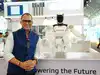
Addverb moves beyond warehouses, sees semiconductors as next big robotics opportunity
As semiconductor facilities become more sophisticated, Addverb sees demand for systems that can move, store and retrieve components with greater precision and traceability.

In 2014, volunteers began hunting for unusual features in particle-collision images; by 2026, over 42,000 had examined nearly 39,000 pictures
Higgs Hunters has rallied over 42,000 volunteers to sift through large volumes of images captured by the Large Hadron Collider. These participants seek to uncover distinctive patterns following the landmark Higgs boson discovery in 2012. The initiative not only fosters a deeper comprehension of particle physics but also motivates volunteers to pursue further studies, developing a unique lexicon that reflects their collective learning journey.

Anthropic's IPO pitch embraces AI's promise and peril
To pull off a successful offering that values it at $2 trillion, Anthropic, whose name means "human-centered," will need plenty of mortal investors to help build a world where mankind will soon take a back seat to far more capable artificial intelligence systems.

AI is making employees faster, but why isn't it making companies much more productive?
Artificial intelligence is helping employees improve their individual productivity, yet overall business performance remains stagnant. Many companies are unable to effectively measure the return on investment from AI adoption. Significant gaps exist between individual gains and organizational transformation, indicating potential bottlenecks. As employees increasingly adopt AI, collaboration will become more crucial for achieving better outcomes. Companies may need to focus on redesigning workflows rather than just implementing new tools.

AI and automation: Are humans making their own brains redundant?
As technology continues to advance, many people find themselves leaning heavily on gadgets to handle tasks that were once second nature, such as remembering phone numbers or addresses. This dependence raises alarms about potential declines in cognitive abilities and interpersonal communication. If these trends persist, the risk of losing critical and creative thinking skills looms large, emphasizing the need for balance in our technological engagement.
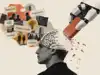
Don’t Let AI Destroy the Skills That Make Your Company Competitive
Artificial intelligence is often promoted as a force multiplier for organizations, but used carelessly it can erode the very capabilities that make firms competitive. As AI tools become embedded in everyday workflows, employees may rely on them instead of developing judgment, organizations may bury important decisions inside opaque systems, and social interactions that build trust and shared understanding may weaken. This article describes these three risks and shows how companies can respond by protecting critical human skills, preserving decision-making structures, and deliberately rebuilding collaborative spaces. AI should augment organizational intelligence—not replace the human capabilities on which long-term performance depends.
What makes us human
Artificial intelligence increasingly performs human tasks with remarkable speed and efficiency. However, human worth extends beyond mere performance and efficiency metrics. Machines can replicate actions but not the profound human connection and compassion. AI can advise humanity, but it should not replace human conscience or moral choices. A future partnership is envisioned where machines perform, and humans preserve their unique qualities.

This wind-turbine nacelle once sat atop a giant machine in the Dutch city of Eindhoven; designers turned the 10-metre-long retired shell into a tiny house
Nestle's most memorable achievement may therefore be its ability to change the way people see an object that would normally disappear at the end of a machine's life. A nacelle that once stood around 100 metres above the Austrian landscape has been brought down to earth and transformed into a compact living space.
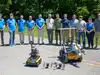
Three robots worked together like an independent science team in NASA’s latest test — it could change space exploration forever by making decisions without waiting for Earth
NASA tested three robots capable of independent scientific decision-making. These autonomous systems can assess risks and adjust plans without human input. The ASTRA project aims to enhance robotic missions in challenging environments. This technology could support future explorations on the Moon and Mars. Robots will handle exploration tasks while humans focus on broader mission objectives.
K-nest Construction Tech enters the DeepTech space with indigenous automation solutions
Company brings robotics, 3D construction printing, human augmentation, precision sensing and automated high-rise construction systems into its technology portfolio
Mathematicians vs AI war erupts: Why top maths medal winners are revolting against OpenAI and other AI companies
Twenty-five Fields Medal winners, including Terence Tao, have warned that the AI industry's race to solve major mathematical problems could harm the field by prioritising speed and headline-making breakthroughs over human understanding, collaboration and rigorous verification.

TCS launches fully automated facility in Pune to advance AI-led manufacturing
Tata Consultancy Services launched a new lab in Pune. This facility is India's first lights-out factory lab for AI. It will help manufacturers prototype and validate AI-first production systems. The lab demonstrates how self-optimising factories automate workflows.

GFF 2026: RBI flags speed, concentration, opacity as key risks as AI use grows in finance
Reserve Bank of India Deputy Governor Rohit Jain addressed emerging technology risks. He noted speed, concentration, and opacity as key concerns for financial systems. Automated systems can amplify errors, and dependence on few providers creates vulnerabilities. Advanced models require clear accountability, and technology alters traditional financial risks.

India set to pitch tech synergy for cementing BRICS
India is keen to complete three major multilateral projects under its chairmanship of the 11-country bloc. The global research advanced infrastructure network (GRAIN) initiative will offer researchers from member states federated, or shared, access to high-performance computing systems and supercomputers, an official said.

Can dogs sniff cancer? AI joins the hunt in India
When rescue dog Chloe is not tumbling across the grass on a farm outside India's tech capital Bengaluru, she is learning to sniff human breath for cancer with a little help from AI. Fitted with a 3D-printed helmet and harness packed with sensors, Chloe is part of experimental efforts to use dogs' extraordinary sense of smell to develop a non-invasive test for the disease. - Dog 'work-life balance' - India has described cancer as a major public health concern, saying one in nine of its 1.4 billion people are likely to develop the disease.

Global Chess League Season 4 kicks off in Bengaluru with Carlsen’s return
The fourth Tech Mahindra Global Chess League season commenced in Bengaluru this Saturday. Six teams are competing in a nine-day franchise tournament featuring top chess players. World number one Magnus Carlsen returns to the league after a one-season absence. The league aims to highlight the human element of chess despite technological advancements. New features enhance spectator engagement and digital audience accessibility throughout the event.
Load More

