
HUMAN LIFE ON MARS
Help NASA build a home on the Moon and get $1 million prize: Check competition rules, key dates, how and where to apply
NASA has announced a $1 million Moon Base Student Challenge, inviting eligible high school and college students in the US to develop innovative solutions for building a permanent human settlement near the Moon's South Pole. The competition will focus on six areas, including power generation, construction, life-support systems and astronaut safety.
Crew from NASA's simulated Mars mission emerges after 378 days in isolation
Four crew members completed a 378-day isolation mission to simulate conditions for a future Mars expedition. They grew crops and engaged in tasks while experiencing simulated communications delays. This experience is aimed at preparing astronauts for long-duration missions beyond Earth. NASA will analyze the insights gained from this mission for upcoming lunar and Mars missions. The mission was conducted at the Johnson Space Center in Houston.

Did comets help start life on Earth? A new study questions the idea and scientists are baffled
Scientists have been researching for a long time whether comets brought important chemicals to early Earth. A new study has examined whether those chemicals could survive the journey. However, the results have raised questions about a familiar idea, but the mystery remains open.
Four crew members spent 365 days in a 1,700 sq ft, 3D-printed Mars habitat in isolation. How could it help NASA prepare for living on the Moon?
NASA's CHAPEA mission, which simulates living on Mars, involves four crew members in a controlled environment. The study focuses on how humans manage isolation and limited resources during long-duration missions. Insights gained could inform the design and functionality of future lunar habitats. Participants will undergo evaluations after their mission to assess their health and performance. Findings will help NASA prepare for sustained human activity on the Moon.
Japan to launch world-first mission to moon of Mars
Japanese scientists will launch the Martian Moons eXploration probe from Tanegashima Space Center, targeting Mars's moon Phobos. The spacecraft aims to collect samples that could reveal the origins of the Solar System and life on Earth. This mission is set for a three-year duration in the Martian region, involving collaboration with US and European space agencies. Mars's other moon, Deimos, will be observed but not landed on during this mission.
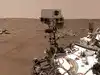
NASA's Perseverance becomes longest-travelling rover beyond Earth after 45.2 km on Mars
NASA's Perseverance rover has covered 28.1 miles on Mars, breaking the previous driving record. For over 5-1/2 years, it has actively investigated Jezero Crater, showcasing its autonomous navigation for optimal exploration efficiency. The mission's extension until approximately the end of 2028 aims to deepen our understanding of the planet's geology and its potential for ancient microbial life, making it a crucial part of Mars exploration.
- Go To Page 1
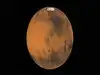
Genetically modified microbe could help make Mars habitable, researchers say
At Pioneer Labs, a biotech startup based in Emeryville, Calif., researchers have engineered a bacterial strain that can grow under simulated Martian conditions. The microorganism, dubbed sPL.001, can degrade toxic compounds in Martian soil analogs and produce bioplastics that could be used in future space settlements.

World Space Week 2026: India’s moon shot was built one rocket at a time, from PSLV to LVM3
India's space journey illustrates a significant evolution in rocket technology from Polar Satellite Launch Vehicle to Launch Vehicle Mark-3. PSLV played a crucial role in launching various satellites and missions including Chandrayaan-1. LVM3 facilitated the launch of Chandrayaan-2 and the successful soft-landing of Chandrayaan-3 near the Moon’s south pole. This progression demonstrates India's growing capabilities in launching heavier payloads and future missions.
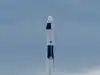
SpaceX launches Crew-13 to ISS in record US transit, with first Black woman to lead orbital crew
On Thursday, four astronauts launched by SpaceX successfully reached the International Space Station after an eight-hour journey. The mission marked the fastest transit to the station by a US operator, including NASA. Commander Jessica Watkins made history as the first Black woman to lead an orbital crew. Other crew members include NASA's Luke Delaney, Canada's Joshua Kutryk, and Russia's Sergey Teteryatnikov.

In 2026, Australian researchers combined satellite images and desktop mapping to uncover more than 1,000 previously uncharted coral reefs
In a groundbreaking study, researchers have unveiled over 1,000 previously hidden coral reefs off the northern coast of Australia, utilizing innovative satellite imaging techniques. This extensive mapping has exposed underwater ecosystems that were once shrouded in sediment. Importantly, these reefs, similar in significance to the Great Barrier Reef, highlight their critical role in marine biodiversity and coastal defense.

Horoscope Today, September 22, 2026: Parsva Ekadashi Brings a Day of Discipline as Money, Career and Long-Term Security Take Focus
According to the traditional Vedic astrological interpretation for Tuesday, September 22, 2026, the day carries a meaningful progression from commitment, integrity, responsibility, perseverance, and long-term achievement toward listening, learning, observation, communication, and the ability to make wiser decisions through greater understanding. The Moon begins the day under Uttara Ashadha Nakshatra before moving into Shravana Nakshatra, while continuing its journey through Capricorn (Makar Rashi). Nearby Delhi-region Panchang calculations place Uttara Ashadha's conclusion shortly after sunrise, making Shravana the dominant Nakshatra for most of the day. Astrologer Sandeep Agarwal, Founder & CEO of Meditate Wisdom, explains how today's horoscope can help every zodiac sign make confident choices in career, love, money, health, and personal growth.

In 2021, NASA sent 11 types of crop seeds outside the space station for 8 months; after their return, scientists tested whether they could still grow
The 2021 NASA seed experiment ultimately demonstrates why some of the most important space discoveries can begin with objects that appear remarkably simple. A tiny seed contains the potential for an entire crop, yet its ability to remain viable after prolonged exposure to the space environment could become increasingly important as human exploration moves farther from Earth.
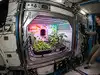
In 2017, a fully automated facility for plant bioscience research was launched to the International Space Station: What NASA studied in space?
In 2017, a fully automated facility for plant bioscience research was launched to the International Space Station. The Advanced Plant Habitat studied plant growth in microgravity and supported experiments lasting up to 135 days. It used more than 180 sensors and systems controlled from Earth. After years of plant research involving radishes, peppers, tomatoes and other studies, the facility is now returning to Earth for museum display.
In 1997, Japanese researchers flew silkworm eggs on STS-84 to study spaceflight effects; developmental abnormalities were more frequent in the flight samples
Silkworm eggs revealed developmental abnormalities in early space experiments. Later, the Rad Silk investigation examined cosmic radiation's long-term effects on the ISS. Ground-based trials showed that radiation during early embryonic development caused higher mutation rates. Visible white spots on larvae indicated radiation exposure levels inside spacecraft. These findings offer insights into radiation's impact on developing organisms beyond Earth.
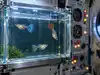
In 1983, three pregnant guppies flew on Cosmos 1514 for five days; one later gave birth to 25 healthy fry and produced six more healthy broods after returning to Earth
In 1983, three expectant guppies journeyed aboard the Cosmos 1514 biosatellite as part of a Soviet experiment exploring the effects of microgravity on reproduction. Remarkably, one guppy gave birth to 25 healthy fry following the mission, demonstrating that later generations also thrived without any developmental issues. This groundbreaking research offered vital insights into the possibilities of reproduction in extraterrestrial environments.
Strange 8.5-inch object found in California creek turns out to be 10,000-year-old mastodon tooth; scientist says, “I had chills and shivers up and down my spine”
A researcher surveying a San Mateo County creek for a frog habitat stumbled upon a remarkably preserved Pacific mastodon molar, a rare Ice Age relic estimated to be at least 10,000 years old. Paleontologists confirmed it was an intact molar from an adult Pacific mastodon. The tooth is about 8.5 inches long, 7 inches deep and 3 inches wide.

In 2025, scientists found 'strongest hints yet' of life on Mars and K2-18b—but, a survey of hundreds of astrobiologists say we still haven’t found aliens
Recent scientific findings on K2-18b and Mars sparked alien life speculation. A survey revealed few astrobiologists believed these discoveries confirmed extraterrestrial life. Researchers found the K2-18b exoplanet evidence less convincing than Martian rock features. Many scientists remained neutral, awaiting further analysis and ruling out non-biological explanations. These intriguing clues offer questions for further scientific investigation and testing.

Quote of the day by Carl Rogers: 'I accept uncertainty, fear, and emotional ups and downs. That is the price I am willing to pay..' ; life lessons on how uncertainties help us grow from powerful quote by American psychologist
Whether we like it or not, life is marred by uncertainties. Our cherished, best-laid plans can backfire or result in failure. We may be overlooked for promotion or even lose our job. Setbacks lurk in every corner. However, we need not be bitter about them. In his book, psychologist Carl Rogers explained how it’s these uncertainties that make life so exciting.
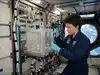
In 2015, fruit flies were sent to International Space Station to study how microgravity and the space environment affect the innate immune system
In 2015, fruit flies were sent to International Space Station to study how microgravity and the space environment affect the innate immune system. NASA’s Fruit Fly Lab-01 tested how weightlessness affects immunity and also tested a new research platform. The mission used fruit flies because of their genetic links to humans and their short life cycle.
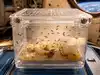
In 1994, 300 young male fruit flies flew for 14.5 days on IML-2; repeated video showed their locomotor activity rose sharply while they were in microgravity
In 1994, fruit flies were launched into space, revealing significantly heightened activity levels in microgravity. These flies aged more rapidly than their Earth-dwelling counterparts. Researchers noted a decrease in mitochondrial RNA, hinting at a connection to energy production at the cellular level. Simulated weightlessness experiments confirmed the increased activity observed in space. This foundational research is vital for understanding the implications of prolonged weightlessness on future space missions.
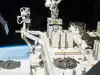
In 2015, Japan exposed bacteria outside the ISS for 3 years; some clumps survived, while thicker ones were estimated to last longer
Japanese researchers launched the resilient bacteria Deinococcus into orbit aboard the International Space Station. Remarkably, these microbes thrived for three years amid extreme environmental challenges. They formed protective clusters that safeguarded their inner cells against harmful radiation. This finding bolsters the hypothesis that life can migrate between planets, impacting future space exploration endeavors and the ongoing quest for extraterrestrial beings.
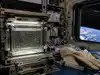
In 1992, NASA studied C. elegans worms exposed to space radiation on IML-1; the experiment reported higher mutation rates than in ground controls
In 1992, micro worms unveiled the troubling effects of space radiation on DNA, showcasing considerable genetic harm to these minuscule creatures. This finding raises alarm for astronauts who lack Earth's magnetic shield, exposing them to similar hazards. As NASA continues to grapple with radiation exposure limits for upcoming lunar and Martian expeditions, ensuring the genetic safety of astronauts on prolonged journeys remains a critical and unresolved challenge.
In 1962, NASA packed 22,900 gallons of water into a Saturn I rocket and deliberately released it 65 miles above Earth to see how water behaved in the upper atmosphere
NASA scientists have long explored recycling resources for extended space travel. Plants and microorganisms could help regenerate vital supplies for astronauts. Reliable mechanical and biological systems are crucial for mission success. Recycling reduces the immense cost of launching supplies from Earth. This technology is fundamental for future lunar and Martian exploration.

NASA sent Pseudomonas aeruginosa on shuttle Atlantis to space, where it formed denser biofilms with an unusual “column-and-canopy” structure
In groundbreaking space experiments, bacteria grown in synthetic urine were sent aboard the Atlantis space shuttle on two occasions. These microbes exhibited enhanced colony density and distinctive formations not observed on Earth. Spaceflight significantly amplified biofilm development in Pseudomonas aeruginosa, presenting major challenges for prolonged space missions and life support systems. Studying these bacterial modifications is crucial for future human exploration beyond Earth.
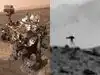
NASA's Curiosity Rover on Mars captured a mysterious ‘jellyfish’ with two small legs and a body sparking theories of alien life on the Red planet
A NASA Curiosity rover image of Mars shows a mysterious jellyfish-like figure with a body and two legs in Gale Crater, absent from photos taken moments earlier, sparking theories ranging from alien life to a camera glitch, even as NASA reports genuine signs of ancient microbial life on the planet.

Elon Musk's big warning: 'All life on Earth will be destroyed eventually...'
Elon Musk, head of DOGE, has warned of Earth's eventual destruction in a new interview, advocating for Mars colonization as humanity's long-term survival strategy. He emphasized the need for a self-sustaining Martian civilization, viewing it as 'life insurance' against existential threats like war and solar apocalypse. Musk will step down from DOGE, an advisory body formed to slash federal government costs.
NASA's mission to Mars: When can humans reach the red planet?
NASA plans to send humans to Mars by 2035 to explore potential life; the 500-day mission follows a six to seven-month journey. After the Artemis I mission in 2022, Artemis III in 2026 will serve as a precursor, allowing astronauts to gain crucial experience on the Moon's south pole for the extended Mars mission.
 Load More

