
HUMAN GENOMICS
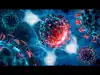
Why scientists call PJ.2.1 a ‘jump’ variant: The COVID strain that arrived with dozens of mutations at once and spreads by gripping your cells more tightly
A new variant of SARS-CoV-2, named PJ.2.1, was detected in Canada and has spread globally. It has over 25 mutations in its spike protein, which enhance its binding to human cells. Researchers are observing its spread in countries like the US, Spain, and Australia among others. Currently, there is no evidence linking PJ.2.1 to increased severity of illness or hospitalization.
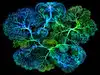
MIT researchers traced the family history of over 1 million cells in developing mouse embryos; the map revealed when cells began becoming different organs
A research team from MIT has mapped the lineage of over a million cells in mouse embryos. This extensive study reveals how cells decide to form specific tissues during development. The new technique allows scientists to identify where developmental errors occur, which may lead to birth defects. It also provides insights for cancer research by highlighting early changes in healthy cells.
AI is no longer just coding or generating images. It has now designed a virus that was used on a human being. Did the patient survive?
A California startup has used artificial intelligence to design a virus that was administered to a human patient for the first time. The experimental treatment uses bacteriophages to target antibiotic-resistant bacteria, potentially opening a new way to fight infections that conventional medicines cannot control. However, the patient's recovery has not been disclosed.

Penn scientists tracked fruit flies in outdoor cages for four months; seasonal shifts were linked to genetic changes across more than 60% of the genome
In an intriguing four-month investigation conducted in Philadelphia’s experimental orchard, researchers studied Drosophila melanogaster fruit flies and discovered that over 60% of their genome underwent transformations driven by environmental pressures. The study highlighted that different traits can evolve at variable rates, suggesting a complex nature of adaptation. These findings enhance existing knowledge regarding evolutionary changes, which may also be relevant to longer-lived species like humans as they confront climate challenges.

Shridevi Institute, US-based Vaxonyx sign MoU for AI-driven cancer and genomic research
Shridevi Institute of Medical Sciences in Tumakuru has signed an MoU with Vaxonyx LLC for collaboration. This partnership aims to focus on AI-enabled bioinformatics and genomic research tailored for Indian populations. They will develop personalized cancer therapies by analyzing individual tumor profiles. The collaboration will also explore the creation of genomic datasets to improve genetic models. Moreover, they intend to develop DNA-based vaccine candidates for relevant public health issues.
China confirms nomination of senior health official for WHO chief's post amid COVID scrutiny
China has officially nominated Dr. Song Li, a senior health official, for the WHO Director-General position. This nomination could draw international attention to China's response to the COVID-19 pandemic. Dr. Song has extensive experience in public health, including maternal and child health coordination during health emergencies. The election results will be revealed after the current Director-General’s term concludes in August 2027.

China confirms nomination of senior health official for WHO chief's post amid COVID scrutiny
China has put forward the nomination of Dr. Song Li for Director-General of the World Health Organization. Her background includes significant experience in public health, especially during health emergencies. This nomination could attract renewed scrutiny on China's COVID-19 pandemic response and the origins of the virus. If elected, she would be the second Chinese official to lead the WHO.

This brain gene can move through human DNA — and scientists found it inside a virus
Researchers at Cornell University identified the BC200 gene, which originated from a transposon in human DNA. This gene displays unusual mobility, retaining its ability to move within the genome while functioning in brain cells. The presence of BC200 in molluscum contagiosum virus raises questions about its evolutionary history and potential roles in human health.
COVID-19 had a scientific head start; the next pandemic virus may be a stranger. NVIDIA and Google DeepMind are using AI to map 2,800 viruses before the next outbreak
An international collaboration has developed a dataset of predicted protein structures from more than 2,800 viruses. This data is accessible through the AlphaFold Database, aiding in pandemic preparedness. Researchers can accelerate their investigations of new viruses using this information for potential treatments. The dataset provides insights into protein interactions, making it a valuable resource for global scientists.
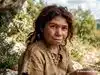
Scientists found an 8-year-old Neanderthal child in a Belgian cave, and DNA from her molar is helping reveal a hidden chapter of our ancient past
The Scladina child was an approximately eight-year-old Neanderthal who lived more than 120,000 years ago in what is now Belgium. Her remains from Grotte Scladina have provided researchers with evidence about Neanderthal childhood development and ancient population history. Genetic studies of the remains have also helped scientists understand relationships between early European Neanderthals and populations that lived later.

Scientists find DNA in human blood can fold into strange four-stranded shapes — a hidden layer of genetic information that ordinary sequencing may miss
Scientists have found unusual four-stranded DNA shapes in human blood plasma. These G-quadruplex structures suggest hidden genetic information may exist. Ordinary sequencing methods might miss this folded genetic material. This discovery could potentially offer new health clues in future research. Further studies will explore their exact role and origin within the body.

Google CEO Sundar Pichai outlines tech giant's AI efforts across health, weather and learning
Amid the ongoing debate over slowing the pace of artificial intelligence development, Google CEO Sundar Pichai has highlighted the tech giant's AI efforts across health, wealth and education, arguing that advances in the technology can accelerate scientific research and deliver tangible benefits for people.
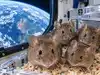
In 2025, China sent four mice to Tiangong for about two weeks; one female later produced three litters of 9, 10, and 9 pups after returning to Earth
In a groundbreaking Chinese space experiment, four mice were sent into orbit for two weeks. Remarkably, one female mouse returned and gave birth to three litters with pups larger than average. These mice's genetic similarities to humans make them invaluable for scientific studies. Prior research has also confirmed that male mice can reproduce post-space travel, paving the way for deeper insights into mammalian reproduction in space environments.

Indus Valley, Mesopotamia shared genetic link beyond trade: BHU geneticist
Ancient DNA analysis confirms a genetic link between Indus Valley and Mesopotamian peoples. This research indicates human lineage traveled along ancient trade routes. Mitochondrial haplogroups found in Syria connect to South Asian populations. These findings authenticate earlier archaeological evidence of contact. Geneticists presented this groundbreaking research at NFSU Varanasi campus.
Scientists found hidden gut bacterial populations linked to ageing, colorectal cancer and type 2 diabetes, and they can spread across continents within decades
Recent studies have uncovered unique genetic variations among common gut bacteria, revealing distinct populations that associate with aging and numerous health conditions. This evidence points to the international spread of these bacteria among individuals, challenging previous beliefs that rapid microbial transmission mainly involved harmful pathogens. This understanding enhances our perspective on gut health and its intricate dynamics.
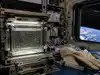
In 1992, NASA studied C. elegans worms exposed to space radiation on IML-1; the experiment reported higher mutation rates than in ground controls
In 1992, micro worms unveiled the troubling effects of space radiation on DNA, showcasing considerable genetic harm to these minuscule creatures. This finding raises alarm for astronauts who lack Earth's magnetic shield, exposing them to similar hazards. As NASA continues to grapple with radiation exposure limits for upcoming lunar and Martian expeditions, ensuring the genetic safety of astronauts on prolonged journeys remains a critical and unresolved challenge.

Not an animal, but one popular fruit shares 60% of human genes. Genetic expert says it’s not shocking: ‘There’s a lot of things we do the same way…'
Who doesn’t like to munch on a banana or two during the summer? Although a guilty pleasure for those with high blood sugar levels, it remains a favourite snacking item. However, apart from being our comfort food, bananas and us are also genetically related. According to a genome study that came out in 2013, we share 60% of our DNA with this yellow fruit!

Could Genome Research Council under public-private partnership be a way forward for India’s human genome program?
In the last 25 years genomic technologies have evolved faster than the computing technologies, and the forecast of genomic market of $140 billion by 2026 is indeed an underestimate. However, in terms of market size it is bigger than the pharma market even today.

India to launch its 1st human genome cataloguing project
Department of Biotechnology to rope in 22 partners for project that will help develop better therapies.
Load More


