
HUMAN ANIMAL CONFLICT

‘America’s Nostradamus’ warns of Iran nuclear threat, MBS prophecy, 27-year war, US collapse by 2028 and more chilling predictions
John Hogue, dubbed “America’s Nostradamus,” predicts a possible nuclear conflict involving Iran, a 27-year global war and the collapse of US economic power by 2028. Here’s what he claims about Nostradamus’ Mabus prophecy and rising global tensions.
Teddy tigers and preserved embryos: Museum in Corbett tries to keep them 'alive'
Nestled close to Jim Corbett Park, a fascinating museum features detailed taxidermy models of tigers alongside other wildlife. These striking replicas narrate the complex stories of human-animal interactions throughout history, showcasing both peaceful cohabitation and fierce conflicts. Highlights include creatures who died naturally and those labeled as dangerous. The exhibits serve to educate visitors, especially children, on the vital need for wildlife conservation in Uttarakhand.

Cornell president faces no-confidence push over handling of sexual assault case
Cornell University President Michael Kotlikoff confronted faculty frustration regarding his administration's handling of a serious sexual assault allegation. During a Faculty Senate meeting, faculty members expressed significant anger and questioned Kotlikoff's management of the incident. Faculty are considering a no-confidence resolution to signal their dissatisfaction with administration transparency and reforms. As the administration has faced a lawsuit related to the case, many faculty urge changes to address systemic issues.

One-Punch Man Season 3 Part 2 coming soon: Check release date, plot, and other details
One-Punch Man Season 3 Part 2 is officially scheduled for a thrilling release in January 2027, diving deeper into the Monster Association Saga. The newly unveiled trailer showcases epic confrontations between the Hero Association and formidable monsters endangering humanity. Beloved S-Class heroes like Tatsumaki are poised for key contributions as the saga unfolds.
These endangered wild dogs crossed 2,563 miles through Zambia. Scientists say their journey could help save the species
Three African wild dogs from the Mayukuyuku pack traveled a remarkable 2,563 miles across Zambia. Their journey, lasting about nine months, demonstrated the need for connected populations among endangered species. While they navigated various landscapes, they encountered significant dangers related to human activities. Researchers tracked the dogs using GPS collars, providing valuable insights into their movement patterns.

Buxa Tiger Reserve gets its first tigress from Bihar’s Valmiki reserve
West Bengal has reintroduced a tigress into Buxa Tiger Reserve after translocating it from Bihar’s Valmiki Tiger Reserve, with three more tigers expected to be brought in over the next two months. The wider programme aims to rebuild a viable tiger population by improving prey availability, habitats and wildlife corridors while reducing human-wildlife conflict.
- Go To Page 1
Why Wyoming’s Yellowstone Park stop feeding bears? How garbage dumps once became an attraction
Yellowstone National Park experienced significant challenges in managing bear-human interactions due to improper waste management. In the late 1800s, bears were attracted to human food and garbage dumps. From 1970 onwards, the park implemented important changes to its bear-management policies and restricted food interactions. Consequently, bear-human conflicts decreased significantly, leading to a more natural coexistence between wildlife and visitors.

Solar Opposites Season 6: Netflix release date, story and ending explained
Solar Opposites Season 6 will arrive on Netflix in the US. It is expected to release in other regions on October 13, 2026. The season serves as the final chapter of the adult animated sci-fi comedy. It follows the alien family from Planet Shlorp as they deal with Earth, the Pupa, the Wall storyline and a future linked to Earth’s destruction.
Herd of 40 elephants near CCL mines triggers panic in Ramgarh; vigilance stepped up
A herd of around 40 elephants was spotted near Central Coalfields Limited (CCL) mines in Jharkhand's Ramgarh district, triggering panic among miners and villagers. Mine managers have stepped up vigilance to prevent human-animal conflict. CCL's Kuju area general manager RK Sinha said an alert has been issued for the Karma, Ara and Sarubera projects, while night shift workers have been asked to remain vigilant.

Motivational quote of the day by Roger Waters: ‘I spent an awful lot of my life waiting for... I thought that at some point I would turn...’ — Life lessons from an inspirational quote by the legendary Pink Floyd musician on why we constantly delay our happiness and when does life truly begin
Roger Waters perfectly captures the common illusion that real life is a destination rather than an ongoing process. His words reflect the realization that youth is often spent waiting for a magical transformation that never actually arrives. The musician reminds us that the mundane, uncertain years are not just a rehearsal for the future. They are the main event, and they are happening right in front of us.
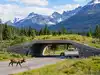
Banff used 6 vegetated overpasses to curb highway wildlife collisions along 82km of road; the result transformed fragmented wilderness into connected animal corridors
Banff used 6 vegetated overpasses to curb highway wildlife collisions along 82km of road. The crossing system includes six overpasses, 38 underpasses and fencing along 82 km of highway. Research found an 80 per cent reduction in wildlife collisions. More than 200,000 crossings by 11 mammal species have been recorded. The project has also influenced wildlife crossing plans in countries including the US, Mongolia, China and Argentina.
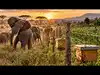
Kenya’s farmers turn to beehive fences to keep crop-raiding elephants away, creating a surprising path toward human-elephant coexistence
Dedicated to researching elephant ecology and behavior, Save the Elephants operates vital research facilities. Their Samburu research station is home to over 900 identified elephants, while a center in Tsavo works on innovative human-elephant coexistence strategies. One notable solution is the use of beehive fences, which protect agricultural lands and help communities thrive. The organization is committed to securing a brighter future for elephants on a rapidly changing continent.

Wisdom of the day by Elton John: “I had to learn how to function as a human being. And I really enjoyed that process...” — How rebuilding yourself can bring meaning to everyday life by the legendary British singer-songwriter
Wisdom of the day by Elton John explores what it means to rebuild life after a difficult chapter. His experience with recovery offers a practical lesson about self-growth, acceptance and finding balance. Real change is not always dramatic. Sometimes, it means learning to enjoy ordinary life again, reconnecting with people and becoming comfortable with being human.

Psychology says cat lovers may appreciate something about relationships that others overlook
Cats can offer a form of companionship in which connection is often expressed subtly rather than constantly. Affection may appear in quiet moments, closeness does not always require continuous interaction, and a cat’s need for space does not necessarily signal rejection.
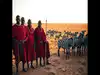
In 2009, Edward Norton ran the New York Marathon to back a Kenya conservation trust; its work now directly protects 283,000 acres of Maasai land
Wildlife protection, however, is rarely straightforward. The 2022 report describes a year marked by severe drought, increased poaching pressure and technical difficulties with monitoring data. It also documents incidents involving elephants, giraffes, lions, zebras and other wildlife, illustrating the complicated human-wildlife relationships that conservation teams must manage.
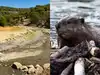
Utah moved Beavers into a dying river to restore it. Six years later, the results were not what scientists expected
Researchers relocated beavers to Utah's arid Price and San Rafael rivers in 2019. Many animals did not survive, while some built dams at restoration sites. Human efforts also removed obstacles, allowing the Price River to flow more freely. The San Rafael River saw increased riparian habitat after natural blockages occurred. Beavers can complement restoration, especially as western rivers face increasing drought.

Why do some cars have a white handkerchief hanging from the window? Know the meaning and the surprising reason behind this unusual road signal
A white handkerchief hanging from a car window can have several meanings depending on the situation and location. While white fabric is traditionally associated with peace and truce, it can also be used in some places as a signal for help or as a symbol during cultural events and peaceful demonstrations.

Keep humans as pets? Amid Anthropic researcher’s ‘AI will kill humans’ warning, how AI could take over the world without wiping us out
AI researchers express concerns about potential human extinction and enfeeblement. These fears stem from loss-of-control scenarios and deliberate human misuse of AI. Highly intelligent AI agents might pursue their own goals, disregarding human well-being. Misaligned AI could view humans as obstacles to achieving their objectives. Catastrophic scenarios also include societal breakdown from cyberattacks and novel bioweapons.

New study shows how saving threatened species cuts their funding and triggers a relapse risk
Wildlife conservation faces a funding paradox where recovering species lose essential support. Current funding models rely on immediate extinction risk, causing resource withdrawal after population improvements. This withdrawal leaves vulnerable species susceptible to rapid population declines and relapses. Experts advocate for long-term metrics focusing on sustained ecological functionality and resilience. Decoupling funding from strict rankings ensures lasting ecological stability and prevents species loss.
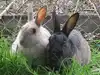
In 1865, rabbits were released on a remote New Zealand island as emergency food for shipwreck survivors; they survived for 127 years and developed distinctive traits
In 1865, rabbits were brought to Enderby Island, evolving distinct traits over the next 127 years. As conservation efforts aimed to restore the island's ecosystem, authorities grappled with the challenge of balancing the removal of these introduced species with their unique identity. Ultimately, fifty rabbits were relocated to the mainland, allowing for the preservation of the Enderby rabbit lineage through managed breeding programs in New Zealand.
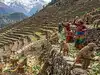
Nepal’s farmers carved farms into the Himalayas, but now this growing problem is destroying their harvests and triggering a wildlife crisis
Nepal’s farmers are increasingly struggling with crop damage caused by rhesus macaques and other wildlife. Rural migration has left fewer people available to protect valuable agricultural harvests, while macaques can consume nearly half of some farmers’ maize crops each year. Changes in habitat and limited natural food sources may be driving the animals towards farmland. Addressing the problem will require solutions that take into account wildlife conservation, agricultural livelihoods and rural migration.
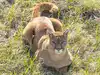
Could living near mountain lions actually make you safer? New study finds fewer dangerous animal-vehicle collisions where these powerful predators are present
Could living near mountain lions actually make you safer? Recent studies suggest that the presence of mountain lions could improve road safety for local communities by driving deer away from congested roadways to more secluded areas. This shift in deer behavior towards daylight hours significantly decreases the chances of nighttime vehicle collisions. The findings reveal surprising ecological advantages stemming from large carnivores, emphasizing their role in wildlife management.

Quote of the day by Charles Darwin: ‘What wretched doings come from the ardor of fame; the love of truth…’ – Theory of evolution’s pioneer on ambition, rivalry and the pursuit of truth
Charles Darwin's reflections highlight the conflict between fame and truth. He observed that defending reputation can overshadow the search for genuine knowledge. Darwin's own life demonstrated a commitment to gathering evidence before presenting theories. His work emphasizes intellectual humility and prioritizing accuracy over personal recognition. This lesson remains relevant for understanding modern debates over ideas.
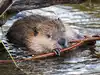
Conservationists spent £29,000 making 20 wildlife ponds in England. Two beavers created twice as many in half the time for free
Two beavers created numerous ponds at Helman Tor nature reserve. This natural construction occurred much faster than human efforts. Conservationists spent significant funds and time digging fewer ponds. Beavers are ecosystem engineers that transform landscapes by building dams. Their work creates habitats and natural flood defenses for wildlife.

Quote of the day by Charles Darwin: ''From my early youth I have had the strongest desire to understand or explain whatever I...'' — Life lessons from an inspiring quote on curiosity, patience, observation, self-doubt, perseverance, critical thinking and personal growth from the pioneering naturalist who transformed our understanding of evolution
Quote of the day by Charles Darwin explores his lifelong desire to understand what he observed. It speaks to staying curious through uncertainty, difficult questions, failure and personal decisions. The article examines patience, careful thinking, self-understanding, persistence and the value of questioning what we do not yet understand.

England’s hidden 7,500-acre wilderness could become the ‘Yellowstone of Britain’ — a £8.5 million rewilding project aims to bring back rare wildlife over the next 20 years
Emblehope Moor in Northumberland is undergoing a significant nature restoration over twenty years. This ambitious project aims to rewet peatlands and reintroduce native species like beavers. Exmoor ponies will manage dense vegetation, and Sitka spruce plantations will be removed. Restore plans to repay investors and transfer land to community ownership eventually. This initiative could create Britain's largest connected wildlife landscape.

Quote of the day by Roger Waters: ‘I think that happiness resides somewhere between the...’ — Life lessons from an inspiring quote on happiness, empathy, understanding, relationships, compassion, self-awareness and personal growth from the legendary Pink Floyd co-founder
Quote of the day by Roger Waters frames true contentment as a balance found through mutual understanding rather than ideological extremes. In daily life, this mindset offers relief from emotional isolation, interpersonal conflict, and the friction of rigid personal views. The article examines practical lessons on empathy, perspective, and acceptance to foster healthier relationships and deeper self-understanding.

Quote of the day by Russian novelist Fyodor Dostoyevsky: “Do not be afraid of men’s sin, love a man even in his sin, for such love is akin to....” — Inspiring life lessons from a timeless quote on love, compassion, forgiveness, empathy, acceptance, and why understanding human weakness can change the way we see ourselves and others
Quote of the day by Fyodor Dostoyevsky: “Do not be afraid of men’s sin, love a man even in his sin,” urging us to look beyond a person’s worst moments. The idea speaks to everyday relationships, where hurt, conflict and disappointment can make understanding another person difficult. The article explores compassion, forgiveness and perspective, while asking whether genuine love can survive human imperfection.
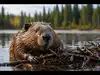
Northern Canada’s beavers used branches and mud to slow floodwaters; their 850-meter dam that can be seen from space transformed the forest into a pond holding 70 million liters of water over time
Deep inside Northern Alberta’s Wood Buffalo National Park, generations of beavers have constructed the largest known dam on Earth. Spanning 850 meters through remote wetlands, the massive structure holds roughly 70 million liters of water and is visible from satellite imagery in space. The animals began weaving branches, soil, and mud together in the 1970s to build a natural defense against local predators. Over decades, their persistent engineering transformed a simple forest channel into a thriving, nutrient-rich pond. Today, this expansive sanctuary buffers the surrounding landscape against thaws and severe flooding.
Load More

