HUAWEI AI CHIPS
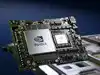
How China gets the Nvidia chips it needs to develop AI
Nvidia's dominance in the global AI chip market has come under scrutiny as US export restrictions fail to fully prevent China from accessing advanced processors. Chinese firms are reportedly obtaining Nvidia chips through smuggling and overseas data centres, while domestic players such as Huawei race to develop competitive alternatives.

Beyond Nvidia: Alice Huang’s reported ties to Gigabyte’s leaders and a data-centre business serving Alibaba
China's alleged spying operation targeting Nvidia CEO Jensen Huang goes beyond one executive. A New York Times investigation links Alice Huang, reportedly recruited by China's top intelligence agency, to Gigabyte's leadership and a Singapore-based data-centre company serving Alibaba. The operation allegedly aimed to gather information on Nvidia's advanced AI chips and influence their exports to China.
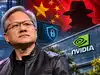
Alice in Nvidia CEO's secret world: Jensen Huang's personal affair matters far beyond than what meets the eye
Concerns about national security have emerged regarding Nvidia CEO Jensen Huang and a Chinese businesswoman, Alice Huang. US intelligence suggests Alice may have gathered information for Beijing after forming a close relationship with Jensen. Nvidia's advanced processors play a crucial role in AI and military applications, making them strategically significant in US-China relations. Congressional inquiries are seeking clarity on Nvidia's security protocols regarding foreign espionage risks.

China, Hong Kong stocks fall as US tech rout sparks AI bubble fears
Chinese and Hong Kong stocks took a hit as American tech shares slumped overnight, fueling worries about the durability of the artificial intelligence surge. This uncertainty cast a shadow over investor confidence across Asia. Nevertheless, the Chinese mainland market saw some recovery driven by bargain hunters supported by government measures, though analysts caution that tech stocks in China are still at risk from global market changes.

China's robot makers have mastered the moves. Now comes the race for brains
The shift is fuelling an investment boom in embodied AI, a field focused on software that allows robots to understand their surroundings, learn unfamiliar tasks and adapt without having to be programmed for every job.

China's CXMT to start advanced AI memory production despite poor yields
The decision highlights China's intense shortage of the AI memory chips, which are essential to a government-backed push to develop domestic alternatives to Nvidia's AI processors at scale amid US curbs on access to foreign-made technology.
- Go To Page 1

From Rome to Washington, why governments are pulling DeepSeek off official systems
At least eight governments, now including the US, have restricted the Chinese AI company's products. Most cite the same concern – user data stored in China, where the law gives the state wide powers to access it.
ByteDance, Alibaba, Tencent place over $35 billion worth of Nvidia chip orders
US-based chipmaker Nvidia has told customers and partners it cannot guarantee that it can fill the orders because demand from Chinese technology companies far exceeds planned production, the two sources and a third person familiar with the matter said. They requested anonymity because they are not authorised to speak to the media.
Semiconductor ecosystem: Made in India and designed for India
India’s competitive advantage will not come from manufacturing at China’s scale or cost. It lies in building customised devices for specific users and applications.
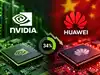
Nvidia’s share of China AI chip market falls to 34% as Huawei gains ground
Nvidia's share of China's AI chip market dropped to 34% in the first half of 2026 due to US export restrictions. Domestic competitors like Huawei increased their market presence significantly during this period. The total AI accelerator shipments in China reached over 2 million units, with non-GPU shipments surpassing GPU sales for the first time.
Nvidia's China AI-chip share falls as Huawei closes gap, report finds
Nvidia's share of China's market for data-centre AI chips fell to 34% in the first half of 2026, as US export controls restricted supplies of its products and domestic rivals led by Huawei gained ground, according to an IDC report seen by Reuters.

DeepSeek to raise at least $12 billion in Tencent-backed funding
Chinese AI startup DeepSeek is close to securing at least 80 billion yuan ($11.93 billion) in its latest round of funding, Bloomberg News reported on Tuesday, citing people familiar with the matter.
Huawei agrees to a multi-year patent licensing deal with Qualcomm
China's Huawei Technologies said on Monday it had agreed a broad multi-year patent licence deal with Qualcomm covering artificial intelligence, 5G, computing and networking technologies.
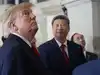
Trump has just fired the starting gun on a new Cold War with China
The US-China AI race is increasingly taking on the character of a Cold War-style strategic contest, with artificial intelligence becoming linked to economic power, military capability, national security and technological leadership.

Finland's Kone prepares sale of TK Elevator's European business to tackle antitrust concerns, sources say
Kone intends to initiate the sale of most of TK Elevator's European operations this fall. This decision is aimed at addressing regulatory concerns related to Kone's acquisition deal. The sales process is expected to commence in November, according to sources familiar with the situation. Kone previously indicated that divestments could be necessary for regulatory approval of the acquisition. Both Advent and Cinven have declined to comment on these developments.

Huawei unveils Mate 90 phones, leans on homegrown chip design to offset US curbs
Huawei has showcased its Mate 90 smartphone series, enhancing performance with new chip technology and HarmonyOS 7. The latest models feature Huawei's Kirin 9050 Pro chip, utilizing an innovative LogicFolding architecture. As smartphone prices rise in China, Huawei has adjusted its pricing strategy to stay competitive in the market. While Apple's new foldable phone enters the market, Huawei maintains a dominant share in foldable phones.

DeepSeek partners with Huawei to develop chip programming tools, reducing reliance on Nvidia
Chinese AI firm DeepSeek said on Wednesday it has partnered with Huawei Technologies to develop programming tools for Huawei's Ascend chips, the latest sign of Chinese tech firms deepening ties as they seek alternatives to the Nvidia ecosystem.

US-China AI talks: A two-power bargain that could leave the world with no say
Donald Trump has rejected international regulations on artificial intelligence while preparing for a critical summit with Xi Jinping. Discussions are expected to focus on AI safety and protecting intellectual property rights amidst rising geopolitical tensions. The contrasting approaches of the US and China highlight differing strategies for AI development and distribution. Both countries are wary of the inherent risks yet reluctant to address global repercussions.

China surveys Broadcom switch use in state data centers, FT reports
Chinese authorities are examining Broadcom's hardware in state-controlled data centres to enhance domestic production capabilities. This initiative aims to reduce reliance on foreign technology amid increasing US-China rivalry. Reports indicate Broadcom's switches may compose 90% of the current equipment in these facilities. The State-owned Assets Supervision and Administration Commission could recommend scaling back on these switches soon. This aligns with Beijing's efforts to promote local semiconductor and AI technology usage.

AI capitalist China vs command-control US
China and the United States pursue contrasting approaches to artificial intelligence development. The US government leads with public resources and control, while China allows companies to innovate freely. China focuses on commercialising AI, making it widely accessible for industrial applications. The US faces deployment challenges as it imports many manufactured goods. Global AI commerce rules will likely reflect Chinese commercial values and priorities.
Chinese AI not powerful enough to see rogue-AI risks, says Huawei
Some Chinese commentators have portrayed proposals to "pace" frontier AI development as an attempt to constrain rivals that remain behind leading U.S. labs, rather than simply as a response to safety concerns.

Huawei's Xu says Chinese AI not powerful enough yet to see frontier risks
His comments come as alarm over AI safety has intensified in the United States, where leading developers and researchers have warned that increasingly autonomous systems could bypass safeguards or become difficult to control.
Huawei unveils new chip technologies as Chinese firm steps up the AI race with Nvidia
Huawei's announcement Thursday at its annual key conference in Shanghai came just days before an expected meeting between U.S. President Donald Trump and Chinese President Xi Jinping in Washington on Sept. 24.
China's Huawei sets 2027 launch for new AI chips as it targets Nvidia
The company is also working on ways to connect very large numbers of AI chips, allowing them to work together as one bigger computing system. Most advanced AI programmes require more processing power than a single chip can provide.

China's AI chipmakers raise prices as high-bandwidth memory shortage bites
Huawei has lifted the indicated price of its Ascend 950DT accelerator card, which integrates an AI processor with memory and other components, to above 250,000 yuan ($37,255), two people said.
China’s AI capex jumps 105% YoY, but Jefferies says US cloud giants face greater risks
Chinese tech giants sharply increased AI capital expenditure in Q2 2026, driven by inference demand and chip availability. However, Jefferies sees greater sustainability risks in US cloud spending, highlighting rising capex relative to revenue and the challenge of monetising AI infrastructure investments.

DeepSeek plans big Huawei AI chip order to power new data centre
The startup doesn’t currently plan to use the 950DT chips for training, one of the people said, even though Huawei designed and marketed these processors to serve that more demanding function. While DeepSeek tried to train its previous models on Huawei chips, it has so far relied on Nvidia accelerators for this crucial step.
Huawei H1 profit drop quickens to 36% on rising costs, R&D spending
The Chinese technology company said net profit for January to June fell to 23.81 billion yuan ($3.54 billion), accelerating from a 32% drop in the same period a year earlier, while revenue rose 9.6% to 467.82 billion yuan, as it continued to recover from US sanctions.
Load More