
HORMUZ NIGHTMARE


Iran's leaders say midterm results show US voters have rejected Trump's war
Iranians expressed defiance following the US midterm elections, celebrating the Democrats' victory over Donald Trump. Supreme leader Ayatollah Mojtaba Khamenei indicated no expectation of changes in US policy toward Iran. Politicians and officials warned of severe consequences if the US disregards the election results. Demonstrators in Tehran commemorated the 1979 US Embassy takeover, showcasing ongoing hostility. Recent military actions have intensified, raising concerns about potential renewed conflict in the region.
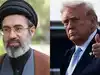
Iran warns of wider war if US attacks after Trump election rout
Iran's supreme leader, Mojtaba Khamenei, expressed that the Middle East conflict may escalate if US attacks continue. Trump's political defeat in the midterms may limit his military options, yet he retains authority to strike. Iran's leadership is emphasizing the outcome of the elections as a rejection of war by the American public. Diplomatic discussions are ongoing, aiming to prevent further hostilities between Iran and the US.
Iranian officials say midterm results show US voters have rejected Trump's war
Concerns about the war's effects, particularly frustration over rising prices for fuel and other goods in the U.S., helped Democrats win control of both chambers of Congress in Tuesday's vote.

AI’s 3 musketeers are hitting the brakes. Why Jefferies’ Chris Wood sees India midcap stocks regaining favour
India’s domestic economy is showing resilience despite geopolitical and energy risks, with stronger bank credit, corporate lending and earnings growth. Jefferies’ Chris Wood sees a potential reversal in the AI trade as another catalyst for global investors to refocus on India. He also favours mid- and small-caps, while highlighting domestic flows, gold loans and energy risks as key market drivers.

Saudi Arabia faces fresh Red Sea threat as Houthi gains, pipeline shutdown rattle kingdom
Houthi rebels are advancing, threatening a vital Red Sea shipping route. Drone attacks have forced a major pipeline closure, impacting global markets. Saudi Arabia faces setbacks in its economic transformation efforts due to regional conflicts. The kingdom's efforts to ensure navigation freedom are challenged by Houthi actions. US support for Saudi Arabia remains unpredictable amid domestic political considerations.
- Go To Page 1

Oil Price Today (September 10): Crude oil at $101 as Iran attack on 10 ships raises supply fears. $120 in sight?
On Thursday, oil prices surged above one hundred dollars per barrel as traders evaluated the risks associated with supply disruptions stemming from recent shipping attacks. Iran has claimed responsibility for targeting ten vessels after the United States destroyed five tankers. Market analysts warn that if tensions continue in the contested Strait of Hormuz, oil prices could escalate further, potentially reaching one hundred twenty dollars per barrel.

Oil crosses $100: A 'perfect hurricane' can trigger bigger shock soon
Brent crude has surged past $100 as escalating Middle East tensions threaten two critical oil chokepoints — the Strait of Hormuz and Bab el-Mandeb — at the same time. While markets were already grappling with disruptions in Hormuz due to the US-Iran conflict, fresh Houthi attacks on Saudi oil tankers in the Red Sea have put alternative export routes at risk.

What if the Strait of Hormuz didn’t reopen?
The Strait of Hormuz, a vital oil route, faces potential prolonged closure. This situation mirrors past disruptions, raising concerns about global energy supplies and economic stability. While diplomatic efforts are underway, the possibility of a lengthy shutdown necessitates careful planning. Nations are exploring alternative routes and stockpiling resources.

20,000 Indian seafarers caught in Gulf tensions; Mariners' body raises alarm
More than 20,000 Indian seafarers in the Gulf and Strait of Hormuz are facing growing risks amid escalating regional tensions, prompting the National Union of Seafarers of India (NUSI) to urge the government to activate urgent evacuation measures. The union warned that any conflict spillover could leave vessels stranded without access to food, medicines or safe evacuation routes.

Iranian state media counters US claims, says 5 civilians killed in "clumsy" Hormuz Strait strike
Iran's state media claims US forces attacked civilian cargo boats in the Strait of Hormuz, resulting in five deaths, contradicting Washington's assertion that the vessels were Iranian military boats threatening commercial shipping. The incident occurred during a US mission to secure maritime corridors and ensure freedom of navigation.

From surplus to strain: World rice supply threatened by Iran war, El Nino
The effects of the Iran war are impacting farmers in top exporters Thailand and Vietnam as well as the import-reliant Philippines and Indonesia, growers and traders said.

Rs 65,000 Birthday shock: 19 drinks, 28 starters and 5 pizzas—Bengaluru boy says ‘never celebrating again’
A young man in Bengaluru has vowed to stop celebrating his birthday after a recent celebration resulted in a staggering ₹65,208 bill. The extensive order included 19 drinks, 28 starters, 5 pizzas, and 5 desserts, with premium beverages significantly contributing to the high cost. The incident sparked online debate about the expense of alcoholic beverages.

Who is Parag Agrawal? This Indian-American CEO, fired by Elon Musk, is now leading a Rs 16,000 crore company
Parag Agarwal has raised $100 million for his new AI startup called Parallel Web Systems and the worth of the company is around Rs 19,020 crore. Parag Agrawal was CEO of Twitter until late 2022, when Twitter-acquirer Elon Musk ousted him. He served as Twitter’s chief technology officer before stepping in as CEO in 2021, following co-founder Jack Dorsey’s departure.

'Feels like crossing Strait of Hormuz': Noida Sector 51–52 Metro route becomes daily nightmare for commuters. Watch viral video
The narrow pathway between Noida Sector 51 Metro Station and Noida Sector 52 Metro Station has become a daily challenge for commuters in the city. The stretch is poorly maintained and the condition becomes worse during the monsoon, with people comparing passing through this narrow stretch to crossing the Strait of Hormuz, a crucial global trade point.

Oil rises for a fourth day on supply cuts from widening Middle East conflict
Oil prices are climbing for the fourth day. Brent crude is set for its largest monthly gain ever. U.S. crude futures are also seeing a significant increase. This is driven by supply concerns stemming from the escalating Middle East conflict. Iran's actions have impacted key shipping routes, raising fears of further disruptions to global energy supplies.

Trump extends pause on striking Iranian energy plants by 10 days; Tehran dismisses proposal
President Trump announced a 10-day pause on attacks against Iran's energy plants, citing ongoing "very well" talks, though Iran dismissed a U.S. proposal as "one-sided." The conflict, which began February 28 after nuclear program talks failed, has caused significant global economic disruption and spread to neighboring nations.

Iran-US war: Better get serious before it's too late, says Trump
"The Iranian negotiators are very different and strange. They are begging us to make a deal, which they should be doing since they have been militarily obliterated, with zero chance of a comeback, and yet they publicly state that they are only 'looking at our proposal.' WRONG!!! They better get serious soon, before it is too late, because once that happens, there is NO TURNING BACK, and it won't be pretty!," the US President wrote on Truth Social.

Trump says Iran ‘begging’ for deal, warns of more strikes
President Trump asserted that Iran is "begging" for a deal, despite Tehran's public denial of talks and criticism of a US proposal as "one-sided." While Iran rejected the terms, it left the door open for negotiations if the US adopts a more balanced approach amid escalating tensions since February 28, 2026.

Iran war's energy impact forces world to pay up, cut consumption
The closure of the Strait of Hormuz has halted 20% of global oil and LNG supply, triggering a severe energy crisis. Strikes on infrastructure have caused widespread damage, leading to a 50% surge in oil prices and threatening global food security due to fertilizer shortages.

Why won't Europe help Trump in Iran? Let's count the reasons
In a bold diplomatic stand, European leaders push back against President Trump's request for military support in the escalating Iran situation. They emphasize their commitment to NATO’s defensive principles and express concerns over the lack of prior discussions.

Gulf economies at risk of worst slump since 1990s on Iran war
The ongoing Iran war could severely impact Gulf economies if it continues, with Qatar and Kuwait potentially seeing GDP contract by about 14% if the Strait of Hormuz remains shut for two months, according to Goldman Sachs. That would mark their worst economic downturn since the early 1990s Gulf War.

How much news do we really need to consume?
When one turns away from political news of the moment, drained and exhausted, one ends up watching or listening to news about one's interests: a cricket match podcast, news from the writing world, music news... Or worse still, one ends up watching news from decades ago. The other day I ended up watching reels on BBC Archives.

War with Iran delivers another shock to global economy
The global economy faces severe disruption due to the war with Iran. The closure of the Strait of Hormuz has sent oil prices soaring, impacting energy and fertilizer costs worldwide. This crisis threatens food shortages in developing nations and complicates inflation control for central banks. Oil-producing nations outside the conflict stand to benefit, while energy importers face significant economic strain.

OPEC+ hikes oil production by more than expected following outbreak of Iran war
OPEC+'s V8 group announced a 206,000 bpd production increase, citing market fundamentals despite Iran's regional attacks. Analysts warn this is insufficient to offset potential Strait of Hormuz disruptions, which could cause oil prices to spike significantly when trading resumes.

Oil and gas majors and traders suspend shipments via Hormuz, sources say
Oil tanker operators, energy companies and trading houses have suspended crude, fuel and LNG shipments through the Strait of Hormuz after U.S. and Israeli strikes on Iran and Tehran’s announcement that navigation was closed, trading sources said.

How a cornered Iran could wreak havoc on global oil trade
Following US airstrikes, Iran is considering retaliatory measures, potentially disrupting oil trade through the Strait of Hormuz. While a full closure is unlikely due to global economic consequences and potential retaliation, Iran has various options, including harassing ships, mining, or targeting regional oil infrastructure. The impact on oil supply and prices depends on the scale and duration of any disruption.

Can crude oil prices really double? Let’s look at the worst-case scenario
Amid escalating Israel-Iran tensions, oil markets are on edge, with Brent crude hovering near $73 a barrel. Concerns rise over potential disruptions to Strait of Hormuz, a vital oil route. While a doomsday scenario of $150 per barrel is unlikely, analysts warn of potential spikes to $120, impacting global inflation and India's economy.

Crude oil prices could spike to $120, warns J.P. Morgan. Explained in 6 key points
Following Israel's military operation on Iranian nuclear sites, J.P. Morgan warns oil prices could surge to $120 a barrel if Middle East tensions escalate. Brent crude futures already jumped nearly 9%, and the bank estimates a 7% chance of a worst-case scenario involving Iranian oil supply disruptions. The situation complicates monetary policy amid stalled nuclear talks.
Load More

