
HIMALAYAN CLIMATE CHANGE
COP31 summit: Nepal highlights need for climate justice, pushes for billions to help disaster survivors
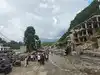
In Nuwakot, Nepal, villagers are struggling to recover from floods that destroyed homes and livelihoods. Survivors rely on aid for basic necessities like water and food as they await help. Globally, climate leaders at COP31 stress the urgency of addressing climate change and its impacts on vulnerable nations. The established loss and damage fund falls significantly short of the required financial support for affected countries.

COP31 a 'moment of truth': UN chief Guterres urges world leaders to act now on climate change
António Guterres has urged global leaders to take immediate action against climate change ahead of the COP31 summit. He emphasizes that responsibility should not be shifted and that everyone must commit to change now. Guterres highlights the worsening impact of climate disasters and the interplay between climate change and other global challenges. Additionally, he believes that fossil fuel companies should contribute by being taxed on their profits.

'Lord Shiva's locks on river Ganga are loosening': Rainfall could get heavier as Himalayan permafrost melts, mountain rocks holding water are losing ground, warns expert
Climate author and entrepreneur Mridula Ramesh has warned that rising temperatures are melting Himalayan permafrost, weakening mountain slopes and increasing the risks of landslides and floods. Comparing the changes to Lord Shiva's loosening locks, she also explained how earlier snowmelt could leave less water for summer.

Five appeals, 15 visits, 30 calls: Sonam Wangchuk cites administrative delays in execution of HIAL land lease
Sonam Wangchuk has blamed administrative delays for the failure to execute a lease deed for land allotted to his Himalayan Institute of Alternatives, Ladakh (HIAL), citing a February 2021 letter from the Ladakh administration that said the process was pending a new lease policy. Wangchuk said he made five written appeals, 15 visits and 30 phone calls seeking the deed.
Nepal floods 'defining moment' for climate action: UN
The country suffered one of the worst disasters in its history on August 26, when a mountain collapse near the China border triggered catastrophic floods that killed more than 1,400 people and left over 5,000 missing.
Super El Nino: What the potential arrival of a stronger 'little boy' means for India’s water, power, health, winter and summer?
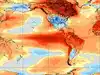
India is projected to experience a warmer and drier start to winter as a super El Niño develops. A weak monsoon has led to concerns over water availability and crop health across the country. The World Meteorological Organization anticipates significant temperature increases and shifts in rainfall patterns. This unusual weather pattern may lead to increased health risks, especially during the summer months.

Nepal flash floods explained: Why the country is facing repeated disasters and should India be worried?
Nepal Flash Floods Reason: Nepal has witnessed another flash flood after a landslide blocked the Budhi Gandaki River in Gorkha district. Here's why repeated floods are hitting the Himalayan country, how climate change and unstable mountain slopes contribute to the risk, and why India needs to monitor downstream rivers.

Nepal wants India and China to team up as a new warning melts out of the Himalayas
Following the severe impact of flash floods in the Himalayas, which led to tragic loss of life and significant destruction, Nepal's Prime Minister Balendra Shah has introduced a Himalayan Climate Resilience Mechanism. This initiative emphasizes collaboration between Nepal, India, and China, promoting data exchange and joint disaster response strategies, acknowledging that climate change poses a universal threat beyond any single nation.
Climate disasters are growing. So are cuts to programs that prepare for them
Climate-related disasters in the Himalayas have intensified, leading to devastating impacts on communities and economies. Aid cuts have significantly weakened disaster preparedness initiatives, increasing vulnerability to climate-related events. Millions face heightened risks of glacial lake outburst floods and other disasters due to reduced funding. Official development assistance has reportedly dropped, impacting vital climate adaptation programs in South Asia.

Nepal flood death toll surges to 1,410; over 6,100 still missing
Nepal's devastating flash floods have claimed 1,410 lives and left over 6,100 people missing. These floods were triggered by an ice-rock avalanche near the Nepal-Tibet border on August 26. The Bhotekoshi River carried floodwaters downstream, destroying homes, vehicles, roads, and bridges. Authorities have recovered 364 bodies from Chitwan district and 232 from Nawalparasi East. Search and rescue operations continue in the affected northern and central regions of Nepal.
Himalayas approaching tipping point, millions of livelihoods at stake, report finds
Himalayan glaciers are melting at an accelerated rate, posing a significant threat to regional water security. This alarming trend indicates the region is approaching "peak water" by the middle of this century. Recent glacier collapses have caused devastating landslides and flash floods, resulting in numerous fatalities and missing persons.
Himalayas running out of water, 20% of India's GDP at risk: 200 glacial lakes linked to rivers like Ganga, Yamuna found to be high risk
A new report by Systemiq and the Integrated Mountain Initiative, backed by the Rockefeller Foundation, warns that the Himalayas are approaching a tipping point, with glaciers melting 65 percent faster than a decade ago. Nearly 200 glacial lakes have been rated high risk, and the region underpins over 20 percent of India's GDP, putting water, food and economic security at stake for hundreds of millions of people.
Nepal flood reconstruction bill to be $4.78 bn: foreign ministry
Nepal estimates a $4.78 billion reconstruction bill following a deadly glacial flood. Prime Minister Balendra Shah will address the UN General Assembly on climate change impacts. The disaster killed over 1,400 people and left thousands missing on the China-Nepal border. Damage assessments indicate significant losses to infrastructure and agricultural land. Rescuers continue efforts in flooded hydropower tunnels while shifting to relief operations.

Nepal's flood disaster and the impact of climate change loom large in the icy shadow of Mont Blanc
Mont Blanc's glaciers are rapidly retreating due to climate warming and heat waves. Permafrost is thawing, causing increased rock falls and instability on mountain slopes. This summer saw a significant surge in rock collapses, impacting climbing routes and safety. Alpine glaciers have lost substantial surface area, with higher altitudes now experiencing rain. Communities and researchers are preparing for serious scenarios of falling ice and rock.

Nepal President Ramchandra Paudel seeks climate justice after deadly floods: 1,356 killed, 4,996 still missing
Nepal's President Ramchandra Paudel urged global action for climate justice for vulnerable nations. He also called for national unity among political parties and citizens for relief efforts. Devastating flash floods struck northern and central Nepal, causing widespread destruction. Official data indicates 1,356 people died and 4,996 remain unaccounted for. Preliminary estimates place the total economic losses at around Nepali Rs 400 billion.
View: Himalaya is all eyes and ears
In the wake of disasters, the question of accountability often arises and blame shifts from leaders to the very citizens they serve. This tendency to evade genuine responsibility fosters a culture of finger-pointing rather than constructive discussion. A recent statement from the Nepalese foreign minister underscores this phenomenon where natural forces are excused from criticism, revealing the inclination of humans to externalize fault instead of confronting underlying issues.
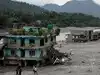
Global warming: From Nepal to Assam to Kerala, nature’s fury is colliding with unchecked development
The Himalayan region is facing increasingly frequent and unpredictable extreme weather, with glacier collapses, flash floods and landslides becoming more dangerous. Climate change is a key driver, but rapid and poorly planned development is worsening the risks by putting more people and infrastructure in fragile, flood- and landslide-prone areas.

The Himalayas look unchanged from below, but something is happening high in the mountains — Nepal’s disaster offers a frightening clue
A recent disaster in Nepal highlights growing instability in the warming Himalayas. Massive rock and ice collapses unleash destructive floods and debris downstream. Scientists warn of increasing glacial lake outburst floods and unstable mountain slopes. India faces potential consequences as Himalayan river systems connect across borders. Enhanced monitoring and early warning systems are crucial for vulnerable communities.
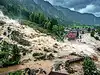
The Himalayas need a new blueprint: Rebuilding Rasuwa with climate resilience and proactive infrastructure management
Nepal is rebuilding Rasuwa after devastating floods, shifting focus to proactive infrastructure management. Resilience and climate risk must guide all future development projects in the region. The floods demonstrated a polycrisis, necessitating interconnected risk accounting for greater resilience. AI can strengthen adaptation through robust early-warning systems for disaster preparedness. Regional countries must cooperate on cross-border mechanisms for sustainable infrastructure development.
Load More


