
GRAPE HARVESTS

Climate pressures hit global wine production again: report
As climate change intensifies its grip, global wine production is set to dip in 2026. Notably, Europe, particularly France and Italy, faces severe harvest challenges, showcasing the impact on traditional winemaking regions. The US continues to lag in production levels, hinting at ongoing climate struggles. Meanwhile, South Africa is gaining ground as a key player in the southern hemisphere.

Double trouble at the dinner table: When will food prices normalise for Indians?
India’s food inflation: Food prices are rising unevenly, impacting household budgets, while inflation is projected to persist in upcoming months. Economists expect food inflation to reach up to 7% in the near future due to various factors. Weather risks, particularly from El Niño, could significantly affect crop yields and consequently food prices. Additionally, global events in West Asia contribute to higher energy and logistic costs.

Bought peaches that are still hard? Put them in a paper bag to speed up ripening instead of refrigerating them
Many store-bought peaches can seem ripe at first glance, yet they might still be quite firm inside. To help them ripen, simply keep them at room temperature rather than placing them in the fridge. You can also accelerate the ripening process by putting them in a paper bag. To enhance ethylene production, try placing some ripe bananas or apples alongside the peaches.

In France's north, winegrowers bet on a warmer future
This year, successive heatwaves, wildfires and drought, disrupted life for France's winegrowers, leading to historically early harvests, lower yields, and an increased risk of smoke taint.

Storm in a wine glass: As climate change and young consumers reshape the wine world, can India take advantage?
Global wine regions face climate challenges and declining demand. India's wine tourism is experiencing significant growth and expansion. Younger consumers are driving demand for sustainable and diverse wine options. Technology and new farming methods are future-proofing vineyards globally. India is poised to leverage these shifts in the evolving wine landscape.

In 2000, Spanish scientists used low-level UV light to triple resveratrol content in wine grapes. 2 years later, that same research team found one grape variety's antioxidant levels had jumped an unbelievable threefold
Low-level ultraviolet irradiation and refrigeration can significantly boost resveratrol levels in grapes. This treatment can make wine a more potent source of beneficial antioxidants. Resveratrol is a compound found in grape skins with antioxidant and anticancer properties. Refrigerating grapes after picking further stimulates enzymes that produce these healthful effects. These findings suggest a way to increase potentially health-promoting compounds in grapes.
- Go To Page 1

In 2025, researchers in Italy’s Puglia region grew grapevines beneath solar panels; the shaded vines produced 277% more grapes than those in full sun
Grapevines under solar panels in Italy showed significantly increased productivity. This shade moderated soil temperature and retained moisture, benefiting the plants. However, results varied in cooler climates, showing shade is not universally beneficial. Agrivoltaics systems are being modeled for economic gains and reduced crop losses. This technology offers a potential adaptation tool for grape growers facing rising costs.

Since 1980s, Champagne has been facing climate change threat. Here's how global warming is impacting France's iconic drink
Champagne is a historic region in northeastern France, best known worldwide for the sparkling wine that bears its name. The region centers on important cities such as Reims

12 grapes under the table ritual: What's the viral trend that started 200 years ago? Which colour brings more luck? Check details
A Spanish tradition of eating twelve grapes at midnight on New Year's Eve, known as 'Las Doce Uvas de la Suerte,' is gaining viral attention on social media. This ritual, originating in late 1800s Madrid, is believed to bring good fortune for each month of the year.

Zero impact of unseasonal rains on business, says Sula Vineyards CEO
With over 25 years of experience, the company has developed a robust grape procurement model where it anticipates a few unseasonal rain events to occur every year. "We therefore always target a slightly higher grape tonnage than we need to fulfil our sales projections. The result is that if and when such unseasonal rains occur, Sula will always get the grapes it needs," Samant said.

Unseasonal rains: IMD asks farmers of Punjab, Haryana & MP to postpone harvesting
In the last 24 hours, IMD said light/moderate rainfall and thundershowers were observed over most parts of the country. Even hailstorm was observed over Uttarakhand, Rajasthan, West Madhya Pradesh, West Bengal, Maharashtra, Gujarat, Rayalaseema in Andhra Pradesh and North Interior Karnataka in the last 24 hours.

Sula's 2019 grape crushing up by 50%
Sula said it expanded its cellar capacity by 20 lakh litres, up by about a fifth.

Raising a toast! English sparkling wines set to woo Indians away from champagne
Fizzy wines created from grapes outside Champagne are known as sparkling wines.

Wine-makers on a high as good grape harvest expected this time
Despite drought-like conditions in Maharashtra, the chief grape producing state in the country, India is eyeing good grape harvest and higher crushing of grapes for wines.

India may see bumper grape output this year
India’s grape export story has been achieving a new milestone every year .

From England's Pearly King Parades to Malaysia's Eco Harvest, here are some experiential fest-time activities
Tailor-make your vacations around the local fests.

Fruit exports rise 18.5% on good summer harvest
“This year's pomegranate production could be the highest ever," said president of All-India Pomegranate Growers' Association.
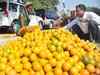
Orange rates fall 50%, exports hit by cash crunch
Export of oranges to Bangladesh and other countries is perhaps the worst hit by demonetisation, as prices have halved.

Good weather during grape crushing season may increase wine output 15-20%
Wine lovers will be able to savour better quality wines this year thanks to excellent weather during grape crushing season in Maharashtra, the wine production hub of India.

Pole position for Indian grapes, exporters anticipate record shipments
However, there are concerns of margins taking a hit if there is a glut in Europe, especially after March.

Climate change advances wine grape harvest by two weeks
Samant added that the industry as well as wine growers are bearing the brunt of climate change and having to rapidly adapt their practices to cope.

Grapes of wrath: Fruit faces uncertainty due to drought in Maharashtra
Grapes faces an uncertain future due to drought conditions in Maharashtra; farmers may do early pruning, which may upset the trade cycle

Rains herald a 'grape' period for Maharashtra farmers; shipments to EU likely to fall 30%
India exported 5,000 containers of grapes to Europe last year. This year, the industry estimates that it will be able to send a maximum of 3,200 containers.
Global warming changing taste of wine
The taste of some of the world's finest wines is changing as global warming alters the way grapes mature, scientists have found.

Nashik wineries host festivals to boost sales and create brand awareness
With the growing popularity of wine festivals, wineries are increasing the scale of the events, which help create awareness.
A number of experiences await travellers around the world in September
Food, Sport, Music and Dance — there are a number of experiences to be had around the world this month. Fasten your seat belts.
Grape exports to Europe dip 6% on poor demand
India’s grape export to Europe, the major destination for the fruit declined by 6% to 38,688 tonnes in 2009 season due to lower demand in the region.
Grape exports to Europe dip 6% on poor demand
India’s grape export to Europe, the major destination for the fruit declined by 6% to 38,688 tonnes in 2009 season due to lower demand in the region. India had shipped 41 139 tonnes of grapes in 2008 season.
Grapes may turn sour for growers
Production is likely to fall by 30% as cold weather spoils harvest party in North Karnataka.
Load More

