GOOGLE LOCATION TECHNOLOGIES

Google voluntary buyouts: What's the exit package, which teams qualify and how many employees are eligible after Microsoft's similar offer?
Google Voluntary Exit Programme Details: Google has expanded its voluntary buyout programme to selected employees in five countries. The offer comes as Microsoft rolls out a similar voluntary exit scheme covering around 60,000 employees. Here's a look at Google's severance package, eligible teams and the number of employees who could opt for the offer.

See data centres less as energy-sucking private warehouses, and more as quasi-public utilities
We need data centres. They run far more than ChatGPT. Search, banking, streaming, social networks, cloud software, government services, hospitals and almost every company's digital operations depend on them. AI simply raises the requirement dramatically. Google says its Vizag hub will provide new subsea connectivity for India. IEA says electricity use by AI-focused data centres jumped 50% in 2025. A country without serious compute infrastructure risks becoming a consumer, rather than a producer, of the AI revolution.

Google went to Finland for its AI expansion. Now a cleared forest and a police probe threaten to overshadow its $15 billion investment
Google's planned expansion in Finland is facing scrutiny due to alleged environmental violations at a data centre site. Authorities are investigating whether the company breached local laws related to water management. The controversy has drawn public criticism and highlighted the need for responsible corporate practices. As investment in artificial intelligence increases, balancing economic growth and environmental protection remains challenging.
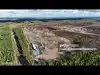
Google faces backlash in Finland after cutting down 400,000 trees for data center projects
Google's decision to clear hundreds of thousands of trees in Finland for data center construction has faced immense criticism due to the lack of required environmental reviews. Local communities are worried about the potential consequences on their environment, while conservationists assert that the company's promises of reforestation will not adequately offset the negative effects. This incident has ignited a wider discussion about the oversight of tech initiatives within Finland.

EssilorLuxottica's smart glasses boom runs into tougher regulatory scrutiny
Smart glasses that resemble ordinary eyewear are under increased scrutiny from European regulators and advocacy groups, leaving investors questioning whether sales can keep booming as Ray-Ban maker EssilorLuxottica
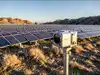
Meet Vasya Tremsin, whose startup raised $11.5 million to turn wildfire sensors into watchdogs for power grids, solar farms, here's what it does
It uses a device called TerraNode, which combines cameras and multiple sensors. The aim is to monitor outdoor locations. Interestingly, it uses AI to analyse information collected at a site. The device can operate without an external power supply, which makes it suitable for remote locations. The reason is that installing conventional monitoring equipment can be difficult or expensive.
- Go To Page 1

Google Cloud outage in London disrupts UK banking and online services, affecting major institutions-When will it be back up?
A Google Cloud outage in London has impacted numerous digital services, including those of banks and public providers. Customers are experiencing issues with banking apps, card payments, and online access. Revolut and ING Germany are among the affected institutions, reporting multiple service disruptions. Google has not disclosed the cause of the outage and its engineering team continues to investigate the matter.

Big Tech wants to build more AI data centres across America. Why local communities are pushing back against the costs of the AI revolution
Cities across America are imposing temporary moratoriums on data centre approvals to address infrastructural concerns. Local governments are assessing the impacts of these projects on electricity, water, and public resources. Environmental lawsuits are complicating the development of AI infrastructure further, leading to delays and increased costs. Some technology companies are moving towards greater transparency with local communities for better engagement.

EU takes a page from Ireland's AI playbook
The EU wants to catch up in the AI race by taking a cue from Ireland -- an early adopter of the technology which has rolled out the red carpet for data centres despite local backlash. The EU wants to ramp up its capacity and is pouring billions into so-called AI gigafactories made up of advanced AI processors and energy-efficient data centres for companies and research labs.

Could Iran target the Gulf’s digital backbone? The risks to data centres and internet cables explained
Iran's warning raises concerns about the vulnerability of Gulf data centres and digital infrastructure to potential attacks. Recent escalations have already disrupted Amazon Web Services facilities in the UAE and Bahrain, highlighting the risk. The Gulf has invested significantly in emerging technologies, making security a critical focus for governments and companies. Developing alternative routes for connectivity will be essential to mitigate these threats.

Google faces backlash against India data centre
Handcuffs encircle Google's logo on one campaign poster, while another warns that people "cannot drink data", as opposition mounts to the tech giant's planned AI mega-facility in India. Still, water use worries residents, especially given plans for Vizag to become a tech megahub.

Samsung Galaxy Watch Ultra 2 review: A familiar design with meaningful upgrades
The Samsung Galaxy Watch Ultra 2 brings a bigger battery, a brighter display and enhanced fitness features while retaining the familiar rugged design of its predecessor. Priced at Rs 64,999, the premium smartwatch offers dual-frequency GPS, LTE connectivity and new trail-running and hydration-tracking features. But with limited design changes and no iPhone support, does Samsung's latest wearable offer enough to stand out in the premium smartwatch market?

US green-card freeze hits TCS, Infosys, Wipro; GTRI warns of wider IT curbs
The US government has suspended eight technology companies, including TCS, Infosys, Wipro and HCLTech, from the PERM green-card sponsorship programme, raising concerns over potential restrictions on foreign tech workers. A Global Trade Research Initiative (GTRI) report warns that curbs could extend to H-1B hiring and skilled-worker mobility. The move may push Indian IT firms to diversify markets and expand domestic delivery.

Gujarat to turn ocean into next big industry: Rs 100 crore marine biotech corridor planned in Porbandar; seaweed, algae & microbes could soon fuel new business boom
An initiative of the Gujarat State Biotechnology Mission (GSBTM), Department of Science and Technology, the proposed corridor is envisioned as an integrated ecosystem connecting marine science, biotechnology research, field cultivation, technology development, pilot-scale biomanufacturing, entrepreneurship and commercialisation, according to the Chief Minister's Office.

Ben Affleck's life beyond Hollywood: Python coding, working with GPUs, AI and neural networks for years. Actor even got access to Google, OpenAI's labs
Ben Affleck’s career has taken a fascinating turn as he explores the world of artificial intelligence in the film industry. By founding InterPositive, he aims to equip filmmakers with innovative AI tools, ensuring artists remain in charge of their narratives. Netflix’s acquisition of InterPositive for roughly $587 million illustrates the rise of technology in storytelling.

Jio IPO SWOT analysis: What the DRHP says about its growth story, moats and risks
Jio Platforms is gearing up for a landmark public offering to secure Rs 37,700 crore in funds, with subscriptions expected to commence on October 21. With an impressive customer base exceeding 524 million, Jio dominates India's wireless data landscape. The company is well-positioned to capitalize on opportunities like the shift from 2G to 4G and expanding enterprise connectivity.

Keeping AI models under control: When an agent causes harm, who bears the blame?
If an AI agent goes rogue, who do you hold responsible— the agent, the LLM developer or the human? asks EY partner Shivaprakash Abburu. Experts believe regulators are slow to build frameworks even as enterprises across the world are actively integrating AI into their workflows.

The Nobel-winning breakthrough that turned light into a remote control for the brain, allowing scientists to switch neurons on and off
Optogenetics, a groundbreaking technique, enables researchers to control specific neurons using light, providing insights into brain functions. The 2026 Nobel Prize in Physiology or Medicine was awarded to Karl Deisseroth, Peter Hegemann, and Georg Nagel for this transformative discovery. Their work originated from the study of light-sensitive proteins in green algae, which led to applying these proteins in neuroscience.

Claude comes closer to India’s data: Anthropic brings in-country inference to AWS
Anthropic has introduced in-country inference for its Claude models in India through Amazon Bedrock. This service allows sensitive AI workloads to be processed on servers located within the country. Financial institutions and large enterprises in regulated sectors can now use Claude while complying with local data-residency requirements. The introduction of this technology is expected to accelerate enterprise adoption of generative AI in India.

These mid-caps have ‘strong buy’ & ‘buy’ recos and an upside potential of over 25%, according to analysts
What is needed in the markets these days is realism. Not fear or gloom, but a clear-eyed acceptance of where things actually stand. Realism means not hoping for things facts do not support. It means accepting that the next few months may be difficult: That earnings may disappoint, that prices may fall further. It also means planning for such a scenario instead of just hoping that it will go away.

Trump says top tech firms have signed accord to 'self-police' AI development
President Donald Trump and executives from top tech companies met to discuss the development of artificial intelligence. They signed a voluntary accord aimed at addressing public concerns about the technology's risks. Executives agree to implement robust internal controls and audits to ensure safety and accountability. Trump emphasized the importance of AI's growth and the U.S. leading in this global competition.

Trump says top tech firms have signed accord to 'self-police' AI development
Trump and House Speaker Mike Johnson met with leading executives from top tech firms that are spending hundreds of billions of dollars to build out AI infrastructure, including data centres in communities across the country, which have sparked grassroots, bipartisan opposition.

Lessons from Chinese AI Firms on Owning Customers’ Habits
As U.S. AI firms compete in an escalating race for superior models, bigger benchmarks, and more advanced features, Chinese companies are pursuing a fundamentally different strategy: embedding AI into users’ everyday habits. The authors argue that this “habit moat” approach may prove more durable than competing on raw capability alone. Whereas Western firms position AI as a destination consumers consciously visit, companies like Alibaba integrate AI into existing routines such as shopping, payments, food delivery, and travel booking, reducing friction until using AI becomes automatic behavior. Once AI capabilities become “good enough,” marginal technical improvements matter less than becoming the default path through recurring customer tasks. The authors outline four strategic imperatives for Western leaders: focus on behavioral cues rather than feature gaps, subsidize customer behavior instead of subscriptions, embed AI invisibly into existing workflows, and optimize for repeat usage rather than first-time adoption. The central warning is stark: AI may not replace employees first—it may instead capture the critical customer moments businesses currently own.

"One small step for TPUs": Google CEO Sundar Pichai announces Project Suncatcher to test AI compute in Space
According to Google, Project Suncatcher is a long-term, research moonshot exploring whether space could one day host scalable machine learning infrastructure.

Sam Altman was just 19 when he left Stanford to build an app Loopt that struggled to take off; years before ChatGPT, Green Dot paid $43.4 million for it
Years before ChatGPT, Sam Altman left Stanford at 19 to build Loopt, a location-based social networking app that struggled to attract users. Green Dot later acquired the startup for $43.4 million, seeing value in its mobile technology, patents and experienced team. The acquisition made strategic sense even though Loopt had not become a dominant social media platform.

NPCI announces MDR for UPI; merchant transactions above Rs 2,000 to attract 0.4% charge
While NPCI has not specified a threshold based on the size of a merchant’s turnover, it said in its announcement that vendors operating under the person-to-person merchant (P2PM) category will “enjoy a mandatory zero MDR”. Merchants in this category, typically small shopkeepers, street vendors and local businesses, are classified as those receiving less than Rs 1 lakh per month in their accounts through UPI.

Former Anthropic researcher Jacob Coxon advocates for 'kill switch' for AI systems
In an interview to NBC News' Meet the Press, Coxon advocated for measures to put in effect the slowdown including the possibility of a 'kill switch'.

Yotta pushes back on fears data centres could strain India’s power, water
Large data centre operators can build dedicated power networks and closed-loop cooling systems. These systems limit dependence on local urban power and water supplies. Yotta Data Services CEO Sunil Gupta stated this at the Global Fintech Fest 2026. He believes many concerns about infrastructure strain are unfounded in India.
Load More