
GLACIAL CYCLE
Did humans cancel the next ice age? Ancient moss reveals an ice cap growing for centuries and global warming may have reversed it, here's what scientists found
Plants uncovered by melting Arctic ice have revealed a surprising change in its history. Scientists believe that the findings could alter how we identify the beginning of an ice age.
It survived for thousands of years, then suddenly fell: The mystery behind New Hampshire's 80-ton boulder
A dramatic event unfolded at Polar Caves Park on October 18, as the 80-ton Mysterious Hanging Boulder succumbed to gravity, coinciding with the conclusion of the tourist season. Fortunately, there were no injuries reported, although a section of the wooden walkway was compromised. Experts believe the boulder's downfall was influenced by erosion and climatic elements. Ongoing assessments will help park officials enhance safety strategies and consider visitor experiences moving forward.
China exerts tight grip on information after floods
Deadly floods killed hundreds along the China-Nepal border, leaving thousands missing. China tightly controls information, limiting media access and punishing dissent online. Nepal, however, has provided regular updates and allowed extensive reporting on the disaster.
Scientists cored Clear Lake, finding ancient pollen records in sediment that reveal how California forests changed with past climate shifts
The sediment cores from Clear Lake present a captivating window into California's forest history over the last half-million years. Research conducted by the USGS and UC Berkeley unveils an unbroken record of climate and vegetation changes, beginning with initial studies in 1973 that traced back 130,000 years. This ongoing research is instrumental in enhancing our predictions regarding future climate change impacts.
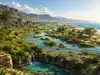
Hidden world beneath the Persian Gulf? Scientists say a lost freshwater oasis may have sheltered early humans
New research suggests the Persian Gulf was once a green landscape. Underground aquifers may have fed freshwater springs, creating a habitable refuge. This hidden landscape could have supported early human communities for millennia. As the Ice Age ended, rising sea levels submerged this fertile region. The findings offer a new perspective on human migration out of Africa.
What Scientists Found Beneath the Southern Ocean Changes Climate Science
Scientists have uncovered new details about iron from Antarctic icebergs. This iron, once thought to boost ocean life and absorb carbon, is not dissolving as easily as believed. This challenges long-held ideas about the ocean's role in climate regulation. The findings suggest a more complex interplay of factors influences carbon uptake.

Pay attention to dry facts about water
India is grappling with an acute water crisis. Recent studies reveal that the Western Himalayas are experiencing the driest spring seasons recorded in centuries. This is due to weakened western disturbances and rising temperatures, which are transforming snowfall into rainfall. Consequently, the region is rife with winter floods and parched summers.

The 9,000-Year-Old Forest That Is Technically One Single Tree
High in Sweden's mountains, a Norway spruce named Old Tjikko reveals a root system over 9,000 years old, challenging our understanding of individual trees. This ancient organism, surviving through clonal regeneration, has repeatedly replaced its visible trunks while its core genetic identity persists. Its discovery offers crucial insights into post-Ice Age ecosystems and the remarkable resilience of life.

If Land Can Rise and Sink, What Other Landscapes Might Be Fooling Us?
Beneath Earth's surface, powerful internal forces continuously shape landscapes, a fact often overlooked. Deep lithospheric processes and mantle convection can cause land to rise or sink, altering river paths and coastlines. This dynamic interplay between surface erosion and deep Earth movements explains seemingly paradoxical geological features, revealing that what appears stable is in constant flux.
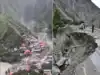
From Kedarnath to Dharali: Uttarakhand's unheeded warnings and rising disasters
Flash floods in Kheer Ganga revive memories of past disasters for survivors. Uttarakhand faces increasing extreme rainfall and landslides. Experts link these events to climate change and unregulated development. Studies show a rise in extreme weather since 2010. Glacial lakes and unstable slopes add to the risk. Warnings about unsustainable practices have been ignored.
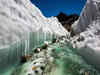
Melting Himalayas are waking up 1,700 ancient viruses sleeping for 41,000 years
Researchers have uncovered nearly 1,700 ancient virus species in the glacial ice of the Himalayas, with about three-quarters previously unknown. These viruses, found in ice cores from the Guliya Glacier, offer insights into viral adaptation to past climate changes. This discovery could help predict how modern viruses might respond to ongoing environmental shifts. The study also suggests a potential link between climate changes and viral evolution.
Climate change, pollution, construction: multiple whammy to fuel more Sikkim-like disasters, warn scientists
As Sikkim picks up the pieces following flash floods that saw many thousands being displaced, major infrastructure projects destroyed and scores of people killed earlier this month, experts said other Himalayan states, including Himachal Pradesh, Arunachal Pradesh and Jammu and Kashmir, are susceptible to similar glacial lake outburst floods (GLOF).
Antarctic sea ice sets new record. Check its impact on global weather, climate
Antarctic sea ice reaches its largest size during the colder winter months. However, this time, there was an unprecedented wintertime low.

Dollar will stay the world's problem
US inflation is still two-and-a-half times higher than target, and the Federal Reserve has paused its interest rate-hiking cycle as stress erupted in the banking system over declining treasury portfolios. Any fiscal tightening will inform the monetary policy response to inflation. Coordinated policy could take some load off the Fed in delivering on inflation. It has already yielded to a disorderly credit squeeze on account of relaxed banking oversight.

Uttarakhand: Massive rockslide melted ice and triggered Chamoli flood, says new report
The findings, released on Friday, said the energy of the fall of about 22 million cubic metres of rock mixed with ice and snow “remobilised the debris and ice on the valley floor deposited by previous events, pushed the stream water and created an excessive flood wave”.

CO2 levels hit record high in 3 million years
Scientists from the Potsdam Institute for Climate Impact Research in Germany succeeded to do a computer simulation that fits ocean floor sediment data of climate evolution over this period of time.
Himalayan glaciers retreating at alarming rate: Parliamentary panel
The panel has also suggested the Centre to constitute a committee of experts to formulate the guidelines to be observed while preparing the roadmap for Himalayan Eco-tourism.
Humans wiped out megafauna in Australia
New York, Jan 21 (IANS) The poop of some of the ancient huge and astonishing creatures that once roamed Australia has indicated that the primary cause of their extinction was humans, not climate change.

Mars emerging from Ice Age
Mars emerging from an Ice Age, according to radar images of Mars's polar regions that are shedding new light on our climate cycle.
Load More

