
GERMAN SPACE AGENCY
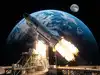
Japan launches spacecraft to mysterious moons of Mars in a bold mission to bring home soil samples
Five of the world’s space agencies joined forces for the five-year mission that will attempt to land a robotic prospector plus a rover on Phobos, the larger and closer of Mars’ two pint-sized moons. The Japan Aerospace Exploration Agency, which is leading the bold sampling effort, launched the spacecraft before dawn from the country's main spaceport on Tanegashima Island.

America brings space warfare into the open. Where does India stand?
The United States has publicly acknowledged possessing on-orbit space control weapons. This disclosure marks a significant shift in how space is viewed militarily. Russia and China are also developing offensive space capabilities, increasing global tensions. India has demonstrated kinetic anti-satellite capabilities and is expanding its military space infrastructure. Nations are now preparing for potential conflicts in Earth's orbit.
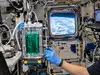
In 2025, DLR tested continuous spirulina growth on the ISS for future closed-loop life support; Limnospira indica produced oxygen and edible biomass in microgravity
In a groundbreaking experiment, scientists have successfully cultivated spirulina aboard the International Space Station, paving the way for future Mars exploration. This remarkable blue-green algae can generate oxygen and produce biomass, allowing astronauts to grow food and breathable air independently of Earth. With its high nutritional value and small ecological footprint, spirulina could revolutionize space travel and even enhance disaster relief efforts back on our planet.

SpaceX's first Starfall customer is European mission integrator Space Cargo
Space Cargo aims to fly in 2028 an orbital reentry flight on the first commercial mission of Starship, which will deploy SpaceX's Starfall - a disk-shaped capsule designed to carry materials on short trips through orbit and back to Earth.
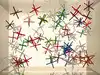
In 2024, ESA flew bouncing hexapods to 256 km on a Swedish sounding rocket; six minutes of microgravity showed how complex grains collide and transfer energy
A Swedish rocket successfully launched miniature brass crosses designed for microgravity research. Scientists are investigating how these irregularly shaped particles interact and lose energy upon collision, advancing our understanding of celestial objects such as asteroids and planetary rings. The implications of this study extend to industrial applications on Earth, with preliminary results indicating that particle clusters exhibit surprising behavior in space.

What to know about Europe's push to compete in space and what it still can't do without America
European nations convened a summit to address competition in the global space market. Concerns about reliance on foreign satellite services drive Europe's sovereign capability push. Recent events highlighted the critical need for independent space infrastructure and launch capacity. A new European rocket launch offers a promising step towards greater autonomy. Future decisions will shape Europe's role in crewed spaceflight and orbital independence.
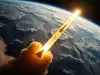
In 1947, the military sent fruit flies 67 miles into space to test radiation risks. 11 years later, NASA was founded in 1958, with animal flights underway in America now
1947 mission was part of a larger American effort to understand whether living organisms could survive the journey into space. Beginning in the mid-1940s, military and scientific teams used captured German V-2 rockets for research after World War II.

In 2013, a special medical research facility was started in Cologne, Germany to understand how humans adapt to extreme environments: How :envihab helps prepare astronauts?
In 2013, a special medical research facility was started in Cologne, Germany to understand how humans adapt to extreme environments. The facility studies how the human body responds to microgravity-like conditions. Its bedrest studies help researchers examine changes in bones, muscles, balance, vision and coordination and test measures that could protect astronauts during space missions.
Japan aims for the moons of Mars
Japan's MMX mission will blast off soon to collect Martian moon samples. The spacecraft will orbit Mars for three years and land on Phobos. This mission aims to understand Solar System origins and life's emergence. A rival Chinese mission also plans to return Mars samples around 2031. The Japanese mission could also prepare for future human exploration of Mars.

Germany eyes lasers, spy satellites in military space spending splurge
Germany is investing 35 billion euros in its military space program. This includes a new secure communication satellite network with over 100 satellites. The country will also develop capabilities to disrupt enemy satellites using non-destructive methods. Germany aims to protect its space assets and enhance its deterrence posture in orbit.
Though it's not the moon yet, it's the next best thing for European astronauts
The European Space Agency has opened the LUNA facility in Germany to simulate lunar conditions for astronaut training. The facility features ground-up volcanic rock and movable trolleys to mimic the moon's surface and low gravity. ESA aims to prepare astronauts for future moon missions under NASA's Artemis program by 2030.
Germany signs U.S.-led space norms pact Artemis Accords
Germany has become the 29th country to sign the Artemis Accords, a multilateral agreement led by the United States that aims to establish norms of behavior in space and on the lunar surface. The signing is significant as Germany is a key player in the European space program and an economic powerhouse in Europe. The accords seek to clarify and update principles of the 1967 Outer Space Treaty, promoting scientific transparency and coordination to avoid interference in space activities.

Qatar FIFA World Cup: Japan stuns Germany with late strike; wins 2-1
The second goal never came, however, and Japan's raids into the German half became more and more frequent, culminating in Doan's equaliser and a brilliant finish from Asano eight minutes later. The defeat was the third in a row in the opening match of a major championship for Germany after a loss to Mexico at the 2018 World Cup, when they bowed out in the first round as champions, and to France at Euro 2020.
Russian nuclear rhetoric rekindles German Cold War fears
Deep inside a decommissioned nuclear bunker built into a Cologne subway station at the height of the Cold War, tour guide Robert Schwienbacher says he is getting a number of inquiries from Germans asking for space available in an emergency.
Russia to prioritise making military satellites
"The priority here is the creation of spacecraft in the interests of both Roscosmos and Russia's defence ministry," Rogozin said, adding that all future spacecraft will be of "dual purpose".

France conducts first military drills in space
Codenamed "AsterX" in a nod to the first French satellite Asterix from 1965, the drills will simulate the monitoring of a potentially dangerous space object, as well as a threat to a satellite.

Sleep to get rich: NASA & ESA project will give people Rs 13 lakh to lie in bed for 60 days
The scientists want to study how weightlessness affects the human body.

India, France plan satellites for maritime surveillance: French space agency chief
France will also share its expertise with the Indian Space Research Organisation (ISRO) on inter-planetary missions to Mars and Venus, the Indian space agency's two major missions, Gall said.
India aiming for international synergy in space missions: ISRO
India is aiming for more international synergy to assuage the huge costs and enormous human resources involved in taking up space missions.
Load More


