
GEOPOLITICAL RIVALRIES
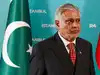
Makkah defence pact with Saudi Arabia, Turkiye not directed against any country: Pak Deputy PM Dar
Pakistan's Deputy Prime Minister Ishaq Dar highlighted the Makkah Joint Defence Agreement with Saudi Arabia and Turkiye. The agreement is aimed at enhancing regional stability without targeting any specific country. Dar emphasized the importance of collective security and Pakistan's balanced foreign policy strategy in light of geopolitical tensions. He also addressed the ongoing conflicts in Jammu and Kashmir and Palestine as crucial regional issues.
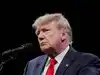
Kiss your wife goodnight: Donald Trump says he threatened to arrest unnamed top AI executive
US President Donald Trump revealed he issued a serious threat to an unnamed AI executive regarding security issues. After receiving intelligence about risk from an AI firm, he intervened directly with a warning of imminent arrest. Trump emphasized the need for American technological dominance in the face of competition from China and expressed a willingness to work with Democrats on regulations.
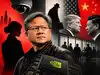
Nvidia scandal: The AI arms race puts human spies back into the game
The Nvidia controversy involving CEO Jensen Huang and a woman suspected by US intelligence of having links to Beijing has renewed concerns over corporate espionage in the AI industry. Recent cases involving OpenAI and Google have also highlighted risks from insiders and traditional spying methods.

Lula vs Bolsonaro: As Brazil lies on the brink of tilting right, India watches its major BRICS partner
Flávio Bolsonaro secured leading votes against incumbent Luiz Inácio Lula da Silva in Brazil's elections on October 4. The runoff on October 25 could solidify right-wing power across South America, following a regional trend. Lula aims to reduce economic inequality while Bolsonaro focuses on crime and spending cuts. India is observing the elections closely due to its strategic partnership with Brazil in various sectors.

Behind big billions, the China hedge begins to take shape in India
Hyundai Motor Group plans to invest $15.5 billion in India over the period of 2026 to 2032. This initiative aims to strengthen local manufacturing and expand research and development facilities. Attracting global interest, especially with competitors like Toyota and Suzuki also enhancing their footprint, Hyundai’s success hinges on optimizing logistics and harnessing skilled labor for maximum output.
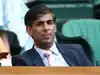
India, Gulf gain room to manoeuvre as US-China rivalry reshapes world, says former UK PM Rishi Sunak
Rishi Sunak stated that countries such as India and Gulf nations are shaping global orders independently. He emphasized the increasing geopolitical uncertainty as these nations do not always align with the US or China. Sunak expressed concern over the rise in armed conflicts worldwide since World War II, noting 61 active conflicts currently. The discussion took place at the Bloomberg New Economy Forum 2026 in New Delhi.
- Go To Page 1

"You don't want it too hot...too good": S Jaishankar calls for a "Goldilocks scenario" to navigate US-China rivalry
S Jaishankar emphasized the crucial role of emerging powers in the midst of escalating US-China tensions. He suggested a 'Goldilocks scenario' to achieve a balanced approach in the complex geopolitical landscape. Nations are increasingly prioritizing self-reliance and building strategic alliances over rigid alignments, as they evaluate their contributions to global discussions and reshape their international roles, fostering a new cooperative framework through adaptable partnerships among middle powers.

Spy chief Jay Clayton, the Trump loyalist tech bosses trust on AI
The 60-year-old lawyer, who will keep his post as director of national intelligence, is unlikely to question the central place of artificial intelligence in the US economy, even as opposition to the technology grows among American voters.

ET Alpha Wealth Summit 2.0: Decoding the new investment landscape and shift in smart money
Transformations in the global economy are reshaping how investors allocate capital and devise strategies. Geopolitical conflicts and tech rivalries are challenging conventional wisdom, leading to heightened interest in markets such as India, Southeast Asia, and the Gulf states. Strategic investments in infrastructure and commodities have gained importance. The upcoming ET Alpha Wealth Summit aims to delve into these transformative investment trends.
Pandas then, pandas now: Trump and Xi are well past Nixon-era magic
Donald Trump and Xi Jinping recently met in Washington to symbolize cooperation in US-China relations. The summit featured the announcement of two pandas to Zo Atlanta as a gesture of friendship. They extended a trade truce rather than resolving major economic disputes or tariffs. Despite strategic rivalry, both countries aim to maintain open channels for cooperation.
Xi Jinping tests Donald Trump with 'Thucydides Trap'
Chinese President Xi Jinping asserted that the US and China should work together to avoid conflict. He emphasized that China's rise does not have to threaten the United States' position. Despite past confrontational rhetoric, President Trump responded positively, highlighting their relationship. Critics remain skeptical, arguing that China's military expansion poses significant risks. Secretary of State Marco Rubio stressed the importance of engaging with China amidst these challenges.
AI may transform economies, but US-China rivalry makes slowing it down unlikely
AI's rapid advancement poses challenges, as concerns from key stakeholders highlight potential risks to humanity. Political leaders in the US and China control the direction of AI development despite differing perspectives. Both countries rely on AI to sustain economic growth amid demographic challenges and competitive pressures. The AI race reflects broader geopolitical rivalries, making coordinated regulation difficult.

On the table or on the menu? A new power play begins at the UN
Partners for Multilateralism, or P4M, unites diverse nations to reform global institutions. This new grouping reflects a changing global mood and a desire for greater maneuverability. Countries seek more influence in a multipolar and contested international system. P4M offers an open framework for issue-based coalitions across different political traditions. It signifies a new mood where middle powers think beyond established alliances.

Don’t allow US to weaponise space: From Reagan’s ‘Star Wars’ to Trump’s space weapons push
Reagan's 'Star Wars' vision is now reality as the US confirms weapons in space, sparking global fears. Despite Moscow and Beijing's calls for restraint, the US Space Force's creation signals no turning back. This escalation, with advanced tech targeting satellites, risks collateral damage and diverts funds from Earth's crises, potentially leading to a new era of M.A.D.
EU chief Ursula von der Leyen says she wants Canada to become the bloc's 1st associate member
European Commission President Ursula von der Leyen proposed making Canada the European Union’s first associate member, as Ottawa seeks closer ties with Europe amid deteriorating relations with the United States. The proposed partnership would expand cooperation beyond trade into defence, technology, energy, critical minerals, AI, cybersecurity and economic security.

Belarus ready for deep industrial cooperation and widen agri sector partnership with India: FM Maxim Ryzhenkov
Belarus is ready for deeper industrial cooperation and is highly interested in the advanced development of Indian pharmaceutical companies, and prepared to establish joint ventures and localise production in India, Maxim Ryzhenkov said.

US-China AI race takes a dangerous turn: former White House official says Washington must prepare for extreme measures if China reaches AGI first
A US official proposed extreme options to counter China's potential artificial general intelligence breakthrough. These options include intelligence operations, cyber activity, and military action against Chinese AI infrastructure. Experts warn that attacking data centers could trigger a direct conflict between nuclear-armed nations. The US currently leads in AI, but China's rapid progress poses a significant challenge. The race for AI dominance could reshape global economic and military power dynamics.
Trump's Moon claim isn't a joke. A lunar power struggle has begun
Trump's "The Moon is Ours" post signals emerging lunar geopolitics. Nasa's Artemis program plans a permanent lunar presence, focusing on resource-rich areas. Private companies like SpaceX and Blue Origin are now key players in lunar development. China and Russia are also building their own lunar infrastructure and partnerships. This competition focuses on practical control and access to lunar resources.

Paint makers expect healthy FY27 demand amid price hikes; competition intensity remains high
Leading paint firms foresee sustained double-digit growth through the festive season. Companies are implementing price increases to manage rising input costs effectively. Demand remains robust from housing and infrastructure sectors, supporting industry projections. Fierce competition persists across all paint market segments.

China's Pacific influence campaign threatens regional unity, Taiwan official warns
Taiwanese officials urge closer international scrutiny of China's Pacific influence. China's growing geopolitical rivalry impedes regional consensus and unity among Pacific nations. Taiwan respects the 'Pacific Way' and supports regional priorities through its engagement. Concerns over security and political independence arise from China's expanding influence. Disagreements over missile-test transparency highlight challenges to collective regional positions.

US, China gear up for mid-September AI safety talks
The talks, the first official bilateral discussions devoted exclusively to AI between the US and China since US President Donald Trump took office for a second time, will be led by US Treasury Secretary Scott Bessent on the US side, the sources, who were briefed on the planning, said on condition of anonymity.

US, China gear up for mid-September AI safety dialogue
The United States and China are set to engage in key talks about the safety implications of artificial intelligence. The discussions will focus on collaboration to monitor AI-driven cyberattacks and mitigate future risks. Additionally, they will consider the establishment of self-regulating AI laboratories and the sharing of relevant information.
SCO Summit: Kazakhstan's Tokayev echoes PM Modi on Eurasian security, human centric approach
At the recent SCO summit, Kazakhstan's President Kassym-Jomart Tokayev emphasised the group's evolution and a collaborative philosophy. He called for enhanced mutual trust in security while prioritising expanded economic partnerships.
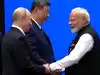
SCO Summit 2026: Power trio reunites as PM Modi meets Vladimir Putin and Xi Jinping at Bishkek meet
Prime Minister Narendra Modi met Chinese President Xi Jinping and Russian President Vladimir Putin at the 26th SCO Summit in Bishkek, reviving a closely watched three-way diplomatic moment. The encounter comes amid a cautious India-China thaw, renewed border-management efforts and ahead of India’s upcoming BRICS summit in New Delhi.

China’s Pacific push gets a boost as key leaders skip island forum
Several Pacific island leaders are absent from a key regional summit in Palau. This fragmentation complicates efforts to project unity amid rising China-Taiwan tensions. China is pushing back against Taiwan's participation in the forum. The summit's agenda also includes economic development and regional integration. The absences highlight the region's difficulty in speaking with one voice.

Great power rivalry threatens to overshadow a summit of some of the world's smallest island nations
At the Pacific Islands Forum in Palau, leaders of small island nations are gathering to navigate their geopolitical landscape amidst fierce competition between China and the United States. Facing urgent challenges such as climate change and economic instability, these nations would need to reconcile their differing alliances to maintain a united stance.
ET World Leaders Forum: EAM Jaishankar to speak on India’s foreign policy amid global tensions
External affairs minister S Jaishankar will be a lead speaker at The Economic Times World Leaders Forum on August 22, addressing India’s foreign policy amid geopolitical rivalries, trade tensions and shifting global alliances. The August 21-22 forum will bring together policymakers, business leaders, academics and global voices to examine these changes.

Cost of living crisis biggest short-term risk; sustainable climate action long-term: WEF
Releasing its annual Global Risks report in London ahead of its Davos summit next week, the WEF also said geopolitical rivalries and inward-looking stances will heighten economic constraints and further exacerbate both short- and long-term risks.

Geopolitical rivalries are transforming the contours of trade
The shifting contours of the global trading system mark a kind of “reglobalization” where multinational companies are adapting their trade networks to accommodate the new economic and geopolitical challenges.
Load More

