
GEOLOGICAL ACTIVITY ON MARS

Mars may still be hiding hot magma underground. Scientists found a strange gas that could explain it
Scientists have detected unusual amounts of hydrogen chloride gas above the Alba Mons volcanic region on Mars. A study published in Science Advances suggests that the gas could be escaping from magma hidden beneath the planet's surface.
NASA Curiosity Gediz Vallis discovery: What do the yellow crystals found by Curiosity on Mars tell us about the planet's ancient history?
NASA's Curiosity rover has made a groundbreaking discovery on Mars, uncovering pure elemental sulfur in a rock formation. This unexpected find has prompted scientists to explore its ancient origins, with two studies offering intriguing theories. One suggests that volcanic gases from billions of years ago contributed to sulfur's formation, while another points to non-biological processes occurring in acidic water. Such findings deepen our understanding of Mars' complex geological past.
Pink rock found in Sahara turns out to be 4.1-billion-year-old Martian meteorite, reveals clues to ancient Mars
A meteorite named Teghaza 001, discovered in the Sahara Desert, reveals insights into ancient Martian geology. Scientists determined it originated on Mars over 4.1 billion years ago and underwent volcanic processes. Detailed analysis of zircon crystals indicated interactions with water, suggesting a more active early environment. Researchers identified potential geological regions on Mars related to the meteorite's origin.
One meteorite crash thousands of years ago, created a mysterious lake. Its water can turn pink and red due to a strange phenomenon under the surface
A meteorite impact thousands of years ago created a remarkable lake in Maharashtra, but the crater is only part of what makes it unusual. The water can appear green at one time and turn pink or red under certain conditions. The reason lies not in the lake’s surface, but in the extreme environment beneath it, where salt-loving microorganisms thrive and produce pigments that can change the colour of the water.
NASA is preparing the Moon for humans: Three new missions will search for underground shelter, water ice and hidden hazards
NASA is planning three investigations on the Moon to gather essential information for a future lunar outpost. These investigations will monitor environmental conditions, explore for underground lava tubes, and search for lunar ice resources. The data collected will inform the design and safety of structures supporting human activities on the Moon. NASA aims to leverage commercial services for delivering scientific payloads to the lunar surface.

Mars had a secret water history: NASA rover finds ancient groundwater and hot fluids that reshaped the planet after its ancient lake vanished
NASA's Perseverance rover discovered that Jezero Crater's Margin Unit was influenced by various water processes. The findings reveal alterations by ancient groundwater, lake water, and later hot fluids. These discoveries challenge previous assumptions about the crater's geological history and its water systems. Researchers believe that olivine and other minerals could provide clues about ancient habitability. The insights gained from Jezero may inform future studies on Mars' environmental changes.
- Go To Page 1

Why NASA is studying 1.2-billion-year-old Scottish rocks for clues to ancient life on Mars and the Red Planet’s watery past
Ancient rocks found in Scotland's Stoer Formation are being studied by NASA to understand potential signs of life. These rocks formed 1.2 billion years ago under water-influenced environments and evidence of microbial life is preserved. NASA's Perseverance rover discovered a rock on Mars with distinctive mineral patterns that may indicate biological origins. The Scottish research helps interpret findings from Mars while preparing for possible future sample analysis.

The 145°F survival mystery: How a tiny California 'fire' amoeba thrives where complex life was thought impossible
Incendiamoeba cascadensis, a newly discovered amoeba, can reproduce at temperatures up to 145°F. It challenges prior beliefs about the heat limits for complex life. This organism demonstrates unique adaptations that allow it to thrive in extreme conditions. Its discovery has implications for understanding potential life forms on other planets. Researchers suggest that similar organisms may exist in geothermal environments worldwide.

In 2025, scientists found 'strongest hints yet' of life on Mars and K2-18b—but, a survey of hundreds of astrobiologists say we still haven’t found aliens
Recent scientific findings on K2-18b and Mars sparked alien life speculation. A survey revealed few astrobiologists believed these discoveries confirmed extraterrestrial life. Researchers found the K2-18b exoplanet evidence less convincing than Martian rock features. Many scientists remained neutral, awaiting further analysis and ruling out non-biological explanations. These intriguing clues offer questions for further scientific investigation and testing.
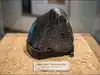
In 2011, a 320-gram Martian meteorite discovered in Sahara Desert reveals red planet Mars once had water
In 2011, a 320-gram Martian meteorite discovered in Sahara Desert revealed evidence that Mars once had water. Known as Black Beauty or Northwest Africa 7034, the meteorite contains hydrated materials and fragments dating back about 4.48 billion years. Scientists used X-ray and neutron tomography to study its structure. The findings provide evidence of ancient water interacting with the Martian crust and add information about Mars’ early environment.

Scientists Thought This Ancient Ocean Floor Was Destroyed Forever: Until Hidden Rocks Revealed a Lost Piece of Earth’s Earliest Crust
Scientists have unearthed evidence of Earth's ancient oceanic crust, older than four billion years, hidden within modern continental rocks in Western Australia. This groundbreaking discovery, revealed through tungsten isotope analysis, suggests that remnants of our planet's earliest crust survived deep within the mantle, offering a revolutionary glimpse into Earth's violent, formative past.

NASA’s Perseverance rover has captured a panoramic view of ancient Martian terrain, and the photograph may hold clues about Red Planet's hidden secrets
NASA’s Perseverance rover has captured a breathtaking 360-degree natural-color panorama of a region nicknamed “Crocodile Bridge” on the rim of Jezero Crater. The image, made from 980 photos, showcases some of the oldest rocks in the solar system and offers new insights into Mars’ ancient geological history.
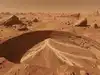
NASA’s Rover Found a Lost River System Under Mars, And It Changes What We Know About Its Past
NASA's Perseverance Rover has uncovered a hidden river delta on Mars. This discovery suggests Mars experienced multiple wet periods, not just isolated events. Layers of sediment indicate rivers flowed and deposited material over extended durations. This finding reshapes our understanding of Mars' ancient climate and boosts the search for signs of past life.

NASA’s ‘Zebra Rock’ on Mars Is Turning Heads — Here’s Why Scientists Are So Intrigued
Mars's red landscape surprised scientists with a black-and-white striped rock. Dubbed 'zebra rock', it stands out in Jezero Crater. The stripes suggest past geological activity like slow magma cooling or intense heat and pressure. This rock may have travelled from elsewhere. It offers a glimpse into Mars's hidden underground layers and its ancient, active past. Future analysis will reveal more.

Mars Gullies Formed by Sand and CO2, Not Water
Mars' strange gullies are not carved by water as once thought. New research shows sand and seasonal carbon dioxide ice are the main sculptors. This discovery reshapes our understanding of Mars' geology. It suggests the planet is drier today than previously hoped. Scientists continue to study Mars, refining the search for ancient water and potential life.
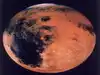
Did You Know: Mars isn’t actually round — here’s the surprising shape of the red planet!
Did you know: While Mars may appear round, its true shape is subtly stretched and uneven, a product of its unique geological past and internal dynamics.
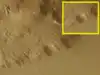
Human-tongue-shaped object found on Mars? ESA discovers horseshoe-shaped channel at Mars’ mountain three times taller than Everest and pinpoints ancient water flow
New images from ESA's Mars Express reveal Olympus Mons' colossal scale and intriguing features. Frozen lava tongues cascade down its slopes, while a horseshoe-shaped channel hints at past lava and water flows. These findings offer a clearer glimpse into the volcanic and hydrological forces that shaped this Martian giant, suggesting a geologically young surface.

NASA Curiosity Rover Shocking Discovery: This multi-billion-year-old rock on Mars reveals…
NASA Curiosity Rover's shocking discovery about Mars is here. NASA’s Curiosity rover has captured images of a coral-shaped rock inside Gale Crater on Mars. The structure formed billions of years ago when the planet had water. The rock’s shape results from mineral deposits in cracks, later exposed by wind erosion. Similar finds add to evidence of past habitability.

Aliens on Mars? What is this strange square? Mysterious images spark debate as netizens link it to the 'Pyramids of Giza'
A perfectly square-shaped structure has been discovered on Mars, which is 3 kilometers wide. The discovery has generated various theories about its origin. Elon Musk has expressed interest in investigating the formation. While some experts suggest natural geological processes, others speculate about extraterrestrial origins. The discovery highlights the importance of continued exploration of Mars.

Tremors on Mars may hold the key to decoding a 50-year mystery of its surface
A recent study published in Geophysical Research Letters provides new insights into the Martian dichotomy, a striking geological difference between Mars' northern and southern hemispheres. Using data from NASA’s InSight lander, scientists suggest internal heat transfer and mantle convection shaped the planet’s surface, challenging earlier theories of external cosmic impacts. While the southern highlands are ancient and magnetised, the northern lowlands are younger and lack magnetisation.

As Elon Musk plans human colony on Mars, here's what India is planning for our neighbouring red planet and Venus
India's space agency, ISRO, unveils ambitious plans for a Mars landing and a space station, aiming to facilitate a moon landing by 2040. This coincides with Elon Musk's SpaceX preparing for multiple uncrewed Starship missions to Mars within the next two years. Meanwhile, ISRO's Venus mission, Shukrayaan-1, is under development to study the planet's surface and atmosphere.

Meteorites from Mars help scientists understand the red planet's interior
Of the over 74,000 known meteorites on Earth, only around 385 originate from Mars. Scientists can determine that these meteorites come from Mars through various pieces of evidence, including the unique composition of Mars' atmosphere and its distinct oxygen isotopes.

NASA picks geology team for first crewed lunar landing mission
Amid the frenzied anticipation in India around its third lunar mission - Chandrayaan-3, American space agency NASA has chosen a geology team that will develop the surface science strategy for the first crewed lunar landing mission in more than 50 years, the agency informed through an official release.

Documentary on Mars rover 'Good Night Oppy' released in theatres
A documentary on Mars rover Opportunity, "Good Night Oppy," hit big screens on November 4.

The Red Planet deep under: Potential life on Mars likely lived below the surface
Underground heat would have been possible 4.1 bn years ago or in the Noachian era on Mars.
Data from NASA's Curiosity rover hints at ancient megaflood in Mars: Study
Based on the analysis, scientists including those from Cornell University in the US, said these floods of "unimaginable magnitude" set up gigantic ripples that are tell-tale geologic structures familiar to scientists on the Earth.
The loud sound of silence: Nasa's Mars rover records audio rumblings, space agency blames it on seismic activity
InSight has detected more than 100 audio signals since April.

Tempe Fossae: The 'red' that stands out in the Martian rainbow
The Tempe Fossae comprises part of the Ascuris Planum, one of the most geologically diverse regions on the planet.
New technique may help detect life on Mars
Visits to Mars by unmanned probes from NASA and the European Space Agency have found evidence that a prime condition for life once may have existed: water.
Load More

