
GENOMIC AND EPIDEMIOLOGICAL SURVEILLANCE

Why scientists call PJ.2.1 a ‘jump’ variant: The COVID strain that arrived with dozens of mutations at once and spreads by gripping your cells more tightly
A new variant of SARS-CoV-2, named PJ.2.1, was detected in Canada and has spread globally. It has over 25 mutations in its spike protein, which enhance its binding to human cells. Researchers are observing its spread in countries like the US, Spain, and Australia among others. Currently, there is no evidence linking PJ.2.1 to increased severity of illness or hospitalization.
No new strain of H1N1 identified, current surge part of seasonal influenza pattern: ICMR DG
The ICMR director general stated H1N1 infections are seasonal and not a new strain. Most cases are mild and self-limiting, requiring no widespread panic. Current circulating viruses align with seasonal patterns observed in recent years. Individuals at higher risk should exercise caution and seek medical advice. Routine hygiene and avoiding unnecessary medication are advised for public protection.

Centre deploys national outbreak team to Gujarat, Rajasthan as Chandipura virus cases rise
A national team has been sent to Gujarat and Rajasthan to aid the ongoing Chandipura virus disease outbreak. Experts are investigating the illness and its spread, working with state health authorities. Researchers are also examining potential insect carriers and animal reservoirs for the virus. Community surveys are underway to detect undetected infections and improve diagnostic tests. Whole-genome sequencing is being conducted to understand the circulating virus strain.

Rising Covid cases push experts to seek sewage surveillance
Amid rising Covid-19 cases in India, experts advocate for enhanced surveillance. They suggest using waste water analysis and genome sequencing. This helps in early detection of outbreaks. A new variant, NB 1.8.1, is under observation. While the current threat is low, vigilance is crucial. Elderly and immunocompromised individuals should take precautions. Following Covid-appropriate behavior is important.

Govt to recast Insacog as Covid cases decline
The Indian government is considering restructuring Insacog, the consortium monitoring genomic variations in SARS-CoV-2, due to the decline in new Covid-19 cases and reduced testing frequency. Experts aim to determine whether to continue extensive sequencing or streamline it to fewer laboratories based on current needs.

Niti Aayog group pitches for a separate law to tackle future public health crisis
An expert group from Niti Aayog has recommended a new Public Health Emergency Management Act to handle future health crises. The proposed act aims to address various health issues, including pandemics and disasters, and suggests creating skilled public health cadres. It also emphasizes the importance of early response and robust surveillance systems.
- Go To Page 1
India Covid panel head clarifies on Kerala death amid JN.1 subvariant scare
India reported 260 new COVID cases, including one death in Kerala, where the JN.1 subvariant was recently detected. The center issued an advisory for heightened vigilance, emphasizing increased testing and genome sequencing. INSACOG Chief Dr. NK Arora clarified the Kerala death, attributing it to underlying health conditions. He assured the public about the JN.1 subvariant, underscoring INSACOG's monitoring efforts.

Insacog meets on friday as Covid cases rise
India's Covid active caseload Monday rose to 1,828 while one death was recorded in Kerala. On Sunday, India logged 335 fresh Covid infections and the number of active cases rose to 1,701, the health ministry said. Meanwhile, Karnataka's minister for health and family welfare Dinesh Gundu Rao on Monday advised senior citizens and those with comorbidities to wear masks. "There has been no serious impact so far as neither clustering or any unusual pattern is seen. We have to keep a close watch clinically and epidemiologically," added the member.

XBB remains the dominant variant
INSACOG has not seen any "unusual pattern" or "clustering" in the country. "Severity depends on population immunity and local epidemiology. In the last few weeks we have seen cases going down contrary to the trend seen by some other countries, a senior government official said.

China releases new COVID-19 control protocol, calls for monitoring mutated variants
The 10th edition of the virus prevention and control protocol has been released in accordance to the decision to downgrade the epidemic management from Class A to Class B.

Omicron subvariants BA.5.2, BF.7 responsible for latest COVID outbreak in China: WHO
In a statement, WHO said that the Technical Advisory Group on Virus Evolution (TAG-VE) held a meeting with the Chinese Center for Disease Control and Prevention on Tuesday and said, "The China CDC analysis showed a predominance of Omicron lineages BA.5.2 and BF.7 among locally acquired infections. BA.5.2 and BF.7 together accounted for 97.5 per cent of all local infections per genomic sequencing."
New Covid variant found in India may fuel fresh infections: Experts
While the government is yet to confirm the presence of the new sublineage, Shay Fleishon, from the Central Virology Laboratory at Sheba Medical Centre in Tel Hashomer, said in a series of tweets on Sunday said that 85 sequences from eight countries had been uploaded so far on Nextstrain, an open-source platform of genomic data.

Consider booster dose for those above 40: INSACOG
"Vaccination of all remaining unvaccinated at-risk people and consideration of a booster dose for those 40 years of age and over, first targeting the most high-risk / high-exposure may be considered," the Indian SARS-CoV-2 Genomics Sequencing Consortium (INSACOG) said in its weekly bulletin dated November 29.
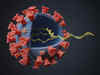
Centre planning to test sewage water for COVID-19 virus load
The department of biotechnology has drawn up a detailed sewage surveillance plan. This plan will be rolled out through the Indian SARS-CoV-2 Genomics Consortium (INSACOG), a network of 35 genome sequencing laboratories.
Coronavirus: Scientists from 4 BRICS nations to carry out genomic sequencing, mathematical modelling
A whole-genome sequencing is required for the identification of genetic mutations and recombinations of the virus, while epidemiological studies can help assess its distribution. Mathematical modelling is required to project its future spread.

Newly formed four city clusters to intensify India’s COVID-19 genome sequencing efforts
Research institutes in Bengaluru, Hyderabad, New Delhi and Pune form these four clusters. “The consortium will track the emergence of viral variants correlated to epidemiological and clinical outcomes,” the media statement from Bengaluru based National Centre for Biological Sciences (NCBS), which is a part of the consortium, said.

COVID-19: Consortium of four Indian cities funded for enhanced genome surveillance
Established with support and seed funding from Rockefeller Foundation, the new effort will track the emergence of viral variants correlated to epidemiological dynamics and clinical outcomes.

Double mutant infecting more than UK variant now
While the incidence of the UK variant seemed to be declining, the double mutant variant B.1.617 - found in Maharashtra - could be a cause of the current surge seen over the last one and half months, said Sujeet Singh, director, National Centre for Disease Control.
Why a new lineage or the 'Bengal strain' is troubling news
“The proportion of B.1.618 has been growing significantly in recent months in Bengal,” said Vinod Scaria, who researches genome mutations at the CSIR-Institute of Genomics and Integrative Biology (IGIB) on Twitter, adding, “along with B.1.617 it forms a major lineage in West Bengal”.

1,189 samples have tested positive for variants of concern of SARS COV-2 in India: Health Ministry
These include 1,109 samples testing positive for the UK variants, 79 for the South Africa variant and one sample for the Brazil variant, the ministry said. Till April 15, 13,614 samples have been processed at the 10 designated INSACOG laboratories for whole genome sequencing (WGS), it added.

Two +ve tests at interval of 102 days with one -ve defined as SARS-CoV-2 re-infection: ICMR study
According to the study 'SARS-CoV-2 re-infection: development of an epidemiological definition from India' which has been published by Cambridge in the Epidemiology and Infection journal, an investigation was conducted with the objective to develop an epidemiological case definition of possible SARS CoV-2 re-infection and assess its magnitude in India.

India's total cases of mutant coronavirus strains reach 795
Minister of State for Health Ashwini Choubey told Rajya Sabha on March 16 that no case of reinfection by mutant variants of SARS-CoV-2 virus has been reported from India so far.

Cases of new UK mutant COVID strain go up to 73 in India
Of the 73 cases, the mutated UK strain was detected in eight samples at National Centre for Disease Control (NCDC), New Delhi, in 20 at the Institute of Genomics and Integrative Biology (IGIB), Delhi, in one at National Institute of Biomedical Genomics (NIBMG), Kalyani (near Kolkata), in 30 at the National Institute of Virology in Pune, in three at the Centre for Cellular and Molecular Biology (CCMB) in Hyderabad and 11 were sequenced at the National Institute of Mental Health and Neuro Sciences Hospital (NIMHANS) Bengaluru.

New COVID-19 strain: Total 38 people in India test positive
It said comprehensive contact tracing has been initiated for co-travellers, family contacts and others. Genome sequencing on other specimens is going on, the union health ministry said in a statement.

New COVID-19 strain: Total 29 people in India test positive
Out of these 29 cases, eight have been registered at National Centre for Disease Control in Delhi, two at CSIR Institute of Genomics and Integrative Biology in Delhi, 10 at National Institute of Mental Health and Neuro-Sciences in Bangalore.

COVID mutant: Govt says focus on enhanced genomic surveillance; Taskforce suggests no change in treatment protocol
The genomic surveillance consortium, INSACOG, has been formed under the leadership of the National Centre for Disease Control (NCDC), New Delhi. Further, more than 50 samples of UK returnees are currently under sequencing at the designated laboratories.

RT-PCR test on arrival, separate isolation for COVID positive cases: Centre's SOPs for UK flyers
India has suspended all passenger flights connecting the United Kingdom from Wednesday till December 31 or till further orders in the wake of the emergence of a mutated strain of the virus there, joining several other countries that have imposed a similar flight ban.

Mutant Covid virus: Samples of UK positive cases to undergo genome sequencing study
If the samples indicate the presence of a new variant of SARS-CoV-2, the patient will continue to remain in a separate isolation unit while necessary treatment as per the existing protocol will be given, the health ministry stated.
Load More


