
GENERATIVE AI IN CHIP DESIGN

Hormones guiding history? Even with Jensen Huang resigning from Nvidia, the chip landscape will be irrevocably changed
The article argues that allegations of Chinese espionage involving former Nvidia CEO Jensen Huang need to be examined for their wider political, military and technological implications. It questions whether the Trump administration will fully investigate the matter, given Huang’s reported political connections and the risk of straining ties with China, which controls over 80% of processed rare earth supplies.

Fallout from the Nvidia scandal may dampen the exuberance around the AI boom
Nvidia CEO Jensen Huang resigned following reports of personal scandals, including extramarital affairs. His departure raised uncertainty in the AI sector and prompted rivals to consider increased competition. Competitors like Advanced Micro Devices and Broadcom saw share price gains on the news.

Not even a board seat: Jensen Huang walks away from every formal role at the company he founded in a Denny's booth
The company said that Jensen Huang had resigned from three positions. It included the President of Nvidia, Chief Executive Officer, and a member of the Board. The board initiated a search for a permanent Chief Executive Officer and would consider internal and external candidates. The Board and the company thanked Jensen for his immeasurable contributions to the company and the industry.
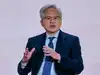
Nvidia loses its AI architect: Huang's exit puts AI dominance to test
Jensen Huang has resigned as CEO of Nvidia, which has raised concerns for the company and the AI industry. Colette Kress will serve as interim CEO while the board searches for a permanent successor. Huang's resignation follows reports of personal controversies, including extramarital relationships involving a former executive. Nvidia's chips are crucial for AI development, making Huang's departure significant amid technological competition.
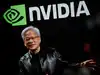
What comes next for Nvidia and AI industry after spy scandal
The scandal, which deepened after reports of a second affair emerged, has sent shares in the multi-trillion-dollar company plunging and raised questions about the future of Nvidia and the wider AI industry.
Nvidia's Asian supply chain prepares for life after Huang
Nvidia faces a turbulent leadership landscape as the board evaluates CEO Jensen Huang's future amidst scandals. Asian suppliers are on alert, considering how the situation might disrupt operations and impact their partnerships, particularly in the booming AI sector. While the potential for investment slowdowns raises concerns, some analysts cautiously predict minimal immediate disruption on production fronts.
- Go To Page 1

Chinese AI firms rush to secure Nvidia chip capacity as spy scandal stirs fear of US curbs
Chinese artificial intelligence companies are actively seeking to rent Nvidia-powered computing capacity from overseas data centres. They are motivated by fears of stricter US export controls and political controversies surrounding Nvidia's CEO. Major cloud providers and smaller AI labs are exploring international options to maintain access to advanced processors.
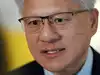
Who's next CEO at Nvidia? Top engineer and CFO favored as candidates
Nvidia's CEO Jensen Huang faces potential ousting from the board due to reported extramarital affairs. If removed, Colette Kress could serve as interim CEO due to her experience and familiarity. Meanwhile, Ian Buck, a key engineer at Nvidia, is seen as a strong long-term candidate for the position. Speculation also includes external candidates like Arm CEO Rene Haas. Nvidia's governance and direction are under scrutiny as these developments unfold.
Who could potentially replace Jensen Huang if Nvidia ousts him?
Nvidia's board is reportedly discussing the future of CEO Jensen Huang due to recent controversies surrounding him. Huang has been linked to extramarital affairs, including a connection to an accused Chinese spy. Speculation about potential successors includes internal candidates and family members, highlighting the absence of a clear succession plan. External candidates from other tech firms are also being considered as replacements for Huang.
China’s army-linked university was served Nvidia chips despite US sanctions
A Chinese university with close links to the country's military has purchased two of Nvidia's powerful H200 AI chips despite being on the US export blacklist, according to procurement records reviewed by Reuters. The findings raise fresh concerns over gaps in Washington's export restrictions and China's access to advanced American technology through domestic suppliers. Other Chinese universities and research institutions have also reportedly obtained restricted Nvidia chips or rented computing capacity powered by them.

Dragon's Army-linked university was served Nvidia chips despite US sanctions
The findings come as Nvidia and its CEO Jensen Huang face mounting scrutiny in Washington over his lobbying for looser restrictions on sales of AI chips to China, following reports alleging he was targeted by a Chinese spy.

Google's expanding AI chip business opens new opportunities for Samsung, SK hynix beyond Nvidia
Google's strategy to boost its tensor processing units is likely to create greater demand for high-bandwidth memory from Samsung and SK hynix. With nearly 100 TPU clients, including Oracle ready to utilize Google's chips by 2024, both memory giants aim for long-term supply contracts as the need for HBM in custom AI chips accelerates. However, the transition from this potential to actual orders is hindered by current production obligations.

Qualcomm initiates India layoffs: Here’s how much employees will get in severance
Qualcomm has begun implementing planned job cuts globally, affecting employees in India and the US (in California).
Nvidia stock crashes another 7%, down 32% in 24 trading days and wiping out $1.8 trillion: Is the Jensen Huang controversy creating a buying opportunity, or is Wall Street overlooking a bigger risk?
Nvidia stock crash: Can NVDA recover after losing $1.8 trillion? Since the Chinese spy controversy began, Nvidia shares have come under fresh pressure, falling another 7% and extending their 24-session decline to 32%. The sell-off has wiped out $1.8 trillion in market value. Concerns over Jensen Huang's leadership and a possible compromise of sensitive Nvidia technology are adding to investor worries, although both risks are considered unlikely.

Huang in suspense, chips may crack
Huang is a hands-on boss at Nvidia. Although he owns a small amount of the company's stock, replacing him will be difficult. In the new political dispensation, Washington may be forced to take a harder look at its export control regime and make it more watertight. 'Jensanity' offers a good trigger.

Adobe MAX 2026: AI Agents Come to Photoshop, Premiere Pro and Illustrator in Major Creative Cloud Overhaul
Adobe has now unveiled a major AI overhaul at MAX 2026, that brings intelligent AI agents to Photoshop, Premiere Pro, Illustrator and other Creative Cloud apps. The new tools can execute complex creative tasks, automate repetitive workflows and work with third-party AI assistants, while Adobe expands Firefly and GenStudio with new capabilities for creators and businesses.
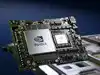
How China gets the Nvidia chips it needs to develop AI
Nvidia's dominance in the global AI chip market has come under scrutiny as US export restrictions fail to fully prevent China from accessing advanced processors. Chinese firms are reportedly obtaining Nvidia chips through smuggling and overseas data centres, while domestic players such as Huawei race to develop competitive alternatives.

Moonshot AI rents Nvidia’s top AI chips in China, documents show
Documents indicate that Moonshot AI possibly accessed advanced Nvidia chips despite US export restrictions and related investigations. The servers were reportedly rented from Super Micro Computer Inc. with significant financial backing from Lingmeixin Technology Co.
'No ordinary CEO': Why the AI race cannot do without Nvidia's Jensen Huang
Nvidia CEO Jensen Huang’s influence extends beyond chip supply, making him a central figure in the global AI industry. The company’s dominance in AI processors, investments across the sector and Huang’s close control over its strategy have raised concerns about the risks of depending heavily on one executive.
'No ordinary CEO': Why the AI race cannot do without Nvidia's Jensen Huang
The star power that 63-year-old Huang draws as the gatekeeper to Nvidia's chips shows how badly the AI industry is leaning on him for the graphics processing units that train models and run services such as ChatGPT.

Google to introduce two variants of in-house chips: Bloomberg News
The search giant's shares were up more than 2% in premarket trading. Through last close, the stock has fallen 9% so far this year. Alphabet did not immediately respond to a Reuters request for comment. Reuters could not independently verify the report.

Nvidia's Jensen Huang, the scandal-hit AI visionary in a leather jacket
Chips made by US chip titan Nvidia push the boundaries of artificial intelligence, but its leader Jensen Huang is in the spotlight over an affair with an alleged Chinese spy. That is an area of concern to US officials who believe he has been involved with the alleged spy, Alice Huang, who is linked to a Singapore-based data center company, according to the New York Times.

NSE rolls out direct-to-chip liquid cooling to scale AI computing capabilities; plans to scale GPU capacity beyond 80 this quarter
The NSE has deployed Direct-to-Chip Liquid Cooling technology at its on-premises data centre to support expanding AI infrastructure. The exchange plans to scale its GPU capacity to more than 80 units this quarter, with the cooling system designed to accommodate up to 224 GPUs across high-density racks.

AI boom turns chip packaging into the next battleground for semiconductors
Billions of dollars are being invested in advanced chip packaging due to the demand for AI chips. This growing need is pushing companies to expand their production capacities significantly. Taiwan's TSMC is at the forefront of packaging technology, yet limitations have spurred alternatives.

SoftBank credit default swaps hit 4-year high as AI profitability concerns mount
SoftBank Group’s five-year credit default swap spread climbed to a four-year high as investors grew increasingly concerned about the profitability of artificial intelligence investments. Rising borrowing costs, questions over returns from its OpenAI investment and uncertainty surrounding AI infrastructure spending have added to credit market concerns.

Qualcomm shares slump 9% as weak smartphone chip sales overshadow data-center momentum
Qualcomm's shares dropped significantly in early trading following disappointing smartphone chip sales. The company's largest business segment faced a 26% revenue decline, leading to lower overall chip sales. While Qualcomm's investments in data-center and automotive chips strengthen its growth potential, analysts remain skeptical about immediate earnings. Brokerages have reduced their price targets on Qualcomm's stock after recent results were released.

AI boom draws chip supply from other end-markets, Siltronic CEO says
Siltronic, which makes silicon wafers used in semiconductors, raised its annual sales forecast for the second time this year on Wednesday, citing stronger demand for its wafers.

Sarvam AI releases Prism, a fast decision model for enterprises: Here’s how it works
Sarvam AI has unveiled Prism, a sophisticated decision-making model aimed at enhancing operational efficiency and precision for businesses. With its ability to render quick, structured decisions from a set of defined choices, Prism recorded an average performance score of 71.8 and processed responses in just 44 milliseconds during evaluations. Organizations can effortlessly tailor Prism using their own datasets, making it adaptable and straightforward.

In 2026, Sonya Jin and Aadi Nashikkar-led Phinity Labs raised $5.2 million to let AI agents design computer chips from text prompts
Phinity Labs has raised $5.2 million to develop AI agents that can design computer chips from text prompts. Founders Sonya Jin and Aadi Nashikkar want the technology to explore chip architectures beyond conventional engineering methods. Backed by Uncork Capital, Moxxie and investors including Jeff Dean, the startup plans to build a system that tests designs using physical feedback and improves them before manufacturing.
Load More

