
FUTURE OF BRAIN CHIPS

'From full-time job to 3 days a week': HR professional shares why she chose 'rewirement' over early retirement
After 30 years in HR, including a role as chief HR officer at Harvard Business Publishing, 56-year-old Angela Cheng-Cimini resigned in December 2024 following the loss of several friends to illness. Rather than fully retiring, she took a part-time role at the Chronicle of Philanthropy, working three days a week in what she calls "rewirement," leaving room for mentoring young professionals and travelling with her husband.

Next-gen silicon wave could see India leapfrog global chip giants: Experts
India’s late entry into semiconductor manufacturing could help it catch up as the industry enters a new phase driven by silicon photonics, post-quantum security and neuromorphic computing. Experts said these emerging technologies could help new entrants leapfrog established players, as AI infrastructure faces pressures on computing power, bandwidth, energy consumption and security.

Psychology explains why you crave junk food when you're stressed - and why it's so hard to resist
Emotional stress disrupts brain reward systems, heightening the desire for sugary and fatty treats as individuals begin to associate these foods with comfort. Coupled with poor sleep, these cravings intensify, perpetuating an unhealthy cycle. By understanding the psychological cues behind these urges, we can proactively address cravings and cultivate healthier habits to replace the impulse for comfort eating.

Beijing-backed brain chip firm says it is 3 years behind Elon Musk's Neuralink
NeuCyber's frontier Beinao-2 product is an invasive BCI with flexible electrodes that fully implant into the brain, currently undergoing large-scale animal implantation. Neuralink's technical advantage is that its surgical robot can insert hundreds of electrodes into the brain in minutes for its invasive N1 chip.

Aravind Srinivas issues stark warning: Multi-billion data centers may soon become obsolete, Perplexity CEO flags 'biggest threat'
Perplexity CEO Aravind Srinivas has warned that massive data centers for which big tech giants Meta, Amazon, Microsoft and others are pouring billions of dollars may become irrelevant in the future. He mentioned that the biggest threat to traditional data centres is if AI “can be packed locally on a chip that's running on the device”. Perplexity CEO Aravind Srinivas highlighted a future where artificial intelligence (AI) shifts from centralised servers to local devices.

Kolkata born IITian invents an injectable chip that can treat diseases without surgery: Who is MIT researcher Deblina Sarkar
Kolkata born scientist Deblina Sarkar has developed a breakthrough brain treatment platform called Circulatronics. The technology uses microscopic electronic chips, or SWEDs, that travel through the bloodstream, cross the blood brain barrier, and implant themselves at diseased sites without surgery. Activated by an external laser, they successfully stimulated targeted neurons in mouse trials. Sarkar’s team at MIT aims to apply the system to conditions like Alzheimer’s, cancer and chronic pain, with human trials expected within three years.
- Go To Page 1

Scientists develop computer-like memory from shiitake mushrooms that could replace silicon-based chips
Scientists have engineered a novel memory device using mushroom mycelium, the intricate white threads beneath fungi. These bio-based circuits, dubbed 'mushristors,' exhibit memory capabilities by adapting to electrical currents, mimicking brain-like functions. This breakthrough offers a promising, eco-friendly alternative to silicon chips, potentially leading to more energy-efficient computing in the future.

LG, Samsung turn to Indian brains to power future chips
South Korean tech giants LG Electronics and Samsung Electronics are significantly increasing their investment in India's engineering talent, recognising the nation's shift from cost-competitiveness to capability superiority. This strategic move highlights India's growing role as a global hub for semiconductor design and high-tech R&D, bolstering its position in the global innovation value chain.
Why 2 nm chips matter in India's chip revolution
India is making significant strides in the semiconductor industry with the inauguration of ARM's design office in Bengaluru, focusing on next-generation 2-nanometre chip technology. This move positions India among a select few nations capable of producing such advanced chips, enhancing device performance and supporting future technologies.
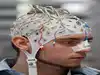
China’s brain-computer interface trial cuts hydrocephalus diagnosis from days to 30 minutes
China has initiated a significant clinical trial using brain-computer interface technology. This trial focuses on neurocritical care, particularly hydrocephalus diagnosis. Researchers have developed BCI devices with faster, more accurate diagnostic capabilities. The technology reduces diagnosis time from days to just 30 minutes. This advancement promises improved patient outcomes and broader applications in neurological conditions.

Stanford researchers build a brain-computer that can read your thoughts, but it needs a 'mind password' first. Here's how it works
Stanford researchers have developed a brain-computer interface that decodes inner speech with a unique password-protection mechanism. Designed for individuals with speech impairments, the implant translates imagined sentences with impressive accuracy. The system activates only upon recognition of a pre-set mental password, like "Chitty-Chitty-Bang-Bang," ensuring privacy. Trials showed nearly 98% accuracy in password detection.

Paralysed Audrey Crews couldn’t move for 20 years. Now Elon Musk’s Neuralink lets her draw hearts and pizza
Audrey Crews, paralysed from the neck down for two decades, has become the first person to publicly demonstrate Neuralink's brain implant by controlling a computer with her thoughts. She has written her name, drawn images, and moved a cursor—without moving a muscle. The chip, developed by Elon Musk’s Neuralink, was implanted in her motor cortex and allows real-time communication between her brain and digital devices. Her story offers a glimpse into what brain-computer interfaces might mean for people living with paralysis.

'Neuralink babies'? Scale AI’s Alexandr Wang says he is waiting for Elon Musk’s brain chips before having kids
Tech mogul Alexandr Wang says he won’t have kids until brain chips like Neuralink are ready. Believing childhood neuroplasticity offers the best window for adopting superintelligence, Wang envisions a future where children learn to use brain-computer interfaces intuitively. Neuralink, still in trials, and other companies like Synchron are advancing rapidly toward making this vision possible.

Neuralink device helps monkey see something that’s not there
Neuralink's Blindsight implant enabled a monkey to perceive nonexistent objects by stimulating vision-related brain areas, as revealed by engineer Joseph O'Doherty. The company aims to help blind people see and eventually achieve superhuman vision. Neuralink is also working on implants for paralyzed individuals, allowing them to communicate with computers, with five people already receiving implants.

Apple is developing specialised chips for smart glasses and AI servers: Bloomberg report
Apple is developing custom chips to power future smart glasses, AI servers, and upcoming MacBooks, Bloomberg reports. The glasses chip, built for energy efficiency and camera control, may enter production by 2026. Apple is also advancing its AI efforts with new Mac processors and on-device features through its Apple Intelligence suite.

Are brain chips the path to human evolution or a step toward control?
Elon Musk's Neuralink has sparked debate about brain chips (BCs). While they hold medical promise, their potential to enhance abilities raises concerns about privacy, control, and the very essence of being human. As BCs advance, will they become indispensable, blurring the lines between progress and dystopia?

SoftBank's Masayoshi Son says artificial super intelligence to exist by 2035
Artificial super intelligence will be 10,000 times smarter than a human brain and will exist by 2035, SoftBank Group CEO Masayoshi Son said in a conference in Saudi Arabia.
What is the chip Elon Musk plans to implant in the human brain?
Neuralink, Elon Musk's brain implant venture, gains FDA approval for human trials. The groundbreaking "Telepathy" technology aims to restore limb functionality through thought control. Amid ethical concerns, including animal welfare investigations, Elon Musk envisions merging humans with machines. Forbes values Musk at $210.2 billion, accentuating the significance of Neuralink's strides in brain-computer interfaces. The journey into uncharted neurotechnology territory prompts crucial ethical dialogues, reshaping the future implications of restoring lost functions and enhancing human capabilities.

Elon Musk's Neuralink seeks first human volunteer for groundbreaking brain chip implant trial
The company is actively searching for a human volunteer, ideally a quadriplegic under 40, willing to undergo a revolutionary brain implant procedure.

IBM's prototype 'brain-like' chip promises greener AI
There are growing concerns about the emissions generated by the large warehouses filled with computers that power AI systems, as per a report.
Key facts about Neuralink, Elon Musk's cyborg gamble
Neuralink's technology would mainly work through an implant called the "Link" -- a device about the size of five stacked coins that would be placed inside the human brain through invasive surgery.

Elon Musk's Neuralink brain chip tests kills 15 monkeys out of 23, company accused of causing 'extreme suffering', says report
However, Neuralink said only eight monkeys were euthanised

At CES, tech alliances firm up in the self-driving car wars
Three chip firms - Intel Corp's Mobileye, Qualcomm and Nvidia - have emerged from a raft of announcements at the CES in Las Vegas as the leaders in locking down the brains of self-driving cars for the next decade.

Elon Musk wants YOU to build a brain-computer interface
Musk, a founder of both the electric car company Tesla Motors and the private space-exploration firm SpaceX, has become an outspoken doomsayer about the threat artificial intelligence might one day pose to the human race.

An AI chip uses fuzzy math for human-like intuition
Unlike the number-crunching alternatives, British startup Graphcore has developed a brain for computers that excels at guesswork.
These ultrathin films can handle IoT data explosion easily
London, Jan 14 (IANS) An Indian-origin academy fellow has designed and fabricated easily printable, organic thin films that can retain data for more than 10 years without power, work with low voltages and handle the data explosion that comes with Internet of Things (IoT).

Post SoftBank buyout, we are placing our chips on future: Simon Segars
We are putting together a technology portfolio that people can build their chips which are so energy efficient that they can run for years and yet be connectivity.
Intel launches Nehalem high-performance chips
Nehalem chips are quad-core, meaning each is built with four microprocessors that act like brains, divvying up computing tasks.
Intel details first stand-alone graphics chip
Intel Corp has disclosed the most details yet of a next-generation microchip architecture that will first take direct aim at the graphics semiconductor market and could pack some 100 electronic brains into a single microprocessor.
Load More

