
FRESHWATER
In 2000, Quito began protecting its damaged mountain wetlands; 25 years later, native plants had returned, and pumas, deer, and condors were seen across the recovering landscape
Since 2000, Quito has restored its watersheds, leading to the return of native vegetation and wildlife. The Nature Conservancy and local authorities collaborated to create FONAG, a water fund collecting contributions for conservation. This initiative has employed community members as park rangers and promoted eco-tourism to benefit local residents. Over three thousand students have participated in environmental education programs associated with the project.
MIT scientists grew microbes from three Massachusetts waters at different salt levels for two weeks; the communities kept growing even as they lost species in the lab
Researchers at MIT embarked on a study to understand the impact of rising salinity on freshwater microbes through controlled experiments. Their findings revealed a mixed response among microorganisms; while some adapted well to saltier conditions, others were outcompeted by salt-resistant varieties. Observations were made across three different Massachusetts regions with varying salinity levels.
In Alaska, scientists spent 20 years moving 217,055 dead sockeye salmon to one side of a stream; when they examined 84 white spruce trees, they discovered that nutrients from the fish had boosted tree growth
For 20 years, scientists in Alaska concentrated dead sockeye salmon on one side of a stream while studying the fish. When researchers later examined 84 white spruce trees, they found evidence that nutrients from the decomposing salmon had helped the trees grow.
Sea otters reduce erosion of California’s coastal wetlands by 69%, says study
California's sea otters are preserving wetlands in Elkhorn Slough of Monterey County. They have decreased the rate of erosion on tidal creeks and salt marshes. The areas with high sea otter numbers have seen an average decrease in the rate of erosion of 69%, a study published in Nature said.
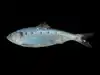
An old dam blocked fish from Plymouth's Town Brook; after the Massachusetts town began clearing barriers in 2002, annual herring runs grew past 200,000 in many years
Plymouth has successfully increased the river herring population by removing several barriers blocking their migration. The first significant removal occurred in 2002 and led to additional projects improving fish passage. Currently, over 200,000 herring migrate annually, up from just 25,000 in the past. Conservation efforts include enhancing spawning habitats and monitoring fish through a camera at Jenney Grist Mill.
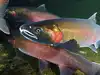
A Washington dam blocked salmon for more than a century; 15 years after Seattle built a fish ladder in 2003, coho salmon were still colonizing upstream habitat
The installation of a fish ladder in 2003 allowed coho salmon to access their previously blocked spawning grounds due to the Landsburg Diversion Dam. Over a span of 15 years, researchers noted a slow return of wild coho salmon to these habitats, documenting how their recovery influenced the ecosystem. The boost in coho populations was linked to enhanced conditions for various other fish species.
- Go To Page 1

Apple’s Kristina Raspe on how Bengaluru shaped its new 14-floor office
In Bengaluru, Apple has launched its expansive office, spanning 14 floors and designed for over 1,000 employees. The new workspace emphasizes local materials and embodies the city's cultural ethos. Notably, the facility runs on 100% renewable energy

India wants more factories, fabs and data centres. Where will the water come from?
India holds about 4% of global freshwater resources, while its demand is projected to double by 2030. The industrial sectors are increasingly vulnerable to water shortages, which may significantly affect growth plans and investments. Treatment of municipal wastewater presents a viable alternative for meeting industrial water needs and can create a new revenue source for urban areas.
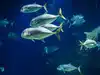
In 2024, 1,865 volunteers reviewed underwater videos; cameras recorded 4 fish species missed by traditional traps
The Where's Walleye? project showcases how researchers leveraged traditional fish traps and high-tech underwater cameras to refine fish survey methods. With assistance from 1,865 citizen scientists, the project analyzed video footage to identify diverse fish species. Remarkably, the underwater cameras uncovered four species previously missed by conventional techniques, enhancing our comprehension of aquatic ecosystems and aiding in rare species monitoring.

3 autonomous expert govt bodies roped in to work on microplastics detection: CPCB to NGT
CPCB reported that it will develop methodologies for detecting microplastics in various environments. Central Institute of Petrochemicals Engineering and Technology will handle freshwater and soil samples. National Centre for Sustainable Coastal Management will focus on marine water and coastal sediments. CSIR-NEERI will address the detection of microplastics in the air. The final proposals are expected within twelve months, which will undergo evaluation and refinement.
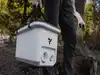
Two former SpaceX engineers built a 25-pound machine that turns seawater into drinking water at the push of a button; here's how it works
It was co-founded by Jonathan Criss and Andrew Harner. Both are former SpaceX engineers. Criss is the company's CEO, and Harner is the COO. They gained engineering experience at SpaceX, and then applied aerospace-level precision and efficiency to the systems. It was reportedly designed for people who are outdoor enthusiasts, boat owners and living in remote locations.

2026 set to rank among four warmest years on record, says WMO
The World Meteorological Organization indicates that 2026 will likely be among the four warmest years recorded. The global average temperature so far in 2026 is notably above pre-industrial levels, with more increases expected. El Nino's influence is expected to contribute substantially to this warming trend later in the year. Additionally, sea levels have reached unprecedented heights and ice loss continues to accelerate.

World entering 'age of climate extremes': UN chief Guterres
The world is entering a new reality where climate extremes are the norm, the United Nations chief Antonio Guterres warned Monday, urging leaders at the COP31 climate conference in Turkey to "get serious". "We have entered a new age of climate extremes."
In 2017, California replaced a fish-blocking road crossing on Upper Green Valley Creek; surveys later found 136 young steelhead upstream of the former barrier
In 2017, engineers undertook a significant project to replace an old culvert that hindered fish migration in Upper Green Valley Creek. The successful replacement is evidenced by the discovery of 136 young steelhead fish in previously unreachable habitats. Researchers are actively studying the long-term effects on these fish populations and their growth.
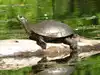
In Yosemite, scientists monitored 4 ponds for 7 years as invasive bullfrogs were removed; juvenile native turtles reappeared at affected ponds by 2019
Scientists observed a decline in juvenile turtles in Yosemite due to invasive bullfrogs preying on them. After nearly eradicating the bullfrog population, baby turtles began reappearing in the affected ponds. The study involved monitoring turtle populations over seven years to measure recovery and changes. Northwestern pond turtles are critical to California's freshwater ecosystems, and conserving them is crucial. The findings highlight how controlling invasive species can benefit native wildlife populations.
A two-feet “leopard eel” was hiding in US swamps; Scientists took years to identify it
An eel-like animal with spotted markings and frilly gills had been turning up in Florida and Alabama waters for years. In 2018, scientists described it as the reticulated siren, a salamander and a species new to science. Its identification relied on a 1970 museum specimen, years of fieldwork and DNA analysis.
Cornell scientists divided 3 ponds into different plant plots; some had more methane in the water, yet gas escaping into the air did not increase as expected
Recent findings from Cornell University reveal the crucial role freshwater plants play in regulating greenhouse gas emissions in pond ecosystems. The composition of these plants significantly influences levels of methane, carbon dioxide, and nitrous oxide. Notably, floating plants such as duckweed can trap these gases, inhibiting their escape. This research underscores the importance of pond management for homeowners, offering effective strategies to combat climate change.
In 1882, a pipeline helped silver boomtown Candelaria, Nevada, grow to about 1,000 people; after the 1893 financial panic, it declined, and its post office closed in 1939
Candelaria emerged as a bustling boomtown in 19th-century Nevada, only to face dire water shortages. Although a dependable water pipeline was constructed in 1882, the town experienced significant decline following the economic downturn in 1893. This echoes the modern-day struggles of resource-dependent communities grappling with severe freshwater limitations, urging a reconsideration of sustainability strategies to prevent the vulnerabilities seen in Candelaria.

Vedanta Power Q2 results: Company swings to profit at Rs 83 crore; revenue rises 38% YoY
Vedanta Power reported a turnaround in Q2 FY27, posting ₹83 crore profit against a ₹1,688 crore loss last year. Revenue rose 38% to ₹2,908 crore, while EBITDA surged 122%, supported by record power sales and improved operations.

In 1905, Minnesota opened a transporter bridge with a suspended gondola; the platform carried people, streetcars, and vehicles across Duluth’s harbor canal
In February 1905, the Duluth Aerial Ferry Bridge debuted to facilitate travel over a challenging sandbar. This innovative structure enabled rapid transport of individuals and cargo across water. However, with the rise of cars during the 1920s, its limitations became all too clear. As a result, the city opted for a modern vertical lift bridge.

Reinventing the pond: How this Bengal start-up is helping fish farmers battle climate and credit crisis
At a time when climate change is impacting world resources, including the aquatic system, Jalpaiguri’s Essential Aquatech is working to empower smallholder fish farmers by turning data into actionable insights and measures.
India eyes 30 million tonnes fish output in 5 years, seafood exports of Rs 1.25 lakh crore
India has initiated a national action plan for inland small-scale fisheries to increase fish production. The plan aims to achieve a target of 30 million tonnes over the next five years. It will focus on improving livelihoods and sustainability amid climate change challenges. Stakeholder consultations will be conducted to finalise the plan, which covers diverse aquatic ecosystems.

Manipur cabinet approves Pawan Hans to resume helicopter services
The Manipur cabinet has engaged Pawan Hans Limited to restore helicopter services for remote areas. One helicopter will operate for six months, helping with passenger transport and medical emergencies. Loktak Day will be celebrated annually, starting on 26 October 2026, honoring Loktak Lake. Chief Minister Yumnam Khemchand Singh met with village representatives to discuss community issues and infrastructure needs.
In 1935, Australian government released 2,400 toads to destroy crop-eating beetles. Almost 100 years later, 200 million giant toads threaten 75 wildlife species
Sometimes, a solution can become an impending disaster. In the 1930s, the Australia government released more than 2000 cane toads imported from Hawaii to curb the beetle population which were wreaking havock on the sugarcane crops. To the Aussie people's horror, as the poisonous amphibians multiplied rapidly, with their population estimated to exceed 200 million by 2011. Today, these have emerged as one of the most unstoppable invasive species in Australia, endangering many wildlife and disrupting the bio-diversity.
Nevada removed invasive blue tilapia from Moapa dace habitat from 2009 to 2012; the endangered fish later returned to an 868-meter stretch where it had vanished
Conservation efforts in Nevada have successfully removed invasive blue tilapia to protect the native Moapa dace fish. After targeted removal operations, Moapa dace have begun to recolonize areas where they were previously extinct. Habitat restoration included creating new streams to support the species' survival. Long-term recovery requires ongoing monitoring and preventing invasive species from re-entering ecosystems. These actions show that effective conservation goes beyond simply removing threats to native species.

AdaniConneX's Vizag data centres to use air cooling, cut freshwater consumption
The facilities will have dedicated industrial water connections rather than draw supplies from municipal lines, a move aimed at preventing competition with households for drinking water.
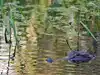
Lake Apopka alligator attack: Florida is home to 1.3 million alligators, with these five lakes teeming with thousands
The fatal Lake Apopka alligator attack in Florida has raised concerns about the state's large alligator population. Florida has an estimated 1.3 million alligators, with Lake Okeechobee, Lake Jesup, Lake Kissimmee and Orange Lake among the waterways known for their large populations. Here's what to know about these alligator hotspots and the safety precautions recommended by wildlife officials.
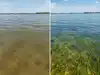
North Carolina removed invasive carp from Lake Mattamuskeet in a restoration effort; an earlier removal campaign increased water clarity more than fourfold and expanded underwater grasses by 16,000 acres
Lake Mattamuskeet in North Carolina has seen a dedicated restoration initiative aimed at curbing the invasive common carp's adverse effects on aquatic life. Launched in 2019, the program employed historical removal strategies to diminish carp numbers. Although some progress was detected, studies revealed the remaining carp were not a significant ecological threat. This case underscores the inherent challenges of ecological restoration and the efficacy of traditional approaches in sustaining biodiversity.

Adani's Kutch Copper plans 115 MW renewable energy push at Mundra refinery
Kutch Copper Ltd, a part of Adani Enterprises, plans to integrate 115 megawatts of renewable energy into operations. The copper refinery in Mundra aims to expand from 500,000 tonnes to 1 million tonnes per annum. This expansion would make it the world's largest single-location custom smelter. Kutch Copper is committed to environmental stewardship by treating nearly all sulphur emissions and conserving water resources. The Adani Group has pledged USD 1.
Load More

