FOOD SUPPLY CHAIN SECURITY

70% of global business leaders report rising risk exposure amid AI, geopolitical disruptions: KPMG
According to the report, 56% of respondents said external disruptions involving geopolitical, energy, cyber, trade or climate-related factors would cause severe operational disruptions or significantly affect their organisations' costs and performance over the next three to five years.

India’s cooling systems face Europe-style cyber risks, say experts
The concerns follow cyberattacks on supermarket refrigeration systems across Europe, with stores in Sweden, Belgium, Estonia, the Netherlands, Finland and Luxembourg reporting disruptions. Attackers reportedly manipulated refrigeration controls, raising freezer temperatures and switching equipment into defrost mode, forcing stores to discard food stocks. The incidents follow similar attacks on hundreds of supermarkets in France in October.
Are Russia, China, Iran planning to carry out large scale cyberattacks bigger than Europe supermarket fridges hacking? Top Britain official reveals shocking details
Moscow, Beijing and Tehran have all repeatedly denied similar accusations of malevolent cyber actions in the past.
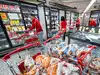
Italy says cyberattack on supermarket fridges had limited impact
A hacking attack on Monday hit fridges and freezers from Sweden to Belgium, forcing stores to throw away food in an incident that echoed a similar attack in France last month.
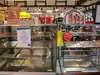
Hackers are targeting something the world can't do without: Food
A series of cyberattacks have affected supermarket refrigeration systems in multiple European countries, leading to food spoilage. These attacks, described as deliberate attempts to disrupt the food supply chain, raised concerns among retailers and consumers alike. Various security vulnerabilities in connected refrigerated systems have been exploited, underscoring the need for better cybersecurity measures. No group has claimed responsibility for the attacks; however, state backing is being investigated.

Why are supermarket fridges connected to the internet, and how are hackers exploiting them?
Recent cyberattacks on supermarket refrigeration systems in Belgium and France have exposed significant vulnerabilities. Around 40 Delhaize supermarkets and several others lost food worth about €100,000 due to the incidents. Researchers found nearly 13,000 vulnerable refrigeration management services accessible online across various countries. Many of these systems have outdated security measures, which increases the risks of unauthorized access.
- Go To Page 1

Asian companies to ramp up investments in US amid supply-chain shifts
Citi expects investments by South Korean, Japanese and Taiwanese companies in the US to rise as global supply chains shift. The bank also sees growing cross-border business flows involving India and China, creating opportunities in transaction banking and financial services.

Marico profit jumps 31%, flags rising input costs amid West Asia woes
Marico has reported a 13% increase in consolidated revenue, driven by strong volume growth in India and international markets. The company highlighted challenges from rising input costs due to geopolitical tensions and adverse weather circumstances. Managing director Saugata Gupta expressed awareness of potential inflation effects, especially in rural areas. Marico aims for mid-20% EBITDA growth by FY27 and expects annual revenue to exceed ₹15,000 crore.

El Nino could add to US inflation pressures in 2027, San Francisco Fed paper warns
A San Francisco Fed study warns the current strong El Niño could drive US inflation up by 1 percentage point in 2027, despite temporarily boosting jobs. With inflation already above the 2% target, the climate shock adds further pressure on the Fed to raise interest rates.

India to host IORA foreign ministers amid Gulf energy supply concerns
India plans to host foreign ministers from various Indian Ocean Region countries later this month. The meeting will occur amid ongoing energy supply challenges stemming from the conflict in West Asia. Key discussions will revolve around predictable supply chains and energy supply disruptions. This ministerial meeting is part of India's preparations for the upcoming IORA summit in 2027.
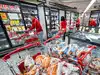
IKEA store in Belgium hit by fridge cyberattack; refrigeration systems impacted as supermarkets across Europe face issues
IKEA's store in Mons experienced temperature rises in refrigeration systems due to a cyberattack. Several European supermarkets, including Carrefour and Coop, also reported similar issues affecting their refrigeration control systems. A broader cyberattack targeted grocery retailers across Belgium, Estonia, Finland, Luxembourg, and Sweden, leading to food waste concerns. Investigations are ongoing regarding the causes and potential future impacts on food supplies.
'New Cold War'? Supermarket freezers hacked in six European countries, food worth millions spoiled. Who's behind it?
A wave of cyberattacks has struck supermarket refrigeration systems across several European nations, including Belgium, Sweden, Luxembourg, and Estonia, raising serious food safety alarms. These breaches allowed unauthorized access to cooling units, causing hazardous temperature increases that threaten product integrity. Experts are voicing concerns about the rising risks associated with connected technologies, while investigators work diligently to pinpoint the perpetrators and safeguard against future breaches.
EAM Jaishankar urges Quad to focus on freedom of choice
External Affairs Minister S Jaishankar emphasized freedom of choice and resilient supply chains during the Quad meeting. He highlighted countering non-market practices as a key priority for discussions with partner nations. The Quad aims to enhance cooperation in maritime security and counter-terrorism measures. Additionally, over USD 85 million will be extended for AI access across the Indo-Pacific region.

G20 foreign ministers end Atlanta meeting without consensus on key issue, group photo cancelled
Top diplomats from the G20 met in Atlanta, but they could not agree on important global security issues. Tensions, particularly regarding Russia's war in Ukraine, overshadowed the talks and affected the outcomes. The meeting concluded without a joint communique, only a chairman's statement summarizing their discussions. Despite the lack of consensus, efforts were made to strengthen cooperation on supply chains and mineral resources.
Quad ministers pledge over $85 million for AI access, flag economic coercion and supply chain risks
Quad foreign ministers meeting in Atlanta reaffirmed their commitment to a free and open Indo-Pacific, focusing on economic security, resilient supply chains and trusted infrastructure. They announced plans to provide over $85 million in technical and financial assistance for access to trusted super intelligence (SI), while pledging action against cyber scams and transnational criminal networks.

Devyani-Sapphire merger gets CCI approval, bringing KFC, Pizza Hut India operations under one roof
The Competition Commission of India has granted approval for the merger of Sapphire Foods India Limited with Devyani International Limited, consolidating two prominent quick-service restaurant operators. The merger aims to enhance operational efficiency and strengthen the presence of KFC and Pizza Hut in India, with the combined entity projected to operate over 3,000 stores globally.

'Took stock of our bilateral cooperation': EAM Jaishankar meets US Secy of State Rubio on sidelines of G20
S Jaishankar held a bilateral meeting with US Secretary of State Marco Rubio in Atlanta. The meeting focused on enhancing India-US cooperation and addressing geopolitical issues. Jaishankar emphasized that military solutions are not viable for resolving global challenges. Rubio also highlighted the importance of protecting economic and maritime security during the discussions. The G20 Foreign Ministers' Meeting concluded with crucial dialogues on international economic stability.

"Discussing ACITI": EAM Jaishankar holds trilateral meeting with Australian, Canadian counterparts
External Affairs Minister S Jaishankar held a trilateral meeting with Canadian and Australian counterparts in Atlanta. They discussed the Australia-Canada-India Technology and Innovation Partnership focused on green energy and supply chains. Jaishankar emphasized the need for diplomatic solutions to global challenges and highlighted issues impacting the Global South. He noted the adverse effects of military actions on civilian shipping and emphasized market access issues.
Jaishankar has a message for the world: Give diplomacy a chance, as military solutions won't work
External Affairs Minister S Jaishankar stressed the importance of diplomacy to address global challenges at the G20 meeting. He highlighted ongoing conflicts, including the Russia-Ukraine war and tensions in West Asia, while addressing seafarer safety. Jaishankar emphasized the impact of market flooding and supply chain issues on the Global South. US Secretary of State Marco Rubio warned of interconnected economic and geopolitical crises affecting the global economic order.

EAM S Jaishankar attends G20 Foreign Ministers' meeting in US
Jaishankar, who arrived in Atlanta late Thursday evening, interacted with his counterparts from several countries ahead of the meeting. He said the G20 "must work together to confront these threats, to strengthen our economic resilience, to safeguard our markets and the economies that they sustain..."

Is the world preparing for war? Why US, UK, Japan and Europe are ringing emergency alarm bells
World War 3 coming? Is the world preparing for war? The governments across the world in the US, UK, Japan and Europe are strengthening emergency preparedness amid rising geopolitical tensions, cyber threats and fears of conflict. Here's what their plans mean and whether the world is preparing for war.
3 Warning Signs Your Supplier Is in Distress
Suppliers to multinational corporations are under growing pressure from tariffs, logistics disruptions, compliance demands, and repeated global shocks, yet many buyers still rely on conventional indicators—audits passed, orders filled, service levels met—that can obscure deeper distress. Supplier weakness often appears first not as outright failure but as a gradual retreat: range thinning, when suppliers stop investing in innovation and improvements; descaling, when they reduce capacity, defer upgrades, or lose resilience; and withdrawal, when they quietly stop bidding, decline complex work, or exit parts of the network. By assessing supplier health across innovation, investment, capability, service resilience, commercial participation, and network position, executives can detect early warning signs before a valued partner disappears. The right response depends on the stage of distress: protect innovation through cost-sharing and co-investment, protect capability through operational support and simpler governance, and protect optionality through targeted retention plans and stronger supplier voice mechanisms.

Pentagon's 'doomsday' plan as World War III fears grow: How US bases are planning to survive for 90 days as UK urges people to 'Be Ready' for crisis
Amid fears of a potential World War III, the Pentagon' Doomsday plan is to keep major US military bases operational for 90 days without outside support under its FORTRESS initiative. The plan includes independent power supplies, strategic reserves of essential materials and preparations for wartime factory production. Meanwhile, the UK government has launched its 'Be Ready' campaign, urging households to stockpile food, water, cash and emergency supplies in preparation for a national crisis.
India, Mexico begin talks for trade pact; aim to boost commerce, investments
India and Mexico have initiated negotiations for a preferential trade agreement to enhance bilateral trade and investment. The agreement aims to create new economic opportunities while addressing market access, customs procedures, and trade facilitation. Discussions included organising a Mexican business mission to India in early 2027 to improve commercial ties. India had a trade surplus with Mexico, largely due to exports in autos and pharmaceuticals.
Need more resilient energy supply chains amid growing global disruptions: Minister Naik
During the Singapore International Energy Week, India underlines the critical need for resilient energy supply chains. Union Minister Shripad Yesso Naik emphasizes diversifying energy sources to bolster security in the face of global disruptions.

L&T profit jumps 33% on strong order inflows
Larsen & Toubro reported a quarterly net profit increase of 33% amid strong order inflows and infrastructure spending. Revenue for the quarter rose 16% year-on-year, reaching ₹78,750 crore, driven by progress in various projects. The company secured orders worth ₹1,47,665 crore during the quarter, marking a 28% year-on-year growth. International orders accounted for 63% of total order inflow, showcasing the company's strong performance.

Anduril and Qualcomm plan to build laptop with US supply chain
The companies unveiled a new product line on Tuesday called BlueChip intended to supply “America’s most critical industries — including government, defense, first responders and public safety,” according to a statement. The eventual goal is to establish an “end-to-end American supply chain” for the laptops and, more broadly, to rebuild US computer manufacturing, the companies said.

US designates helium as a critical material, citing its importance for semiconductors
The U.S. remains the largest producer of helium globally, with production primarily from natural gas processing. Helium is crucial for semiconductors, medical imaging, and renewable energy technologies.
Load More