
FLUORESCENT DYE EXPERIMENT

Rutgers scientists changed one gene in tiny worms to test a human kidney disease clue; the altered nerve protein fell to 15% of normal and missed its target
Researchers at Rutgers University have delved into the genetics of kidney disease by studying the miniature roundworm C. elegans. By manipulating a specific DNA segment, they discovered a drastic reduction in levels of polycystin-2, showing that this mutation hinders the protein's delivery to its cellular destination. This alteration also disrupts the functioning of polycystin-1, emphasizing the critical role of genetic mutations in disease understanding.

‘Life goes on’: Scientists describe how ‘zombie’ bacteria keep pumping DNA after death
Researchers at Aarhus University have made a fascinating discovery: even after bacteria die, they retain the ability to generate DNA. This phenomenon is powered by bacteriophages that rest inside the dead cells, awaiting activation. Using artificial DNA, scientists successfully demonstrated that the bacteria could indeed synthesize new genetic material and manipulate the DNA type produced. This knowledge paves the way for innovative uses in environmental biotechnology and bioenergy production.

These mid-caps have ‘strong buy’ & ‘buy’ recos and an upside potential of over 25%, according to analysts
Why should one be careful of the market at this juncture? One reason is that stocks are still not cheap. Even after all the nervousness of the past over two years, valuations have not come down to levels where you can say you are getting a bargain. When you buy something that is not cheap, you have less room for error, because the price already assumes things will go well.

In 1991, scientists used red dye to trace weedkiller in a Washington river choked by milfoil; the study reported a 99% decline in milfoil and up to 1,000% more native plants
Researchers used a red dye to precisely track herbicide application in Washington's Pend Oreille River. This innovative method allowed for a significant reduction in herbicide dosage while achieving excellent results. Invasive Eurasian watermilfoil biomass declined dramatically, allowing native plants to recover and thrive. Native plant biomass increased substantially, and their variety more than doubled in treated areas. This successful intervention demonstrated effective ecological damage repair through careful, measured application.
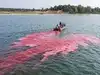
Lake Michigan looks calm from shore, but a 2013 11 kg of red dye experiment revealed its hidden waters can spread far faster than scientists expected
A 2013 dye experiment in Lake Michigan revealed that water in the lake’s open interior can spread surprisingly quickly. Researchers traced a fluorescent dye plume for hours and found that near-surface shear linked to Poincaré waves helped drive unexpectedly rapid dispersion. Researchers observed the dye's dispersion rate increase from approximately 1.5 to 4.2 square metres per second over about 21 hours.
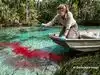
In 2015, scientists released fluorescent dye into Florida’s Silver River: Here’s what they discovered
A 2015 University of Florida experiment used five gallons of fluorescent dye to track water movement through a 5.1-mile section of Florida’s Silver River. Researchers measured travel and residence times and compared the findings with earlier tracer data to study changing flow conditions. The work also helped investigate links between river hydraulics, nutrient movement and increasing algal growth.
- Go To Page 1

In 1933, a teenager’s recovery from a basement experiment led to Day-Glo colors that transformed signs, safety gear, and art
Two brothers in Berkeley, California, experimented with fluorescent materials in their basement. Their home project led to the invention of Day-Glo pigments. This innovation made colors appear brighter in daylight. Day-Glo found uses in advertising, safety equipment, and popular culture. The Switzer brothers' discovery became a global brand, impacting design and visibility.

IISc researchers develop hydrogel that can remove microplastics from water
Researchers at IISc have developed a sustainable hydrogel to remove microplastics, with a unique polymer network and nanoclusters to degrade contaminants. The hydrogel can efficiently remove up to 95% of microplastics and be repurposed into carbon nanomaterials for heavy metal removal.
Best baby laundry detergent for chemical free and gentle cleaning
When it comes to choosing the best detergent for newborns, toddlers and infants it is important to make an informed purchase. Some important factors that you should consider before making the purchase factors are that the clothes stay clean, soft, fresh and free from irritants. The products listed in this article prioritizes gentleness with effectiveness, we make sure you choose the best from the best.

Equine Biotech, incubated at IISc, develops indigenous testing kit for Covid-19
The test kit, called GlobalTM diagnostic and based on Reverse Transcriptase Polymerase Chain Reaction (RT-PCR), has been approved for use in authorised diagnostic labs by the Indian Council of Medical Research.

Soon, glow-in-the-dark dye may power cars
The dye called BODIPY may help to stockpile energy in rechargeable, liquid-based batteries.
Load More

