
FISH PASSAGE TECHNOLOGY
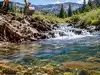
Wyoming reopened a blocked stream and cut non-native brook trout by 97%; native Snake River cutthroat trout then jumped more than 14-fold in just 3 years
In Wyoming, a stream known as Game Creek has observed an increase in native Snake River cutthroat trout. After a culvert blocking fish movement was replaced, cutthroat trout returned to the stream naturally. By 2024, surveys recorded a significant increase from just five cutthroat trout in 2021 to seventy-two. The Wyoming Game and Fish Department had also removed many non-native brook trout from the area.

AI Is Changing How Customers Choose Your Business
As AI increasingly mediates how customers research, evaluate, and choose suppliers, competitive advantage is shifting from direct customer understanding to managing AI-shaped interactions. Drawing on the experiences of three small-to-medium sized businesses they worked with, the authors show how firms can adapt. A manufacturer improved sales efficiency by screening AI-generated inquiries before investing engineering time in quotations. A boutique hotel learned to monitor how AI tools described its business and revised public content to improve accuracy and differentiation. A B2B software company replaced periodic customer reviews with continuous monitoring of customer feedback and AI-generated market perceptions. Across all three cases, the lesson is that firms must treat AI as a new intermediary in the customer relationship. Winning companies will not necessarily spend the most on technology; they will build systems for continuously listening, interpreting signals, and adapting strategy in markets where both customers and the information they rely on are increasingly AI-mediated.
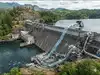
Washington used 1 pneumatic fish cannon to solve salmon passage past a 60m hydroelectric dam; the result transformed blocked rivers into thriving spawning grounds
Washington used 1 pneumatic fish cannon to solve salmon passage past a 60m hydroelectric dam, using a pneumatic tube system to move migrating fish over major barriers. The Whooshh PassagePortal, also called the Salmon Cannon, helped transport salmon around dams while reducing handling. The system uses scanning, sorting, water mist and controlled air pressure. The technology helped reopen access to upstream waters used by salmon for spawning.

In 1997, NPS installed 3 solar hot-water systems at Oklahoma’s Chickasaw park. 2 years later, the largest system supplied 18,194 kWh annually, replacing electric heating
In 1997, the National Park Service replaced electric heaters at Oklahoma’s Chickasaw National Recreation Area with three solar hot-water systems. Built with the National Renewable Energy Laboratory, the project tackled high utility costs at campground comfort stations. Within two years, the largest system produced 18,194 kilowatt-hours annually. The installation recouped its investment in eight years while cutting long-term energy demands.

The U.S. Army Corps of Engineers spent $7 million on fish ladders in 1938 to move salmon past Bonneville Dam; decades later, the system carries 1 million a season in good years
The Bonneville Dam’s fish ladders, designed as part of a New Deal initiative, remain operational after decades of service. The construction saw a notable increase in budget allocation. Annually, millions of fish traverse these ladders, predominantly hatchery-reared. However, wild salmon populations continue to dwindle, impacted by upstream dams and climate change, underscoring persistent environmental challenges despite the fish ladders' effectiveness.
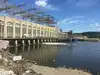
Maryland spent $12 million on a fish lift in 1991 to move American shad past Conowingo Dam; decades later, annual runs remained far below the 2 million-fish target
Maryland invested $12 million in a fish lift to help migrating shad overcome the Conowingo Dam. This technological solution proved ineffective, moving only a fraction of the targeted fish annually. Experts now favor dam removal over fish passage structures like lifts and ladders. The state is investing $340 million in environmental upgrades and trucking fish past the dam. This situation reflects costly infrastructure projects that under-delivered on their initial goals.
- Go To Page 1

In the 2nd century CE, Romans built a mysterious structure near the Colosseum decorated with sea creatures. Nearly 2,000 years later, its mosaic offered a surprising clue that it may have housed Rome's firefighters
Beneath the ancient soil of Rome’s Caelian Hill, just steps from the iconic Colosseum, archaeologists stumbled upon a stunning two-thousand-year-old secret. An excavation revealed an eight-room structure featuring delicate wall frescoes and a remarkable floor layout. For months, researchers believed they were uncovering an opulent residential palace for wealthy elites. However, a stunning marine-life floor panel changed the entire narrative.

A surprising Arctic discovery shows melting icebergs are quietly building hidden neighborhoods on the ocean floor
Melting icebergs are creating hidden arctic homes as disappearing glaciers reshape the deep ocean. Scientists found that iceberg-carried rocks are reaching the seafloor and forming rare habitats for marine life. This Arctic climate change discovery shows how glacier loss, ocean ecosystems, and deep-sea biodiversity are becoming connected in unexpected ways beneath polar waters.

As Europe readies tougher migration measures, a Greek island sees illegal crossings spike
Crete is now a major entry point for migrants. The journey from Libya is long and dangerous. European Union border agency Frontex is increasing surveillance. New EU policies aim for stricter border checks and faster deportations. More migrant crossings are expected in the coming months.

Snoop on chatter & dark web, be mindful of privacy: IT dept tells its sleuths, revises search manual after 17 years
The Income Tax Department's revised manual, updated after 17 years, equips officers with new tools to combat tax evasion in the digital age. It guides them on navigating the dark web, handling cryptocurrency assets, and adhering to data privacy norms. The manual emphasizes caution in issuing Look Out Circulars and using international tax treaty information, balancing enforcement with individual rights.

The US is about to blow up a fake warship in the South China Sea but naval rivalry with Beijing is very real and growing
The live-fire drill is not a response to increased tensions with China over Taiwan, both the U.S. and the Philippines have stressed. But, either way, Beijing isn't happy - responding by holding its own staged military event involving actual warships and fighter jets deployed around Taiwan, a self-governed island that Beijing claims as its own.

China’s reliance on Taiwan would make trade retaliation costly
If China wants to mitigate the fallout of sanctions on its own economy, it could target Taiwanese wood, minerals, shoes or hats. Taiwan’s trade relies significantly more on delivering those items to China than China does on receiving them from the island.

US increasing scope complexity and frequency of military engagements with India: Shanahan
COMCASA will facilitate India to obtain critical defence technologies from the US, and access critical communication network to ensure interoperability among the US and the Indian armed forces.

This Delhi investor learnt trading in 'school of hard knocks', makes it big
Aveek Mitra has been active in the investing world for over 21 years now.

India could be Donald Trump's next trade war target
Modi was the fifth world leader Trump called after his inauguration, and trade issues didn’t come up, according to a readout of their conversation by the White House.

GST, competitive logistics, e-mandis and food processing parks may integrate to sell daal at Rs 20/kg and mangoes at Rs 10/kg
Experts said that after the bugs had been ironed out and the investment put in place, prices of food items such as lentils and fruits could go down by at least 75%.

Arunachal Pradesh CM Nabam Tuki assures passage of fish in dams
AP CM Nabam Tuki today assured to incorporate in MoUs and MoAs provisions of passage for fish at dams of upcoming power projects in the state.
Load More

