
FISH LADDERS
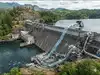
Washington used 1 pneumatic fish cannon to solve salmon passage past a 60m hydroelectric dam; the result transformed blocked rivers into thriving spawning grounds
Washington used 1 pneumatic fish cannon to solve salmon passage past a 60m hydroelectric dam, using a pneumatic tube system to move migrating fish over major barriers. The Whooshh PassagePortal, also called the Salmon Cannon, helped transport salmon around dams while reducing handling. The system uses scanning, sorting, water mist and controlled air pressure. The technology helped reopen access to upstream waters used by salmon for spawning.
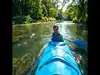
In 2014, Massachusetts' JRWA began work to remove a dam sitting 10 feet below the Elm Street Bridge. 5 years later, the Jones River was freed for alewife, eels and trout once again
Elm Street project was also part of a broader sequence of restoration work on the Jones River. A previous obstacle, the Wapping Road Dam, had been removed in 2011. A Massachusetts feasibility report notes that this earlier removal opened approximately 3.7 miles of Jones River main-stem habitat and 18.3 miles of tributary habitat.

Henry Ford owned more than 2,000 acres around his Michigan home. The estate later became a national historic landmark
Henry Ford's ambitious vision led him to acquire vast tracts of land near Dearborn, Michigan, to support his burgeoning automobile enterprise. Fair Lane, created on this land, harmoniously blended innovative architecture with lush gardens and advanced technology, including its own hydroelectric power plant. For many years, it was the Ford family's cherished residence. Today, this historical estate stands as a proud National Historic Landmark, preserving its legacy.
The U.S. Army Corps of Engineers spent $7 million on fish ladders in 1938 to move salmon past Bonneville Dam; decades later, the system carries 1 million a season in good years
The Bonneville Dam’s fish ladders, designed as part of a New Deal initiative, remain operational after decades of service. The construction saw a notable increase in budget allocation. Annually, millions of fish traverse these ladders, predominantly hatchery-reared. However, wild salmon populations continue to dwindle, impacted by upstream dams and climate change, underscoring persistent environmental challenges despite the fish ladders' effectiveness.
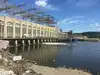
Maryland spent $12 million on a fish lift in 1991 to move American shad past Conowingo Dam; decades later, annual runs remained far below the 2 million-fish target
Maryland invested $12 million in a fish lift to help migrating shad overcome the Conowingo Dam. This technological solution proved ineffective, moving only a fraction of the targeted fish annually. Experts now favor dam removal over fish passage structures like lifts and ladders. The state is investing $340 million in environmental upgrades and trucking fish past the dam. This situation reflects costly infrastructure projects that under-delivered on their initial goals.
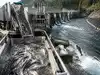
In 2012, PacifiCorp launched a trap-and-haul program to move adult salmon upstream past Merwin Dam. 14 years later, researchers found 2 stages in the system but 1 decisive bottleneck: young salmon failing to find the artificial current downstream
A trap-and-haul program on Washington’s Lewis River helps adult Chinook salmon bypass Merwin Dam by transporting them in trucks to upstream spawning habitat. But researchers tracking the salmon life cycle have identified a major weakness on the return journey. Juvenile salmon, or smolts, must travel downstream toward the Pacific Ocean, yet many struggle to locate the artificial current leading to a floating collection system near Swift Dam. Once captured, they can be transported safely downstream, but low capture rates remain the program’s primary bottleneck.
- Go To Page 1

In the 2nd century CE, Romans built a mysterious structure near the Colosseum decorated with sea creatures. Nearly 2,000 years later, its mosaic offered a surprising clue that it may have housed Rome's firefighters
Beneath the ancient soil of Rome’s Caelian Hill, just steps from the iconic Colosseum, archaeologists stumbled upon a stunning two-thousand-year-old secret. An excavation revealed an eight-room structure featuring delicate wall frescoes and a remarkable floor layout. For months, researchers believed they were uncovering an opulent residential palace for wealthy elites. However, a stunning marine-life floor panel changed the entire narrative.

How a 39-year-old California man survived over a month lost at sea with no water, limited food and a makeshift boat repair
A California man survived over a month alone at sea after his sailboat suffered major damage. He improvised repairs using available materials and collected condensation for drinking water. The man subsisted mainly on oatmeal, squid, and fish during his ordeal. A ship crew spotted his vessel approximately 900 miles from Hawaii and initiated a rescue. He expressed gratitude to the crew for saving his life after his ordeal.
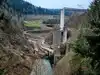
In 1948, America built Mud Mountain Dam for flood control; decades later, a $112 million facility was designed to carry 1.2 million fish around it annually
The Mud Mountain Dam serves as a crucial flood prevention structure, shielding communities downstream from severe weather. Yet, its construction hindered salmon migration for years. In response, a substantial investment was channeled into building a comprehensive fish passage facility. This initiative emphasizes the importance of harmonizing safety measures with environmental conservation, highlighting an evolution in infrastructure priorities and ecological consciousness.
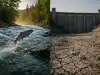
In 1942, America completed Friant Dam and diverted most of the San Joaquin River into farms; a salmon run once numbering nearly 50,000 adults collapsed
Friant Dam construction in California significantly altered the San Joaquin River's flow. This action disconnected salmon from their spawning grounds, causing their disappearance. Agricultural development thrived, but the river's ecosystem suffered environmental damage. Environmental groups campaigned for restoration, leading to a settlement and ongoing efforts. Young salmon are now being released, showing signs of return to the river.

In 2016, when river dams trapped Japan's giant salamanders, scientists came up with an unusual solution: building custom ladders instead of removing the dams
Researchers in Japan developed special ladderways for giant salamanders to cross river dams. These step-type structures with side walls proved most effective for amphibian movement. The innovative approach helps reconnect fragmented river habitats without dam removal. This method offers a practical conservation tool where dam removal is not feasible. The findings suggest similar designs could aid freshwater wildlife globally.

Scientists Finally Explain Why Fish Break Formation Mid-Swim
Fish schools, appearing chaotic when splitting and reuniting, actually follow biological and physical rules. This dynamic behavior aids in danger avoidance and energy conservation. Environmental factors and hydrodynamic interactions influence school stability, leading to temporary fragmentations. Fluid dynamics and three-dimensional formations facilitate rapid regrouping, showcasing a sophisticated strategy for collective survival and efficient movement.

Body of missing Chinese sailor fished out of sea in Odisha's Paradip
A Chinese sailor, Zhang Tai, who went missing after falling into the sea at Paradip Port in Odisha on Friday, was found dead on Sunday. A search operation involving multiple agencies was launched after Tai fell while setting a ladder at the Paradip International Cargo Terminal.

Most money for endangered species goes to a small number of creatures, leaving others in limbo
Since the passage of the Endangered Species Act, over 1,700 species in the US have been listed as threatened or endangered. However, there are disparities in funding allocation, with half of the $1.2 billion spent annually going towards the recovery of salmon and steelhead trout. Many species, including the Virginia fringed mountain snail, stoneflies, and California tiger salamander, receive little or no funding. The plant kingdom, which was almost excluded from the conservation law, also receives inadequate funding. Scientists suggest redirecting funds from species with excessive funding to those with none or less.

‘Beyond Paradise’: Where is the TV series filmed and what is it about? Check all details here
BBC One's "Death in Paradise" spinoff is here.

Where's the capital for climate?
There are three sets of challenges, and each requires government action. The first is mitigation or reducing the potential environmental damage by India due to its actions. At COP26, the PM set a clear target that India, with the help of global investment, will achieve net zero greenhouse gas emissions by 2070. For this it will undertake actions such as greater use of renewable energy, reduced energy intensity, etc. It's a tough task, but the process is on and is reflected in the budget.

DAS Avatar: The original AI generation
Here are the 10 incarnations pointed to help with your business darshan.
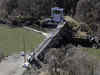
US regulators to vote on largest dam demolition, Klamath Basin in history
The Klamath Basin watershed covers more than 14,500 square miles (37,500 square kilometres) and the Klamath itself was once the third-largest salmon producing river on the West Coast. But the dams, constructed between 1918 and 1962, essentially cut the river in half and prevent salmon from reaching spawning grounds upstream. Consequently, salmon runs have been dwindling for years.
European drought dries up rivers, kills fish, shrivels crops
There has been no significant rainfall for almost two months in Western, Central and Southern Europe. And the dry period is expected to continue in what experts say could be the worst drought in 500 years.

Bottomfish in midcap IT space: Siddharth Sedani, Anand Rathi
Companies like Cyient or Majesco or MindTree can be bottom fished at the lower levels.

Bengaluru's technology majors leaacn green efforts
As the need to combat global warming becomes urgent, companies in Bengaluru take are taking steps to minimise their impact on environment.

Ratan Tata funds online pet shop DogSpot now
Ratan Tata has invested an undisclosed amount in his personal capacity in online pet shop Dog-Spot, along with Ronnie Screwvala.

Avoid stocks of companies with high FII stake: Experts
Global markets are in turmoil. The rout has hit home with stocks posting their biggest singleday loss in percentage terms.

Arunachal Pradesh CM Nabam Tuki assures passage of fish in dams
AP CM Nabam Tuki today assured to incorporate in MoUs and MoAs provisions of passage for fish at dams of upcoming power projects in the state.

India can give more market access to Bangladesh: Assocham
The industry body said the Prime Minister's two-day visit is likely to see bold moves take economic relations.

Tata Power to commission 2 South African wind projects in 2017
Tata Power, which has an installed generation capacity of 8,560 MW, is developing the two projects through an equal joint venture.

Tata Power eyes SAARC, South East Asia, Africa for growth
To fuel its ambitious growth plans, Tata Power is focusing on overseas opportunities spread across four regions including South East Asia and SAARC.

Rapid decline in commercially important fishes in Ganga
It is ironical that Patnaites consume fishes imported from Andhra Pradesh despite the city situated on the bank of the Ganga.The number of fishes like Rehu, Catla, Hilsa, Jasar and Mrigal (Naini) is rare in the Ganga. Jasar, Pangas and prawns are also on the verge of extinction.
Dams destroying fisheries, livelihoods
The Delhi-based South Asia Network on Dams, Rivers & People (Sandrap) has urged the Union ministry of environment forests (MoEF) and its expert appraisal committee (EAC) on river valley and hydropower projects to take urgent steps to protect inland water fisheries and millions dependent on them.
Load More

