
EXOPLANET RADIO BURSTS
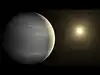
For the first time in astronomy, scientists detect radio signal from a young planet
Astronomers have discovered notable radio signals originating from the exoplanet Beta Pictoris b, located 64 light-years away from our solar system. These signals hint at an unexpectedly robust magnetic field surrounding the planet. The MeerKAT radio telescope network in South Africa facilitated this groundbreaking observation, revealing fluctuating intensities and timings of the signals related to the planet's rotation, thereby marking a pivotal step forward in exoplanetary magnetic field studies.
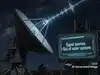
Mysterious radio bursts detected 63 light-years from Earth, well beyond our solar system: What scientists discovered about its source
A newly reported radio signature from Beta Pictoris b is giving astronomers a rare way to investigate the magnetic environment of a planet beyond our solar system. Observations with South Africa’s MeerKAT array identified recurring auroral radio bursts at the planet’s location, rather than its host star. The research also provides the first direct measurement of an exoplanet’s magnetic field strength.
Strange radio signals detected from exoplanet almost 63 light-years from Earth
Researchers have observed unusual radio signals from Beta Pictoris b, an exoplanet located 63 light-years away. These signals, detected using the MeerKAT radio telescope, are associated with auroras produced by the planet's magnetic field. The emission identified as electron cyclotron maser radiation indicates a magnetic field strength of approximately 1.25 kG. This discovery marks the first direct localization of auroral radio activity from an exoplanet.

A planet 63 light-years away is sending repeating radio bursts, and scientists can read them for the first time. Here’s what it reveals about the alien world
Astronomers detected repeating radio bursts from exoplanet Beta Pictoris b. These emissions originate from powerful auroras on the distant world. The signals provide a rare direct measurement of the planet's magnetic field. Scientists calculated Beta Pictoris b possesses a magnetic field stronger than Earth's. This discovery offers a new method to study exoplanet magnetic environments.
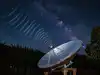
Why a radio telescope can be built from cardboard and aluminum foil: the metal-lined horn reflects radio waves toward a receiver
Dedicated hobbyists and curious students are assembling radio telescopes from common household objects. These innovative instruments catch elusive radio waves emitted by hydrogen in our galaxy. By utilizing materials like aluminum foil and cardboard for horn antennas, they can hone in on these signals. The rise of budget-friendly software-defined radios allows for the transformation of these signals into understandable data, opening up the wonders of astronomy to the general public.

Nearby star hurls plasma into space, astronomers capture it for the first time and it changes everything we know about life on other planets
Scientists have confirmed that eruptions from distant stars can escape their star's pull. A radio telescope in the Netherlands detected a true coronal mass ejection from the star StKM 1-1262. This discovery proves that magnetized plasma can travel freely through space. This finding has major implications for understanding space weather around other stars and the habitability of exoplanets.
- Go To Page 1
Zombie worlds: Five spooky planets orbiting dead stars
Stars with more than about eight times the mass of the Sun will typically burn through their fuel in less than 100 million years. Once fusion ceases, the star collapses - generating a massive instantaneous final burst of nuclear fusion which causes the star to explode as a supernova.
Load More

