
EXOPLANET
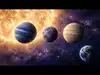
Three planets survived where they should have vanished: What does it mean for Earth and what did the Chinese scientists discover?
Three distant planetary systems are challenging expectations about what happens when stars grow old. The mystery offers a fresh way to examine planetary survival, including questions about Earth.
NASA’s SPHEREx finds brown dwarfs with water and methane, they drift in darkness without a host star and heated entirely from within
NASA's SPHEREx telescope has opened a fascinating window into the realm of brown dwarfs, the enigmatic celestial bodies that sit between stars and planets. Recent data reveals diverse chemical signatures and significant atmospheric variability, challenging existing models. Researchers aim to delve deeper into these findings, seeking to untangle the mysteries surrounding brown dwarfs and their complex atmospheres as they continue their groundbreaking analysis.

Meet Wolf Cukier, the 17-year-old who discovered a planet with two Suns just 3 days into his NASA internship
Just three days into his summer internship at NASA’s Goddard Space Flight Center in Maryland, 17-year-old Wolf Cukier discovered a planet orbiting two stars. He picked out a strange signal from a distant star system using data from NASA's Transiting Exoplanet Survey Satellite (TESS) that at first looked like a stellar eclipse. Additional analysis confirmed the presence of TOI 1338 b, a planet roughly 6.9 times the size of Earth and located about 1,300 light-years away in the constellation Pictor. This discovery was the first circumbinary planet found by TESS.
One of astronomy’s oldest suspected planetary systems has just undergone its most sensitive search yet and the biggest planets scientists might have expected to find are not there
Astronomers have conducted one of the most detailed searches yet for planets around 70 Ophiuchi AB, a binary system roughly 16 light-years from Earth. Researchers led by the University of Michigan combined more than a century of observations with modern radial-velocity and astrometric measurements. The study found no statistically convincing evidence of giant planets around either star, while stellar activity explained signals that initially appeared potentially planetary. The findings largely exclude Jupiter-mass planets across much of the inner system but do not rule out smaller worlds.
For the first time in astronomy, scientists detect radio signal from a young planet
Astronomers have discovered notable radio signals originating from the exoplanet Beta Pictoris b, located 64 light-years away from our solar system. These signals hint at an unexpectedly robust magnetic field surrounding the planet. The MeerKAT radio telescope network in South Africa facilitated this groundbreaking observation, revealing fluctuating intensities and timings of the signals related to the planet's rotation, thereby marking a pivotal step forward in exoplanetary magnetic field studies.

Mysterious radio bursts detected 63 light-years from Earth, well beyond our solar system: What scientists discovered about its source
A newly reported radio signature from Beta Pictoris b is giving astronomers a rare way to investigate the magnetic environment of a planet beyond our solar system. Observations with South Africa’s MeerKAT array identified recurring auroral radio bursts at the planet’s location, rather than its host star. The research also provides the first direct measurement of an exoplanet’s magnetic field strength.
- Go To Page 1
Strange radio signals detected from exoplanet almost 63 light-years from Earth
Researchers have observed unusual radio signals from Beta Pictoris b, an exoplanet located 63 light-years away. These signals, detected using the MeerKAT radio telescope, are associated with auroras produced by the planet's magnetic field. The emission identified as electron cyclotron maser radiation indicates a magnetic field strength of approximately 1.25 kG. This discovery marks the first direct localization of auroral radio activity from an exoplanet.
Astronomers just spotted an “Impossible” planet: Elias 2-24 b is the youngest known planet, and its Jupiter-sized growth could challenge planet formation models
Elias 2-24 b is young enough that astronomers are seeing it before its planetary neighborhood has finished taking shape. Yet the planet is already roughly Jupiter-sized. It orbits about 55 times the Earth-Sun distance, far out in a disk where assembling such a massive world should be difficult and slow. That mismatch is what makes the discovery so intriguing: astronomers are not looking at an old planet and guessing how it formed. They may be watching a giant world grow in real time.
A planet 63 light-years away is sending repeating radio bursts, and scientists can read them for the first time. Here’s what it reveals about the alien world
Astronomers detected repeating radio bursts from exoplanet Beta Pictoris b. These emissions originate from powerful auroras on the distant world. The signals provide a rare direct measurement of the planet's magnetic field. Scientists calculated Beta Pictoris b possesses a magnetic field stronger than Earth's. This discovery offers a new method to study exoplanet magnetic environments.
This strange world has no star to orbit, yet James Webb has revealed its changing weather from 20 light-years away
Webb telescope observed SIMP 0136, a brown dwarf twenty light-years away. Researchers found its changing appearance stems from temperature and cloud structure. These two factors explain most atmospheric variability observed by the telescope. The brown dwarf's atmosphere exhibits three recurring weather states as it rotates. This new method helps study distant worlds with limited direct observation.

Astronomers have found a 'baby' planet and named it Elias 2-24 b. The Jupiter-size world is less than 1 million years old
Astronomers have made an exciting discovery with Elias 2-24 b, recognised as the youngest planet identified to date. This gas giant is still enveloped in the material from its formation, indicating it is in a state of growth as it gathers more matter from its surrounding disk. Analysing previous telescope data has allowed scientists to gain valuable insights into the processes behind the formation and evolution of giant planets.

A future without oxygen: Scientists explain what Earth could look like in a billion years - hostile to complex life long before the Sun dies out
Earth's breathable atmosphere is a temporary phenomenon, experts predict. Computer simulations show oxygen loss within one billion years, long before the sun ages. This event will render the planet uninhabitable for oxygen-dependent life forms. Anaerobic organisms, however, will likely continue to survive in oxygen-free environments. This research also impacts the search for alien life on exoplanets.
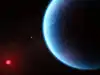
In 2025, scientists found 'strongest hints yet' of life on Mars and K2-18b—but, a survey of hundreds of astrobiologists say we still haven’t found aliens
Recent scientific findings on K2-18b and Mars sparked alien life speculation. A survey revealed few astrobiologists believed these discoveries confirmed extraterrestrial life. Researchers found the K2-18b exoplanet evidence less convincing than Martian rock features. Many scientists remained neutral, awaiting further analysis and ruling out non-biological explanations. These intriguing clues offer questions for further scientific investigation and testing.
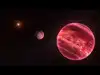
Is it a planet or a moon? Scientists discover a strange Jupiter-sized world orbiting a brown dwarf in a never-before-seen cosmic system
Astronomers found a massive object orbiting a brown dwarf star. This discovery challenges existing definitions of planets and moons. The unusual system features a nested orbital arrangement unlike our solar system. Scientists are debating the object's classification as a planet or something new. More such discoveries may redefine our understanding of cosmic bodies.
NASA's new Roman Space Telescope set to launch this Sunday will help scientists study dark matter and dark energy across billions of galaxies, unraveling the deepest mysteries of the universe
NASA Roman Space Telescope launch: NASA's Roman Space Telescope launchNASA's Nancy Grace Roman Space Telescope is set to launch on August 30 aboard SpaceX's Falcon Heavy from Florida. Named after NASA's first chief astronomer and “mother of Hubble”, the observatory will survey billions of galaxies, investigate dark matter and dark energy, hunt thousands of exoplanets and work alongside Hubble and James Webb.
Can NASA’s Pandora find water on alien worlds? The new mission is now watching
NASA's Pandora satellite has begun observing distant exoplanets to study their atmospheres. This mission aims to separate planetary atmospheric signals from stellar activity. Pandora will repeatedly study at least twenty exoplanets over its operational year. It monitors stars in visible light and planets in near-infrared wavelengths. This work will improve the interpretation of data from other powerful space telescopes.
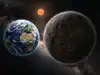
Scientists found a ‘Mega-Earth’ 2.5 times the size of Earth with a core 23 times its mass; but it didn’t develop the massive atmosphere expected of a planet this large, and researchers are trying to find out why
The discovery of GJ 523b, an exoplanet more than twice the size of Earth, has shaken scientists' understanding of rocky planet formation. This Mega-Earth, studied using TESS and Webb telescope data, showcases a significant core and a surprisingly light atmosphere. These intriguing findings highlight the need for further research to fully grasp the complexities of such unique celestial entities, as GJ 523b blurs the lines of conventional planetary science.
James Webb telescope discovers a cosmic oddity: A lemon-shaped exoplanet that has scientists stunned
The James Webb Space Telescope has found a strange exoplanet with a lemon-like shape. The planet orbits a dead star and has a rare carbon-filled atmosphere. Scientists say this discovery is very unusual and hard to explain. The planet’s shape and air make it one of the strangest worlds ever seen in space.

Indian researchers discover new exoplanet TOI-6038A b. Here's all about it
Indian researchers have discovered a dense sub-Saturn exoplanet, TOI-6038A b, which is 78.5 times the mass of Earth. This exoplanet orbits a bright, metal-rich F-type star every 5.83 days. The detection, involving PARAS-2 spectrograph, provides valuable insights into planetary formation and evolution, highlighting India's advancements in astronomical instrumentation.
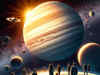
International astronomers including IIT Kanpur professor discover 'super-Jupiter' exoplanet orbiting a Sun-like star
An international team, including Dr. Prashant Pathak from IIT-Kanpur, discovered a giant exoplanet, Epsilon Indi Ab (Eps Ind Ab), orbiting a Sun-like star. The exoplanet, six times the mass of Jupiter, is the first mature exoplanet found using direct imaging. The discovery, made with the James Webb Space Telescope, was published in Nature.
Hydrogen Sulfide found outside our solar system for first time. Where has it been discovered and how important is it?
Scientists working with the James Webb Space Telescope have found hydrogen sulfide on an exoplanet known as HD 189733b. It is near Jupiter and about 64 light years from the Earth. It is the first time that this gas has been found outside our solar system.

NASA finds 'Waterworld with a boiling ocean' on exoplanet. Know if life too has been found there
An 'hycean' or a world of water under a hydrogen-rich atmosphere has been found on a sub-Neptune distant exoplanet. It contains an ocean of boiling water and its temperature could be as high as 100 degree Celsius.

Not just Moon, Chandrayaan-3 to also help Isro find other Earth-like exoplanets
The scientific instrument SHAPE, aboard the Chandrayaan-3, has been successfully orbiting the Moon for 52 days and collecting valuable data. Its primary mission is to scrutinize Earth for habitable planet-like features, aiding in the study of exoplanets. The Indian Space Research Organisation (Isro) intends to keep SHAPE operational as it has already amassed sufficient data.
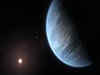
Two new exoplanets covered with water found by explorers
Exoplanet explorers have discovered new planets, Kepler-138c and d, covered with water.

Astronomers discover heaviest element yet detected in an exoplanet atmosphere
WASP-76 b and WASP-121 b are no ordinary exoplanets. Both are known as ultra-hot Jupiters as they are comparable in size to Jupiter whilst having extremely high surface temperatures soaring above 1000°C. This gives these planets rather exotic features; in WASP-76 b, for example, astronomers suspect it rains iron.
Astronomers detect water in Saturn-sized exoplanet's atmosphere
Washington, March 2 (IANS) Astronomers have detected a large amount of water in the atmosphere of a hot, Saturn-mass exoplanet some 700 light-years away.
NASA's Kepler discovers nearly 100 new exoplanets
London, Feb 17 (IANS) An international team of scientists have confirmed the discovery of nearly 100 new exoplanets -- planets located outside our solar system.
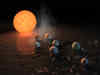
'100 new planets discovered beyond our solar system'
Mayo and his colleagues analyzed hundreds of signals of potential exoplanets to determine which signals were created by exoplanets and which were caused by other sources.
This is how Google AI helped NASA discover two exoplanets
Washington, Dec 15 (IANS) The Artificial Intelligence (AI) and Machine Learning (ML) approach from Google researchers helped NASA discover two exoplanets, including an eighth planet around the star Kepler-90.
Load More

