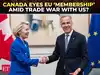
EU MEMBERSHIP
France's far-left presidential candidate cheers Gen Z school protests
Jean-Luc Melenchon has celebrated the nationwide high school protests over education issues in France. He has called for lowering the voting age to 16 and ending selective university admissions. Melenchon aims to engage young voters while addressing their grievances with the educational system. His campaign also focuses on lowering the retirement age and canceling national debt. Melenchon believes that young people's political involvement will be crucial for the upcoming election.
India has decades of high growth ahead, AI for humanity vision: Jaishankar
External Affairs Minister S Jaishankar highlighted India's anticipated decades of growth during a recent Munich meeting. He emphasized the potential of emerging powers and India's unique demographic advantage in this context. Jaishankar also addressed India's approach to artificial intelligence as a model for social equity and public welfare.
Andy Burnham wants UK to consider EU re-entry
"We could stay as we are. That's definitely an option, if people think this is the right place to stay," Burnham said, listing certain options including one to "go all the way". It is not clear how Burnham will canvass opinion on the EU, but he said in his conference speech that he would "take the opportunity around the summit to lay out to you, to lay out to the country, what I believe the different options are".
Canada has prepared for the unthinkable: A military attack by the US
Canadian Prime Minister Mark Carney recently suggested that the possibility of a US military attack is minimal. He emphasized responsibility in assessing extreme and improbable risks while preparing for them. Carney's remarks indicate a growing mistrust in the US and a shift in Canadian defense strategy. Canada seeks to diversify its dependencies and strengthen ties with Europe amidst increasing pressures.
On the table or on the menu? A new power play begins at the UN
Partners for Multilateralism, or P4M, unites diverse nations to reform global institutions. This new grouping reflects a changing global mood and a desire for greater maneuverability. Countries seek more influence in a multipolar and contested international system. P4M offers an open framework for issue-based coalitions across different political traditions. It signifies a new mood where middle powers think beyond established alliances.
- Go To Page 1
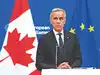
After POTUS threatens 'friendship' levies, PM Carney says EU and Canada are stronger together
"Europe and Canada are each strong. Europe and Canada are even stronger together," Carney told EU lawmakers in Strasbourg. "I am not proposing a third bloc in order to become a great-power rival - only with better manners," he continued. "We do not seek power to dominate others. On the contrary, we are pursuing resilience so that no one can control our open markets, impair our sovereignty, threaten our territorial integrity, or undermine our freedoms, our democracies, our rule of law."
EU opens door to ‘associate membership’ for Canada, but the concept does not yet exist
European Commission President Ursula von der Leyen proposed associate membership for Canada. This offer aims to forge a new partnership between the EU and Canada. While the concept is undefined, it signals a shift in international alliances. Canada welcomed the idea, focusing on concrete substance and mutual benefits. This development has drawn attention and potential trade responses from the United States.
Trump threatens to unleash new tariffs on EU over Canada associate membership proposal, calls move ‘hostile act’
US President Donald Trump warned that the European Union could face heavier tariffs if Canada’s proposed associate membership is intended to harm the United States. Calling the prospect “laughable” and Canada a “terrible trade partner”, Trump also suggested Washington could restrict trade with Europe in certain areas.
Carney welcomes a proposal for Canada to become the European Union's first associate member
Canadian Prime Minister Mark Carney welcomed a European Union associate membership proposal. He stated this deeper integration aims to build resilience for both sides. This move seeks to reduce vulnerability to economic and geopolitical pressures. Carney clarified the intention is not to create a rival power bloc. The goal is to enhance sovereignty and independent decision-making capabilities.
EU chief Ursula von der Leyen says she wants Canada to become the bloc's 1st associate member
European Commission President Ursula von der Leyen proposed making Canada the European Union’s first associate member, as Ottawa seeks closer ties with Europe amid deteriorating relations with the United States. The proposed partnership would expand cooperation beyond trade into defence, technology, energy, critical minerals, AI, cybersecurity and economic security.
In a historic first, Canada invited to become EU bloc’s associate member
Canada could become the EU’s first “associate member” under a proposal from European Commission President Ursula von der Leyen. The plan would deepen cooperation beyond trade into defence, energy, critical minerals and technology as Canada and Europe seek stronger economic ties amid uncertainty over US trade policy.
Canada’s European pivot draws Trump threat as Mark Carney prepares for EU Parliament speech
Canadian Prime Minister Mark Carney addresses the European Parliament amid escalating US trade disputes. Europe proposed associate member status for Canada, which was warmly received by lawmakers. President Trump warned of economic measures if the move is perceived negatively. Canada aims to diversify relationships and strengthen its independence from the United States. This deeper partnership offers Canada strategic autonomy and Europe a closer ally.
Prime Minister Mark Carney responds with namaste as Ursula von der Leyen invites Canada to become EU’s first ‘associate member’
Ursula von der Leyen, President of the European Commission, has extended an invitation to Canada to become the EU's inaugural associate member. This initiative is designed to enhance both economic and strategic ties between the two powers. Since Canada cannot achieve full EU membership due to current treaties, this new status might pave the way for a more integrated partnership and bolster their trade relations significantly.
Trump vs Carney: The dealmaker meets his match in a central banker
In response to Trump's pressures, Canadian Prime Minister Mark Carney has strategically leveraged central banking principles. Steadfast in resisting tight deadlines while prioritising Canada’s long-term economic stability, Carney is actively looking to establish diverse trade partnerships that extend beyond the United States. A proposed 'associate member' status from Europe further aims to enhance Canada's geopolitical and economic influence.
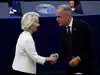
Trump wanted Canada closer to America; Ottawa is now flirting with the EU instead
Donald Trump’s tariffs and “51st state” rhetoric have coincided with Canada accelerating efforts to diversify away from its heavy dependence on the US. The EU’s proposed “associate member” status could deepen cooperation in trade, defence, energy and technology, but Canada’s nearly $900-billion trade relationship with the US means any economic reorientation would take years.

Schengen on ice: Italy and Spain extend their border standoff for another 15 days, two months after the deadly Ceuta migrant surge
Italy and Spain have extended border checks for fifteen days. This action follows a significant migrant surge into Spain's Ceuta territory. Both nations are engaging in retaliatory border controls against each other. The crisis highlights ongoing European debates on migration policies. This situation has become a political challenge for Spain's Prime Minister.
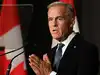
Carney says Canada seeks "unique alliance" but not membership with the European Union
Canada seeks a unique alliance with the European Union, not membership. Prime Minister Mark Carney confirmed discussions for this special partnership. This move comes amid escalating trade disputes with the United States. Canada and the EU are exploring closer economic and strategic ties. Both sides share common values and complementary strengths for collaboration.
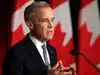
Mark Carney pushes idea of making Canada 'associate member' of EU, WSJ reports
Canada seeks closer European Union ties, exploring associate membership status. This strategic pivot follows escalating trade disputes with the United States. Discussions involve free movement of goods, services, and workers in key sectors. Joint infrastructure projects for energy and data are also under consideration. Prime Minister Mark Carney will meet French President Emmanuel Macron soon.

From G7 to D10: Why the world's democracies should finally name their coalition
Global summits highlight a multipolar world order and competing national interests. Industrial democracies informally assemble, behaving like a D10 coalition. This grouping commands significant global GDP and economic influence. India's consistent participation makes it indispensable to these discussions. The time has arrived for this informal arrangement to gain formal recognition.

Iceland rejects EU-accession talks in close-fought referendum
Icelanders voted against joining the European Union, a decision reported on Sunday. The government's push to reopen membership talks was rejected by voters. Concerns about Iceland's vital fishing waters influenced the referendum outcome. Previous attempts to join the EU were ended by a Eurosceptic government in 2013. The vote concludes decades of debate about Iceland's global position.

Trump's Greenland threats cast a shadow on Iceland's vote on whether to trigger EU membership talks
Icelandic voters are deciding on resuming European Union membership talks. This referendum occurs amid United States President Donald Trump's interest in Greenland. Concerns about potential future threats influence the national debate. Fishing rights and national identity are central to the discussion. The government emphasizes this is an initial step toward potential membership.
European Union approves further €6.1 billion aid for Ukraine's defence
The European Commission has approved an additional €6.1 billion for Ukraine's defence. This new aid package will procure vital systems like air defence and missiles. It builds upon previously approved procurement plans totaling €16 billion. The European Union stands with Ukraine as Russia intensifies its attacks. This support aims to help Ukraine protect its people and skies.

Ukraine's Zelenskiy says proposal of associate EU membership 'unfair'
Ukrainian President Volodymyr Zelenskiy has rejected a German proposal for Ukraine to gain associate membership in the European Union. He stated this would leave Kyiv without a voice within the bloc. Zelenskiy believes the time is right for Ukraine's full and meaningful membership.
EU executive weighs idea of quick, but limited membership for Ukraine
The European Commission is exploring a new path for Ukraine's EU membership. This approach, part of a potential peace deal with Russia, could grant Ukraine early accession without immediate full rights. Kyiv would earn these rights through transition periods, offering a security guarantee and economic stability.

Could Canada join the European Union? rising public support and strategic interest amid US tensions
Amid escalating tensions with the US, nearly half of Canadians now support joining the European Union, according to a 2025 Abacus poll. While legal barriers remain, the growing interest reflects Canada’s push to diversify global alliances and reduce economic reliance on the US through deeper ties with Europe

Ukraine’s EU membership faces challenges; decision on keeping Georgia out signals double standard: Analysts
EU Candidate status requires unanimous approval from the existing 27 members and backing from the European Parliament. Once approved, it only begins the accession process, though this is no guarantee of progress. Turkey has had candidate status since 1999, North Macedonia since 2005, Montenegro since 2010, Serbia since 2012, and Albania since 2014, according to Hess.
Load More