
EROSION REDUCTION
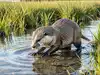
Sea otters reduce erosion of California’s coastal wetlands by 69%, says study
California's sea otters are preserving wetlands in Elkhorn Slough of Monterey County. They have decreased the rate of erosion on tidal creeks and salt marshes. The areas with high sea otter numbers have seen an average decrease in the rate of erosion of 69%, a study published in Nature said.

Assam plans major project to reclaim land lost to Brahmaputra's changing course
Assam Chief Minister Himanta Biswa Sarma visited Kayantol in Hajo, Kamrup district, and Sonka in Mayong, Morigaon district to assess the feasibility of the proposed project on the ground.

Market crash near or after retirement: Invested heavily in equities for high returns, but are you ready to withstand a 25% crash?
Navigating the unpredictable tides of market fluctuations can be particularly daunting for retirees. This guide delves into balancing equity and debt in investment portfolios, highlighting strategies for managing withdrawals during market downturns, the critical role of a retirement buffer, and the necessity of adaptable financial plans to shield against economic uncertainties, thereby promoting a stable and comfortable retirement lifestyle.
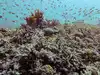
Almost all coral reef ecosystems face risk of collapse in 50 years, study warns
The world’s coral reefs are critically endangered due to rising ocean temperatures and climate change. This poses a significant threat to marine biodiversity and coastal communities. Nearly all shallow-water reef systems could collapse by 2075 without intervention. Experts emphasize the need for ambitious emissions reductions and improved protection efforts. The IUCN report serves as a crucial reminder of the urgent action needed to protect coral ecosystems.

In the 1950s, California brought in Cape ivy as an ornamental vine; it spread across 500,000+ acres, cutting native seedling variety by as much as 95%
Cape ivy, introduced to California in the 1950s for ornamental purposes, has turned into a destructive invasive species. Its rapid growth shades native plants and competes for essential resources, leading to a significant loss of biodiversity in many regions. Efforts to eliminate this resilient vine have been challenging, but new biological control initiatives show promise in curbing its spread and rehabilitating affected ecosystems.

‘Productivity growth in consumer services is powering India’s rise’
Dani Rodrik highlights the relationship between ending poverty, boosting the global middle class, and addressing climate change. He emphasizes the importance of transitioning from manufacturing to services in the global economy. As digital technologies evolve, they enhance productivity in services and create equitable opportunities. The decline of the middle class threatens democracy, leading to political instability in many countries.
- Go To Page 1

Ohio solar farm is now home to more than 3 million honey bees. Veteran beekeepers turn land around panels into pollinator habitat
In Ohio, Big Plain Solar is pioneering a unique blend of renewable energy and agriculture by integrating over 50 hives of honey bees into its solar farm. The initiative employs pollinator-friendly plants, enhancing the ecosystem while producing electricity. Run by veterans, this project not only supports sustainable land use but also contributes to improved soil health and reduced maintenance costs, showcasing how innovative practices can benefit both energy and agriculture.
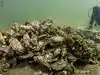
Alabama dumped 16,000,000 used oyster shells from restaurants into the sea. What happened next surprised researchers in development of new coastal lines, marine life, and cleaner water
Oyster shells are being repurposed along the Gulf Coast to restore essential marine ecosystems. By forming a strong foundation for new oyster reefs, these recycled shells bolster marine biodiversity. In addition to enhancing water clarity through their filtration capabilities, they serve as a natural barrier, safeguarding Louisiana's shorelines against erosion and storm impacts. This project aligns restaurant operations with crucial coastal restoration efforts.

$3 trillion gain or a 10% GDP loss? WTO sounds a trade alarm
The WTO’s World Trade Report 2026 says strengthening the global trading system could lift global GDP by 2.9%, or about $3 trillion, by 2050, while failing to modernise it could cost up to 10% of global GDP.
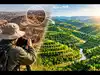
In 1995, John D. Liu filmed 1 Loess Plateau project in China where slopes were terraced, vegetation restored and water managed. 25 years later, 35,000 sq km had recovered
China's Loess Plateau, once severely eroded, underwent significant ecological recovery. Communities actively participated in restoration efforts, receiving incentives for their work. Vegetation cover increased, and biodiversity returned to the landscape over time. This project demonstrated that degraded land can be restored with proper community engagement. The lessons learned offer valuable insights for ecological rehabilitation globally.
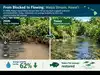
In 2006, Hawai‘i listed Waipā Stream, after dense hau bush trapped sediment and blocked fish. Today, restoration cut average turbidity by 62% and restored native fish passage
Waipā Stream restoration efforts significantly improved water quality and aquatic habitats. Invasive hau bush removal and feral pig control reduced sediment pollution. Constructed wetlands and riparian revegetation further enhanced stream conditions and native fish populations. Measurable improvements led to the delisting of turbidity and nutrients from impaired waters. Continued community commitment ensures ongoing watershed protection and management for the future.
In 1996, Idaho listed Fish Creek for sediment after erosion damaged aquatic habitat. 22 years later, restoration helped it earn the maximum 3.0 score for cold-water life
Fish Creek in Idaho was listed as impaired for sedimentation in 1996. Collaborative efforts by various stakeholders improved road surfaces and stabilized streambanks. Wetland enhancements and channel improvements further reduced sediment and nutrient loads. Data collected in 2017 showed full support for cold water aquatic life. Fish Creek was subsequently removed from the impaired waters list in 2020.

In 2004, Illinois began Cedar Lake restoration with 3 projects to curb erosion. 18 years later, Cedar Creek was delisted for 3 impairments after sediment and TSS improved
Cedar Lake erosion restoration Illinois: Extensive erosion restoration efforts at Cedar Lake have significantly improved water quality. Projects focused on stabilizing shorelines and gullies, reducing sediment and nutrient pollution. These restoration initiatives successfully addressed multiple water quality impairments in Cedar Creek.
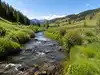
In 1994, Idaho listed Rapid Creek for sediment after grazing added excess sediment. 20 years later, 3 reaches were delisted after BMPs improved habitat and water quality
Rapid Creek in southeastern Idaho was listed for sediment impairment in 1994 after assessments found that several streams did not support cold water aquatic life. Livestock grazing, streambank erosion, sheet and rill erosion, and road erosion contributed excess sediment to the watershed. Beginning in the late 1980s, landowners and watershed partners implemented agricultural best management practices to reduce soil erosion and improve stream conditions. Later monitoring showed declines in suspended solids, Escherichia coli, and nitrogen concentrations, along with improved biological and habitat scores.

In 2011, Arkansas prioritized Lake Conway-Point Remove to tackle pollution. 13 years later, Conway cut nitrogen 41% and phosphorus 44% with green infrastructure annually
Lake Conway-Point Remove story ultimately shows why the future of water-quality protection may depend on combining engineering with ecology. A watershed facing stormwater pollution does not always have to choose between functional infrastructure and a healthier natural environment. Conway's experience demonstrates that porous surfaces, wetlands, rain gardens, native vegetation and infiltration systems can work together to reduce pollution while improving flood resilience and creating public spaces.
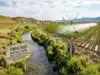
In 2016, Colorado listed 67 miles of Timpas Creek as impaired for sulfate. 7 years later, local farmers helped delist 24 miles after BMPs restored drinking water quality
Timpas Creek's sulfate levels significantly decreased due to improved irrigation practices. Voluntary efforts by local producers focused on the lower creek section. These changes allowed the creek to meet drinking water standards for sulfate. Consequently, Timpas Creek was removed from the impaired waters list.
In 2006, Illinois listed 10.69 miles of Cahokia Creek as impaired. 14 years later, Heartlands Conservancy's BMPs improved the stream, leading to delisting in 2020
Cahokia Creek in Illinois was impaired due to severe streambank erosion and lack of vegetation. Heartlands Conservancy used grant funding to implement stream channel and streambed stabilization practices. These efforts included installing rock riffles and establishing vegetated riparian corridors along the creek. The implemented best management practices significantly reduced pollution entering the stream. Consequently, Cahokia Creek was removed from the impaired waters list in 2020/2022.

In 2021, New York assessed Cannonsville Reservoir as impaired after a 7-foot culvert blocked fish passage. 2 years later, the new culvert scored 0.88 for aquatic passage
A culvert replacement project in Delaware County, New York, addressed stream-flow, erosion, sediment, and fish-passage problems along an unnamed tributary to the Little Delaware River. The failing 7-foot-diameter metal culvert was replaced with a 9-by-13-foot concrete box culvert designed to accommodate additional flow, reduce erosion, and improve aquatic connectivity. After construction, the new structure received a 0.88 aquatic passability score under the North Atlantic Aquatic Connectivity Collaborative (NAACC) protocol, placing it in the “insignificant barrier” category.

In 1994, Illinois EPA listed 50.75 miles of Silver Creek as impaired by farm pollution. 28 years later, Illinois removed the creek from its impaired list in 2022
Upper Silver Creek in Illinois has been removed from an impaired waters list. Best management practices were installed to reduce pollution from agricultural sources. These efforts significantly lowered nitrogen and sediment loads in the waterway. Water quality monitoring confirmed improvements in dissolved oxygen levels. The successful project demonstrates effective watershed management strategies.
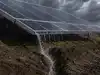
Rainfall experiments found solar panels cut soil erosion beneath their surfaces by 27–63%, while concentrated dripping created new erosion hotspots along panel edges
Solar panels significantly reduce soil erosion directly beneath them during rainfall events. However, concentrated runoff at panel edges causes increased erosion in those specific areas. Studies indicate that this edge effect can substantially elevate erosion rates and runoff volumes. Researchers suggest simple solutions like ground cover to mitigate these edge hotspots. Expanding solar farms must consider these edge impacts for effective land management.

Lessons from Zee: What to read when investing in a cash-cow firm
An established cash-generating business tends to increase the risk appetite of the promoter.

Hold Glenmark Pharmaceuticals, Rs 530: Edelweiss
Hold Glenmark Pharmaceuticals Ltd. at a price target of Rs 530.0 .

Price erosion in US impacted Q1 margins: Saumen Chakraborty , Dr Reddy's Labs
If competitions are higher, then definitely it leads to more price erosion but we will have to definitely work on those molecules where competitions would be limited

How Trump, FDA policies may change the way you look at the pharma stocks
Analysts largely believe the near-term earnings in the sector will largely be a function of new launches in the US and growth rates in domestic and other key markets.

Jindal Stainless submits monetisation plan to lenders to improve networth
"The AMP is aimed to facilitate enhancement of the networth and viability of the Company and unlock value of the stakeholders," JSL added.

Jindal Stainless's net worth falls 92%, eyes monetising assets
It had reported Rs 103.90 crore loss in 2011-12, Rs 820.82 crore loss in 2012-13 and Rs 1,390.09 crore loss in 2013-14.

HCL's pricing, deals and future growth
HCL CEO talks about pricing, deals and future growth drivers for the firm.
India Inc may see more job cuts as efficiency levels drop
Though the last week's retrenchment saga at Jet Airways saw a happy ending, the ghost of job losses still haunts India Inc. Keep staff motivated | Retain your job
Load More


