
ENVIRONMENTAL RESEARCH
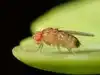
Scientists compared flies from cool California forests with those from hot Southwestern deserts; a 2025 study found their brains responded differently to heat
Two fly species, Drosophila persimilis and Drosophila mojavensis, showcase fascinating adaptations to their environments, revealing their opposing responses to heat. While forest-dwelling flies evade warmth, their desert counterparts thrive in it. These contrasting behaviors highlight significant neural changes that not only reflect physical adaptations but also altered sensory processing. This research is pivotal in predicting how species may cope with the challenges of climate change.

Elon Musk has a class 12 competitor from India: Hyderabad student makes satellite receiver that works without internet
A Class 12 student from Hyderabad has developed SummitSathi, a satellite-based receiver that downloads cloud images without internet or mobile connectivity. Three units, costing around Rs 68,000 each, are planned for deployment across 10 villages in Himachal Pradesh's Seraj Valley to provide an additional source of weather-related information during network disruptions.

India should offer world new development model rooted in tradition: RSS chief Mohan Bhagwat
Mohan Bhagwat called attention to India's heritage of traditional wisdom as a potential blueprint for global progress. He underlined the necessity of achieving equilibrium among human lifestyles, animal health, and environmental integrity. Concurrently, Maharashtra Chief Minister Devendra Fadnavis confronted the agricultural issues arising from climate change, and Union Minister Nitin Gadkari announced the establishment of agriculture and veterinary institutions as vital steps for enhancing local development.

IIT Madras develops real-time digital twin platform for autonomous maritime navigation
Researchers at IIT Madras have created SEANAV, a digital twin platform for testing autonomous maritime navigation systems. This innovation simulates real-world conditions, reducing the costs and risks associated with testing. The platform supports applications in search-and-rescue operations and maritime defense. It is aimed at enhancing safety at major Indian ports and improving navigation strategies.
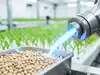
NECTAR to host international workshop on cold plasma and pulse power in Shillong
The Northeast Center for Technology Application and Reach will hold the COFHA workshop in Shillong in December 2026. Participants will include scientists, engineers, and researchers from India and abroad. The workshop aims to explore cold plasma applications in various sectors, including food and agriculture. Sessions will cover food safety, seed treatment, and biomedical applications, focusing on emerging technologies. Keynote speakers will include experts from prominent universities around the world.
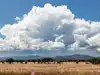
Since 2023, over 3,000 volunteers have searched satellite images for clouds; their answers are helping scientists check what computers miss
Thousands of volunteers are analyzing satellite images to assist in accurate cloud classification and detection. The CloudCatcher project aims to enhance the understanding of cloud patterns and their effects on climate. Human input provides valuable data to refine the capabilities of automated systems used in cloud detection. This collaboration showcases the growing trend of involving the public in environmental research efforts.
- Go To Page 1
India blocks battery waste exports to recover more lithium, nickel and cobalt at home
India has enforced a ban on exporting lithium-ion battery black mass to promote local recycling initiatives. The prohibition aims to ensure that valuable materials from battery waste remain accessible for domestic refiners. This regulation will help reduce reliance on imported materials essential for battery manufacturing. Furthermore, the decision addresses the capacity issues faced by local recycling facilities in processing battery waste.
Help NASA build a home on the Moon and get $1 million prize: Check competition rules, key dates, how and where to apply
NASA has announced a $1 million Moon Base Student Challenge, inviting eligible high school and college students in the US to develop innovative solutions for building a permanent human settlement near the Moon's South Pole. The competition will focus on six areas, including power generation, construction, life-support systems and astronaut safety.
IIT Indore reveals severe pollution in drain leading into Kshipra river ahead of Simhastha 2028 pilgrimage
IIT Indore conducted an investigation revealing significant pollution levels in Nagdhaman Nala, which impacts Kshipra river water quality. The study identified a lack of oxygen and high levels of faecal bacteria in the water. Experts expressed concerns regarding the water's unfit status for recreational use ahead of Simhastha 2028. Madhya Pradesh government has not taken necessary actions to address these pollution levels despite growing environmental concerns.
Can closing windows keep wildfire smoke out? How much smoke still gets in and do air purifiers work?
Closing windows can reduce how much smoke from wildfires gets indoors, but some can still seep in. A 2026 NIST experiment found that a portable air cleaner’s performance depended partly on how air moved between rooms.

California replaced a fish-blocking pipe on Fort Goff Creek with a bridge in 2014; later monitoring found 64 Chinook salmon nests upstream
In California, the removal of the culvert on Fort Goff Creek has significantly enhanced fish passage, particularly for salmon. Completed in 2014, a new bridge now connects fish to breeding grounds that were previously inaccessible. Biologists found 64 nests of Chinook salmon in this newly opened habitat, highlighting the importance of addressing culverts nationwide to improve aquatic ecosystems and connectivity.

Why are we becoming 'vishwaguru' in air pollution: Kharge targets Modi govt
Congress president Mallikarjun Kharge has accused the BJP government of failing to tackle Delhi's worsening air pollution, questioning Prime Minister Narendra Modi over unspent environmental funds and missing PM2.5 readings at monitoring stations. He demanded accountability, citing pollution-linked deaths, poor utilisation of clean-air funds and recurring government assurances.

US: Senate advances sweeping energy legislation in first major action since midterm elections
The Senate voted 73-25 to formally take up the bill, which senators and the president have pushed as a way to meet growing demand for electricity and other forms of energy that now face yearslong delays in getting to the grid.

India’s emissions to rise 4.4% despite global dip: Study
Renewable energy capacity growth and electric vehicle adoption are projected to reduce fossil fuel emissions by 0.4%. Major economies like China, the US, and the EU are expected to decrease emissions this year. However, India's emissions are predicted to increase at a higher rate than previous years. The ongoing energy crisis due to geopolitical events is influencing these changes in emissions.

Microsoft reports $36 billion quaterly profit, employees complain salary raises below 1%, describe workplace as 'joyless and demoralizing' after 60,000 people receive buyout offers
Microsoft reported a 32% jump in quarterly profit to $36.6 billion but its employees complain of salary increases below 1%, rising workloads and pressure to use AI tools. An open letter describes the workplace as “joyless and demoralizing” following voluntary buyout offers to around 60,000 employees across four countries.

Indian sector of Southern Ocean sees rising oxygen levels, contrary to global trend: Study
Research reveals that oxygen levels in the Indian sector of the Southern Ocean increased significantly from 1993 to 2025. This rise is attributed to enhanced ocean ventilation processes affecting the deeper water layers. Results indicate that the Antarctic Zone experienced notable increases in dissolved oxygen concentration. Observations show a retreat of winter water layers, indicating changes in ocean structure.

For 20 years, a road culvert blocked fish in California’s Sharber-Peckham Creek; crews replaced it in 2016, and 2017 monitoring found 740 juvenile coho upstream
In Northern California, a four-foot metal pipe had hindered salmon migration for two decades. After its replacement, juvenile coho salmon gained access to essential spawning habitats. This case underscores the critical situation of culverts obstructing fish passage nationwide. Recent research has identified the need to evaluate these structures for effective prioritization in upgrades. Continuous investment, study, and conservation efforts are essential for sustaining fish habitats.
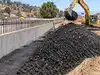
In 2003 and 2006, California used 224,700 waste tires behind two freeway walls; the lighter fill reduced pressure on the structures by about 30%
California has taken a progressive step by integrating millions of waste tires into its freeway construction. This innovative approach involves the use of tire-derived aggregate in retaining walls, which effectively minimizes structural pressure. Not only does this practice present numerous advantages in civil engineering, but it also helps conserve natural resources while tackling the tire disposal dilemma.
Delhi govt urges citizens to burst only green crackers, stick to specific timings: Check permitted time, restricted areas and other key details
Delhi pollution news: Delhi government has outlined restrictions on firecracker use for the upcoming Diwali festival. Green firecrackers will be allowed only on specific dates and times in November. The sale is limited to certified green firecrackers at authorized locations only. Violators of these regulations may face penalties and confiscation of illegal products. Supreme Court has mandated these conditions to reduce pollution and noise during the celebrations.

Environmental groups embrace AI, even as they warn of data center impacts
Environmental organisations are increasingly leveraging artificial intelligence to enhance conservation efforts and analyze ecological data. Many express concerns about the environmental impact caused by data centers that support AI technologies. The energy and water consumption of these centers is projected to double by 2030, raising emissions concerns.
A billionaire couple donated $50 million to UC Davis for agricultural research; in 2026, a 34,000-square-foot center opened in California
At the forefront of agri-tech innovation, the Resnick Center at the University of California, Davis, drives agricultural advancement with a strong focus on sustainability and research. Fueled by generous donations, it strives to elevate farming practices and enhance crop resilience. Current projects aim at transforming agricultural waste into valuable resources, thereby reducing ecological footprints.

Florida planted Australian pine for shade, windbreaks, and storm protection; by 1993, the fast-growing tree had invaded more than 372,000 acres
Australian pines were brought to Florida in the 1800s as a means of protecting against storms and enhancing landscapes. By 1993, however, these trees had taken over more than 372,000 acres, leading to harmful impacts on local ecosystems through monocultures. A study following Hurricane Andrew revealed that merely 4% of these trees withstood the severe winds, exposing their shallow root problems.
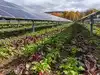
In 2024, Cornell researchers grew radishes and radicchio between solar panels near Albany; shade reduced light and crop biomass, with radishes more affected
In a groundbreaking study, Cornell University researchers evaluated agrivoltaics in Albany, New York, focusing on crops like radishes and radicchio. Their findings revealed that solar panel shading led to considerable reductions in light and biomass. With agrivoltaic land usage in the U.S. having more than doubled since 2020, they advocate for strategic adjustments in planting schedules and crop choices to optimize synergy between agriculture and solar energy.
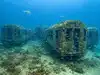
In 1990, New Jersey placed five retired subway cars in a reef about 70 feet underwater; a decade later, they still provided three-dimensional structure
In an innovative move, decommissioned subway cars were submerged off the Jersey Shore, transforming them into artificial reefs. These underwater habitats not only shelter marine life but also enhance biodiversity in the region. Research shows that fish and invertebrates flock to these structures shortly after their installation. However, concerns have emerged regarding potential sinking and contamination, highlighting the complexities of turning waste into environmental assets.

In Washington, scientists excluded elk from rainforest plots for 36 years; shrubs became 5 to 6 times more abundant, while 46 plant species disappeared
A comprehensive study conducted over 36 years in Washington's Olympic Peninsula has unveiled striking insights into elk exclusion's impact on plant communities. Researchers found that while shrubs thrived, numerous smaller plant species vanished, underscoring the elk's critical role in promoting forest diversity through their feeding habits and behavior. These revelations challenge conventional views on herbivores, highlighting the importance of understanding ecological interactions for wildlife management and conservation efforts.
SFC Environmental Technologies shares debut at nearly 8% premium to IPO price
In a landmark event, SFC Environmental Technologies debuted on the stock exchange with a promising start, opening at a premium. The IPO garnered impressive attention, being oversubscribed 9.47 times. Institutional investors showed particular interest, leading to an 18.81 times subscription in the QIB segment. The raised capital will be directed towards settling borrowings and facilitating working capital. SFC is known for its cutting-edge solutions in managing wastewater and solid waste.
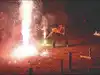
Delhi-NCR gets two days of green crackers as Supreme Court caps bursting at three hours a day and sets 300-metre no-cracker zones
The Supreme Court has authorized the use of certified green firecrackers in Delhi-NCR on specific dates. Firecrackers can only be burst within designated time limits on November 7 and 8. Certain areas, including hospitals and educational institutions, will be declared as 'No-Cracker Zones' to ensure safety. Manufacturers must comply with specific certifications to produce authorized firecrackers during this period. A complete ban on all firecrackers will resume after November 8.
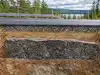
In 1997, Sweden used copper-smelting slag beneath a road near Luleå; after 10 years, copper, nickel and zinc leaching had declined below recommended thresholds
A decade-long study in Sweden investigated the environmental effects of incorporating copper slag in road construction. The researchers observed a significant reduction in the leaching of metals like copper, nickel, and zinc over time. While initial tests indicated high metal concentrations in various materials, the findings imply that the environmental concerns related to these materials are primarily short-lived.
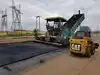
In Burgundy, France, 17,000 tonnes of discarded foundry sand went beneath RN 80; two years later, tests found good road strength and no environmental impact
In Burgundy, France, engineers have made strides in sustainable construction by incorporating about 17,000 tons of foundry sand waste into a highway project. This initiative sought to assess the safety and efficiency of using recycled materials in roadwork. Over two years of observation, the highway demonstrated commendable structural integrity with no adverse environmental effects, emphasizing a notable shift towards utilizing industrial waste and easing landfill burdens for sustainable practices.
Load More

