
ECONOMIC DECOUPLING

With G-sec yields rising, countries have no alternative but to increase their bullion holdings
In India yield on T-year G secs has increased by 0.4 percentage points over the same period. Unfortunately, governments are confronting these higher borrowing costs precisely at a time when debt is elevated, with global public debt expected to exceed 100% of GDP by 2030, a level last reached in the immediate aftermath of WW2.

In US swing districts, high prices dominate minds but not always ballots
American consumers express significant concerns over rising living costs impacting their daily shopping habits. Many voters remain loyal to their parties despite inflation influenced by various factors, including political decisions. Democratic candidates see increased urgency to address economic issues for congressional elections. While Republicans hold strong support among some constituents, Democrats hope to gain ground in swing districts.

India can achieve Viksit Bharat and Net Zero without trade-offs
India can achieve its Viksit Bharat 2047 ambition alongside its net-zero 2070 target, with green investments boosting growth, energy security and future industries without hurting spending on health and education.

India’s great market disconnect: The economy says steady, but stocks say trouble. Which signal should investors trust?
India's macroeconomic fundamentals indicate strong growth despite the Nifty index losing 13% this year. While industrial production and corporate earnings demonstrate resilience, foreign selling pressures weigh on equities. Upcoming earnings season is crucial as investors assess the impact of input costs on margins. Analysts suggest that the market needs broader economic signals to recover sustainably. Stability in global bond yields and crude oil prices could also influence market sentiment.

$3 trillion crypto comeback: Can Bitcoin bulls reclaim $100K and push higher?
Bitcoin has led a broad crypto market recovery, pushing total digital-asset market capitalisation back above $3 trillion. Strong spot and ETF demand has supported the rebound, although rising open interest and funding point to increasing leverage. The next phase will depend on whether underlying demand can sustain momentum toward the $100,000 mark.

Dollars no longer buy happiness
Despite an unexpected increase in spending, US consumer sentiment is showing a notable decline. Economists are delving into the underlying reasons for this paradox, with factors beyond economics, such as global events and trust in institutions, playing a critical role. Additionally, consumers are adapting their spending patterns, placing greater emphasis on larger purchases while neglecting smaller ones, which complicates traditional economic assessments.
- Go To Page 1
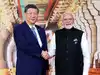
Behind the Modi-Xi border thaw, India's dependence on Chinese imports, especially rare earths, keeps deepening
India faces a significant trade deficit with China, importing substantially more goods than it exports. Chinese firms offer superior price and tech competitiveness, impacting Indian industries. India relies heavily on China for critical inputs like rare earths, affecting various sectors.

Powerful quote of the day by Ben Kingsley: “I've never had to turn my hand to anything for...” — Life lessons from a motivational quote on purpose, gratitude, ambition, financial success, and finding fulfillment beyond money from the Oscar-winning actor
Quote of the day by Ben Kingsley reflects on the rare privilege of earning a living through work that feels meaningful. It speaks to the choices we make when money, ambition and personal satisfaction pull us in different directions. The article looks at gratitude, purpose, contentment, self-worth and the deeper meaning of success when a person is no longer chasing more simply for the sake of it.

Mid-tier VCs scout deeptech deals; ETSA winner Varaha’s India play
Happy Monday! Sector-agnostic mid-tier venture capital investors are recaliberating focus on India's deeptech startups. This and more in today’s ETtech Morning Dispatch.

CNG, hybrids, electrics rule motown: Alternative powertrains beat petrol vehicles for the first time in India as August auto sales jump 18%
Retail vehicle sales surged by eighteen percent year-on-year, reaching 2.42 million units last month. For the first time, alternative energy vehicles, including electric and CNG options, outsold petrol vehicles. This increase in sales was primarily driven by strong rural demand, even with varied monsoon conditions. Electric vehicle category sales soared by nearly fifty-three percent, showcasing their growing appeal. Dealerships remain cautiously optimistic as the festive season approaches, anticipating higher bookings.

Alternative fuels overtake petrol in India’s car sales for first time as CNG, EVs and hybrids gain ground
In response to soaring fuel costs, consumers are now leaning towards alternative fuels like CNG, hybrids, and electric vehicles, resulting in a decline in petrol sales. Rural markets have played a pivotal role in driving year-on-year vehicle registration growth. Electric vehicle adoption is steadily climbing across different segments. While dealers remain hopeful for strong demand, they are wary of monsoon-related challenges and possible increasing prices.

Tech pilgrims flock to China as global innovation race heats up
Investors and entrepreneurs are paying thousands of dollars for rare access to Chinese factories, seeking a front-row seat to what many believe could be the next technological revolution.
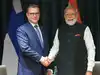
India-Finland cooperation takes centre stage at circular economy forum
India and Finland are strengthening business and technology ties in the circular economy. Companies from both nations explored resource-efficient and sustainable growth opportunities at a forum. This event served as a precursor to the World Circular Economy Forum in Gandhinagar. Discussions focused on building competitive value chains through circularity and sustainable practices. Finnish companies see significant opportunities to collaborate with Indian partners for growth.

US-China trade truce amid tariff chaos? Scott Bessent hints at 'big deal to be done' with China 'at some point'
Treasury Secretary Scott Bessent suggested a US-China deal is possible despite tariff threats, acknowledging China as both a competitor and rival. While Trump administration sends mixed signals, Xi Jinping warns against protectionism during a Vietnam visit. The trade war raises economic downturn fears as the dollar weakens and investors sell US bonds, but Trump remains optimistic about a deal.
Indian economy to grow 6.5-6.8% in 2024-25 fiscal, projects Deloitte
Deloitte India revised its 2024-25 GDP growth projection to 6.5-6.8% amid global trade uncertainties. The economy faces challenges with lower-than-expected Q2 growth (5.4%), lagging government capex, election uncertainties, and high inflation. However, strong rural consumption and a thriving services sector show resilience.

China premier calls to 'oppose decoupling' at economic forum
Friction between the West and the world's second-largest economy has intensified in recent years, particularly as Beijing and Washington compete for supremacy in advanced technology and new "green" industries.

Economic decoupling? China remains a dominant player in global manufacturing, supply chains
Declines in foreign direct investment in China highlight the emergence of indigenous Chinese firms like BYD Co. and CATL, which are not major exporters but play a crucial role domestically.

India has a small window to attract cos moving out of China: BVR Subrahmanyam
NITI Aayog Vice Chairman BVR Subrahmanian highlighted that India has a two-to-three-year window to leverage the global strategy of de-risking from China. He emphasized the need for policies and programs that make doing business and shifting to India attractive and easier.

Globalisation’s demise has been greatly exaggerated
Terms such as friend-shoring, reshoring and fragmentation offer an expressive way of developments but they too can easily suffer setbacks.

Decoupling from China 'an illusion', French finance minister says
France's finance minister, Bruno Le Maire, stated that decoupling the Chinese economy from the American and European economies is an illusion, and he opposes the idea. Although France aims to become more economically self-sufficient, de-risking does not imply that China is a risk, he added. As some countries seek to reduce their reliance on China, the minister's remarks come amid high-level economic talks in Beijing. On Monday, Le Maire will meet business leaders in Shenzhen.

‘De-Risking’ not ‘Decoupling’: The semantics behind how the world deals with China
That rhetorical shift allowed some of the world’s wealthiest democracies to speak in a common voice on countering Chinese economic risks at a Group of Seven summit in Japan this month.

We are once again dancing to the tune of what is happening in external markets: Aashish Somaiyaa
“The midcap PSU banks saw 50%-100% kind of moves. Some of that also was just more like mean reversion or extrapolation of some sentiment on the banking sector and ‘spread the cheer’ kind of rally. That was probably unsustainable and when we get into 2023, I am not very hopeful of the next three-four months.”
US rebuilding the Great Wall
As a result, US officials of both parties have sought to substantially - though not completely - reduce the flow of technology products, services and inputs to and from China, in a process called 'technological decoupling'....

China says regional countries fear IPEF may decouple them from Chinese economy
When asked to comment on a senior US official remarks that the IPEF is "the most significant international economic engagement that the United States has ever had in this region" and presents Indo-Pacific countries an alternative to China, Chinese Foreign Ministry Spokesman Wang Wenbin told a media briefing here that in the name of cooperation, the framework seeks to exclude certain countries.

View: Economic decoupling to self-strengthening, how India can rise to China challenge
The Indian response must first of all concentrate on self-strengthening. The military reforms initiated in 2020 would constitute a good beginning. The risk of China-Pakistan collusive action and Pakistan’s increasing significance in China’s global strategy require our military strategy to cater to the worst-case scenario of a two-front war under the nuclear shadow, by building and bringing into play our strengths in the maritime domain as well as on land and in the air.

Why India’s stock markets are decoupled from the economic reality
One, markets by their khaasiyat — their very nature — are decoupled from the economy. They are either forward looking or despondent. The Bombay Stock Exchange Sensitive Index (BSE Sensex) bottomed out a shade below 26,000 a day before the lockdown commenced in March 2020.

Beijing accuses US of 'paranoid delusion' over innovation bill
The foreign affairs committee of China's top legislature called the bill an attempt to interfere in the country's internal affairs and deprive it of its "legitimate right to development through technology and economic decoupling," state media reported.

China, US economic 'decoupling' not realistic, a 'lose-lose' plan: Top Chinese official
The economic links between China and the US is determined by the highly complementary nature of respective economic structures and the openness of the global economy, Han Wenxiu, deputy director of the Office of Central Commission for Financial and Economic Affairs, told a media conference of the CPC Central Committee.
Decoupling domestic economy from US
The global financial crisis and its detrimental effect on US and other economies in the developed world is likely to further accelerate decoupling of Asian economies from United States.
Load More

