
EARTH OBSERVATION SATELLITE

Modi government in calibrated capitulation mode vis-a-vis China, downplaying its role in Operation Sindoor: Congress
Congress general secretary in-charge communications Jairam Ramesh shared on X the media report which claimed that three Chinese surveillance satellites equipped with radiofrequency tracking and electronic intelligence (ELINT) stayed focused on the Gujarat coast during the entire duration of Operation Sindoor last year.

GalaxEye orders Bellatrix Aerospace propulsion systems for 30 satellites
Under a multi-year contract, Bellatrix will design, manufacture and deliver its Arka Hall-effect electric propulsion systems for GalaxEye’s upcoming Drishti Gen-II constellation. The systems will help position satellites in their designated orbits, maintain their formation, avoid collisions with space debris and eventually deorbit them at the end of their operational life.

Gaganyaan mission not delayed, preparations in final phase: ISRO Chairman V Narayanan
ISRO Chairman V Narayanan stated that the Gaganyaan mission is in its final phase and all rocket components are ready. He emphasized the importance of private sector involvement in India's expanding space program, highlighting recent changes in vehicle production. Narayanan discussed the growth of India's semiconductor capabilities through collaboration on the Vikram processor.

China's Rs 15,623,605,200,000 super dam project near Arunachal working at fast pace, satellite images show site cleared, river diverted in less than a year
China's $169 billion (Rs 15.62 lakh crore) Medog hydropower project near Arunachal Pradesh is advancing rapidly. Satellite images reveal villages cleared, river diversion work underway and major infrastructure emerging near the India-China border.

Spacetech startup SatSure raises $7 million from sovereign space fund
Indian space startup SatSure has raised 600 million rupees ($7 million) from a government-backed space technology fund as part of an ongoing 2 billion rupees funding round, the company said on Friday.

SpaceX’s Starship recovery could lower launch costs for Indian satellite companies
SpaceX’s expected transition from Falcon 9 to potentially reusable Starship is expected to bring down launch costs, provided the Elon Musk-led company offers commercial rideshare services at competitive prices, spacetech startup founders said. Starship’s larger payload capacity would also help, they said.
- Go To Page 1

NASA built Pioneer 6 to last just 6 months; but it kept sending signals for 35 years
NASA's Pioneer 6 was designed for a six-month mission but remained operational for decades. Launched on December 16, 1965, it studied the solar wind, magnetic fields and interplanetary space. NASA declared the mission complete in March 1997, but controllers re-established contact later that year. The final successful contact came on December 8, 2000, and lasted about two hours.

From bicycle crankshafts to satellites: Sunil Mittal's 50-year journey and his next big bet on AI
Sunil Bharti Mittal founded Bharti Enterprises and has overseen its massive growth over fifty years. He seeks to position Airtel as a digitally enabled technology company with varied services. Mittal believes that mobile tariffs need to be increased for financial viability and infrastructure expansion. He emphasizes the importance of India’s digital economy and better telecom operator strength.

Two PSLV failures, one modified rocket stage: How ISRO is trying to restore launch vehicle reliability
ISRO has tested a modified third-stage motor of its PSLV after two consecutive launch failures involving anomalies in the same stage. The changes cover the motor's nozzle, mechanical connections, sealing arrangements and quality-control procedures. The space agency will analyse the test data before deciding on further testing.

Since 2023, over 3,000 volunteers have searched satellite images for clouds; their answers are helping scientists check what computers miss
Thousands of volunteers are analyzing satellite images to assist in accurate cloud classification and detection. The CloudCatcher project aims to enhance the understanding of cloud patterns and their effects on climate. Human input provides valuable data to refine the capabilities of automated systems used in cloud detection. This collaboration showcases the growing trend of involving the public in environmental research efforts.

White dwarf WD J1328-1450 has a double debris disc; one ring may be hiding a Pluto-sized survivor
Astronomers have discovered a white dwarf named WD J1328-1450, located 1,600 light-years away, has two separate rings of gaseous planetary debris. Unusual signals detected around the star suggest that two planetary bodies may be maintaining the rings, with the outer object potentially reaching Pluto-like or even Moon-like dimensions. The discovery offers a rare glimpse into what planetary systems may look like after their stars die.
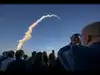
NASA's Artemis II rocket punched 3,100-mile-long holes in Earth's atmosphere, disrupted GPS signals: Study
NASA's Artemis II mission created large disturbances in the ionosphere that disrupted GPS signals across the United States. These disturbances were significantly more intense than those from prior rocket launches, causing potential issues for technologies reliant on precise positioning. Researchers noted that even minor positioning errors could impact autonomous vehicles, which rely on GPS data. The mission set new records for human distance from Earth during a lunar flyby.

Pixxel's Indian ownership comes under scrutiny
Pixxel founder and chief executive Awais Ahmed in a blog post on X said the company remains “headquartered, owned, managed and controlled in India,” on Monday. Indian investors, including the founders, collectively hold the largest shareholding in the company, followed by investors from Singapore, the UK and the US, he added.

The Moon is shrinking. What happens when its surface can’t take the pressure?
The Moon may look the same from one evening to the next, but its surface records a slow transformation. Multiple researches reveal a different kind of reasons to explain the shrinking and this findings impact not the skywatchers but those who planning a future on the moon.
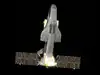
China's secret reusable spaceship spotted in US intelligence report: What we know about this mysterious plane and its mission
A recently declassified US intelligence report has revealed a satellite image that confirms China's reusable spaceplane is currently orbiting. This significant development has sparked concerns about China's expanding capabilities in space and the potential military implications. The spacecraft is noted for its ability to interact with smaller objects during missions, amplifying worries about the competitive landscape of space exploration, as tensions between nations continue to rise.

Pixxel sets up US subsidiary to serve federal agencies
Pixxel in September raised $100 million (around Rs 945 crore) in the largest funding round in India’s spacetech sector, co-led by Singapore sovereign wealth fund Temasek and UK-based space investor Seraphim, ET reported.

Three planets survived where they should have vanished: What does it mean for Earth and what did the Chinese scientists discover?
Three distant planetary systems are challenging expectations about what happens when stars grow old. The mystery offers a fresh way to examine planetary survival, including questions about Earth.
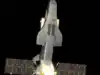
China's secretive Shenlong spaceplane: What the US report reveals
A newly released report by the US Defense Intelligence Agency showcases an intriguing image of China's Shenlong spaceplane operating in orbit. Notably, a second spacecraft is docked to Shenlong, prompting speculation about the spaceplane's mission and technological abilities. Concerns have been raised over China's advancing space technologies and counterspace capabilities, with whispers of potential developments in space-based weaponry that could jeopardize international satellite safety.

India's deeptech dream remains import dependent for critical components
The founder of a spacetech startup developing rockets said geopolitical tensions, including the Russia-Ukraine war, disrupted the supply of critical components. “Parts that were earlier available within weeks are now taking months to arrive, making it harder for startups to plan development and testing schedules,” the founder said, requesting anonymity.
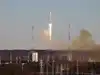
Russian satellites help Iran's allies strike Saudi Arabia, data and officials say
Crucial to the strikes' success was what was happening in the skies overhead: For days beforehand, a constellation of Russian spy satellites converged over the pipeline and the air base to gather intelligence.

India aims to expand space economy from USD 8.4 billion to USD 44 billion amid rising private participation: IN-SPACe official
Rising demand for low Earth orbit satellites is expected to enhance India's space industry growth. A new Small Satellite Launch Vehicle launch pad will increase launch capacity in Tamil Nadu. The government's reforms have facilitated increased private participation in space activities. Various funds and technology transfers aim to support startups and enhance their capabilities. The Indian space economy is targeted to expand significantly over the next decade.

Polish PM Tusk seeks deeper tech, AI and space ties with India
During a recent meeting, Polish Prime Minister Donald Tusk called for strengthened collaboration with India, zeroing in on advancements in AI and space technology. He pointed out potential synergies in manufacturing automation and data analysis. Karnataka's Chief Minister DK Shivakumar invited Polish participation in the 2027 Global Investors Meet, stressing the importance of joint ventures in renewable energy and advanced manufacturing, given Bengaluru's pivotal role in tech innovation.

NASA's 12-foot-wide satellite lost its radio signal in space; scientists still got the data they needed
A sphere launched by NASA in 1961 named Explorer 9 was made to measure how dense the air is above the Earth. Its radio beacon did not work, but scientists tracked the sphere through visual contact and got the desired data. This helped researchers understand how thin air affects satellites in orbit.
In 1965, NASA unfolded a 96 feet satellite in space to test what could puncture an Apollo spacecraft
NASA’s Pegasus I, launched in 1965, opened wings 96 feet wide in orbit to count hits from particles too small to see. The readings helped engineers understand what could damage spacecraft carrying astronauts. Pegasus I and two more satellites sent back data in the years before the Apollo Moon missions.

EU is making its own satellite system like Elon Musk's Starlink. Its first satellites are expected to launch in 2029
Since Russia's invasion, Ukraine has heavily depended on Elon Musk's Starlink for its military communication needs. However, recent limitations on military connectivity have sparked worries regarding this reliance on private corporations. The EU meanwhile is creating IRIS, a satellite network aimed at ensuring secure communications for governmental and military use by 2029, lessening dependence on providers like Starlink.
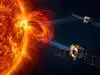
One solar eruption raced at 645 km/sec, another crawled at 145 km/sec: Bengaluru scientists uncover new clues about the Sun
A Bengaluru research team combined observations from India's Aditya-L1 and Europe's Proba-3 to study two solar eruptions. One CME travelled at 645 km per second, while the other moved at 145 km per second. The study also revealed differences in density changes and energy distribution.

Can a private company switch off a country’s battlefield communications? The Starlink-Ukraine crisis exposes a new vulnerability in modern warfare
Ukraine has depended on SpaceX's Starlink for military communications since Russia's invasion began in February 2022. Connectivity disruptions raised concerns about military operations and civilian protection during intensified Russian attacks. Officials reported that restrictions affected drone operations meant to intercept incoming threats effectively. The distinction between Starlink and Starshield has generated questions about authority and responsibility in conflict scenarios.

Satellite network a 'technology of geopolitical control': Think tank for hard limits on Starlink
An Indian policy group has advised the government to enforce strict conditions on foreign satellite operators. The Kutniti Foundation argues that SpaceX's Starlink poses strategic risks to India's telecommunications sovereignty. The report emphasises the need for India to establish its own satellite constellation to ensure data security. It highlights concerns about potential foreign intelligence vulnerabilities linked to external operators.
A satellite was launched for the first time with frequency division multiple access in 1966. After functioning for nearly 20 years, it slipped into a useless orbit almost 7 years after official deactivation
ATS-1 was launched on December 7, 1966, to test satellite communications, weather observation and orbital technologies. The spacecraft was the first to use frequency division multiple access to combine independently transmitted signals for delivery over a downlink carrier. After getting deactivated on December 1, 1978, the satellite continued to function for years. It finally failed to respond to commands in 1985.
Load More

