
DWARF PLANETS
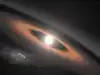
White dwarf WD J1328-1450 has a double debris disc; one ring may be hiding a Pluto-sized survivor
Astronomers have discovered a white dwarf named WD J1328-1450, located 1,600 light-years away, has two separate rings of gaseous planetary debris. Unusual signals detected around the star suggest that two planetary bodies may be maintaining the rings, with the outer object potentially reaching Pluto-like or even Moon-like dimensions. The discovery offers a rare glimpse into what planetary systems may look like after their stars die.
21 years after the discovery of the last dwarf planet, scientists may have found a sixth one beyond Neptune
Vera Rubin Observatory may have identified a new dwarf planet called ED138, hidden beyond Pluto's orbit. Researchers are in the process of assessing ED138's size, a task expected to take several months. This finding is noteworthy as it holds the potential to be recognized as the sixth dwarf planet. Difficulties in locating such remote celestial bodies stemmed from their position in the southern hemisphere.

Green star discovery: Why astronomers are calling this strange cosmic object a ‘zombie’ after it began consuming planetary debris
Astronomers have uncovered a remarkable white dwarf star named WD J1330+6435, situated 326 light-years away from our planet. This celestial body exhibits a striking green color, influenced by the elements present in its atmosphere, particularly sodium. This discovery broadens our perspective on the spectrum of colors that stellar remnants can possess, with the star affectionately dubbed a 'zombie star,' highlighting the intriguing afterlife saga of stars and their planetary systems.
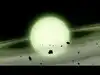
Astronomers find a ‘ghostly’ star glowing green and another possibly the reddest ever recorded
Astronomers studying 151 stars near Earth found unusual colors in some white dwarfs. One white dwarf appeared green due to its atmospheric composition, while another was identified as the reddest star. The research indicates that a star's color may involve more than just temperature factors. Typically, white dwarfs are white due to their high temperature and density. The findings suggest a diverse range of colors exists among white dwarfs.

Because a hailstorm ruined his family’s 15 acres of oats, he couldn’t afford college; in less than two years, Illinois-born self-taught astronomer Clyde Tombaugh discovered Pluto
Clyde Tombaugh, after enduring financial trouble following a damaging hailstorm, sparked his passion for astronomy in 1928. He crafted a telescope and began his quest for Planet X, leading to Pluto's discovery in 1930. Named after the Roman god of the underworld, Tombaugh’s journey continued with academic achievements in astronomy and military service in the US Navy during World War II, while Pluto's status shifted to dwarf planet in 2006.

Green stars existed only in comics. Now astronomers have found the first real one and the reddest star ever recorded
Astronomers have unveiled an astonishing white dwarf star, WD J1330+6435, that shines with a distinctive green hue. Situated roughly 280 light-years away in the constellation of Draco, its unique coloration stems from sodium that captures multiple light wavelengths due to elevated density. Additionally, a second white dwarf, WD J1011+2845, displaying a rare salmon-pink tint from carbon, illustrates the intriguing diversity and atmospheric intricacies of these celestial bodies.
- Go To Page 1

NASA’s SPHEREx finds brown dwarfs with water and methane, they drift in darkness without a host star and heated entirely from within
NASA's SPHEREx telescope has opened a fascinating window into the realm of brown dwarfs, the enigmatic celestial bodies that sit between stars and planets. Recent data reveals diverse chemical signatures and significant atmospheric variability, challenging existing models. Researchers aim to delve deeper into these findings, seeking to untangle the mysteries surrounding brown dwarfs and their complex atmospheres as they continue their groundbreaking analysis.

Scientists exploring Superhabitable Worlds that could be twice as massive as Earth with more water and a cooler sun
Scientists are exploring superhabitable worlds, which could provide better conditions for life than Earth itself. These planets are believed to orbit stable K-dwarf stars, ensuring a consistent environment for life to flourish. Research suggests that life could develop at an accelerated pace in these optimal settings. Future missions are set to explore these celestial bodies for potential signs of extraterrestrial life.

Warren Buffett calls out the worst accounting trick in corporate America, and the analysts who help it along
Every loan that Warren Buffett’s home business makes, it keeps. When the borrower stops paying, the loss is borne by his company rather than somebody who bought the paper years ago. Buffett contrasts that with how the last housing crisis was built, and then applies the same test to accounting, to executive pay, and to the numbers analysts repeat without checking. One question runs through all of it, and almost no annual report answers it.
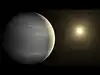
For the first time in astronomy, scientists detect radio signal from a young planet
Astronomers have discovered notable radio signals originating from the exoplanet Beta Pictoris b, located 64 light-years away from our solar system. These signals hint at an unexpectedly robust magnetic field surrounding the planet. The MeerKAT radio telescope network in South Africa facilitated this groundbreaking observation, revealing fluctuating intensities and timings of the signals related to the planet's rotation, thereby marking a pivotal step forward in exoplanetary magnetic field studies.
Strange radio signals detected from exoplanet almost 63 light-years from Earth
Researchers have observed unusual radio signals from Beta Pictoris b, an exoplanet located 63 light-years away. These signals, detected using the MeerKAT radio telescope, are associated with auroras produced by the planet's magnetic field. The emission identified as electron cyclotron maser radiation indicates a magnetic field strength of approximately 1.25 kG. This discovery marks the first direct localization of auroral radio activity from an exoplanet.
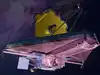
This strange world has no star to orbit, yet James Webb has revealed its changing weather from 20 light-years away
Webb telescope observed SIMP 0136, a brown dwarf twenty light-years away. Researchers found its changing appearance stems from temperature and cloud structure. These two factors explain most atmospheric variability observed by the telescope. The brown dwarf's atmosphere exhibits three recurring weather states as it rotates. This new method helps study distant worlds with limited direct observation.
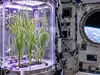
In 2022, China grew rice from seed to seed on Tiangong for 120 days; six seeds produced 59, and their descendants reached a third generation on Earth
Chinese astronauts have made remarkable strides in agricultural innovation by growing rice aboard the Tiangong space station. The experiment led to a successful seed-to-seed growth cycle, and subsequent generations thrived back on Earth, yielding rice with enhanced sweetness and nutritional value. This success opens exciting possibilities for future food cultivation in space environments.
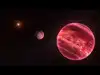
Is it a planet or a moon? Scientists discover a strange Jupiter-sized world orbiting a brown dwarf in a never-before-seen cosmic system
Astronomers found a massive object orbiting a brown dwarf star. This discovery challenges existing definitions of planets and moons. The unusual system features a nested orbital arrangement unlike our solar system. Scientists are debating the object's classification as a planet or something new. More such discoveries may redefine our understanding of cosmic bodies.

In 1920s, a Kansas farm boy built his own telescope from scrap. Years later, he discovered a planet
Clyde Tombaugh, a Kansas farmer, built his own telescopes from scrap materials. His detailed drawings of planets sent to Lowell Observatory earned him a job. He searched for Planet X using photographic plates and a blink comparator. Tombaugh discovered Pluto on February 18, 1930, after months of work. This discovery occurred before he attended college, marking a significant astronomical achievement.

Planet nine stays hidden, but the solar system has a new mystery guest
A newly identified dwarf planet, named 2017 OF201, has been discovered in the distant outer reaches of the solar system. Measuring about 700 kilometres across, it lies far beyond Neptune and follows a highly elongated orbit that stretches into the Oort cloud. Its unusual path contrasts with the clustered orbits that initially led scientists to theorise the existence of Planet Nine. While the object’s discovery may weaken support for the Planet Nine theory, astronomers say more data is needed before drawing conclusions.

Star Wars’ Tatooine-like planet, with double sunsets, found outside the solar system
Scientists have detected a potential Tatooine-like exoplanet orbiting a pair of brown dwarfs, located approximately 120 light-years away. This planet exhibits an unusual, right-angled orbit around the binary system. While the planet's existence requires further confirmation, its unique configuration offers insights into the diverse planetary systems beyond our solar system.
Scientists find habitable 'super-Earth' among 15 new planets
Tokyo, March 12 (IANS) Scientists have discovered 15 new planets -- including one 'super-Earth' that could harbour liquid water -- orbiting small, cool stars near our solar system.
Astronomers building small space telescope to explore nearby stars
Washington, Jan 11 (IANS) Astronomers are in the process of building a small space telescope to explore the flares and sunspots of small nearby stars to assess how habitable the space environment is for planets orbiting them.
Ceres may still have liquid water underground: NASA
Washington, Oct 27 (IANS) The dwarf planet Ceres may have had a global ocean in the past, and two new studies from NASA's Dawn mission suggest that this largest object in the asteroid belt between Mars and Jupiter may still have some liquid water underground.
Scientists discover white dwarf star with 'ingredients for life'
New York, Feb 10 (IANS) Scientists using NASA's Hubble space telescope have discovered a white dwarf star whose atmosphere is rich in materials that are the basic building blocks for life -- carbon, nitrogen, as well as oxygen and hydrogen, the components of water.
Ceres may have 'hidden' ice volcanoes
Washington, Feb 3 (IANS) The dwarf planet Ceres may actually host many "hidden" ice volcanoes, besides the only one discovered recently, a study says.
'Planet Nine' may spell doom for solar system: Study
The future of the Sun may be foreshadowed by white dwarfs that are 'polluted' by rocky debris. Planet Nine could act as a catalyst for the pollution.

NASA probe spots dead star 'killing' a planet
This discovery validates a long-held theory that white dwarfs are capable of cannibalising possible remnant planets that have survived within its solar system, researchers said.

Here's how big Pluto is compared to the largest objects in the solar system
Today, it's still one of the farthest objects in our solar neighborhood, but it now goes by another title: dwarf planet.

NASA's Dawn spacecraft spots pyramid-shaped peak on Ceres
NASA has captured more images of mysterious bright spots on Ceres, and also spotted a baffling pyramid-shaped peak towering over a flat landscape on the dwarf planet.

NASA's Dawn spacecraft reaches dwarf planet Ceres
The spacecraft was approximately 61,000 kilometres from Ceres when it was captured by the dwarf planet's gravity, NASA said.

NASA spacecraft snaps closest ever images of dwarf planet
The sharpest and closest-yet images of the dwarf planet Ceres have been snapped by NASA's Dawn spacecraft.

NASA's Dawn spacecraft beams new images of dwarf planet Ceres
As Dawn closes in on Ceres, new images show the dwarf planet at 27 pixels across, about three times better than the calibration images taken in early December.
Load More

