
DRUG REGULATION
Centre proposes tighter regulatory oversight of antimicrobials to tackle drug resistance
The Health Ministry has proposed amending the New Drugs and Clinical Trials Rules, 2019, to bring antimicrobials under Central regulatory oversight. The move would require manufacturers to secure prior approval from the Central Licensing Authority, addressing concerns over inadequate scrutiny and the growing threat of antimicrobial resistance.

Drug regulator seeks pre-1988 approval records to compile national list of medicines
The Indian government has initiated a process to create a consolidated list of approved drugs for regulatory purposes. This list will include fixed-dose combinations and historical drug approvals that lack current visibility. The Central Drugs Standard Control Organisation aims to enhance oversight and transparency through this comprehensive database. Industry experts have expressed concerns regarding the existing fragmented drug approval records.

FDA suspends licences of 9 Mumbai restaurants; seizes food stock worth Rs 1.27 cr across Maharashtra
The FDA also suspended the licences of three food establishments in Thane, and ordered six vendors at Pune's Manikbaug Khau Galli to shut their businesses, a press release issued by the department on Wednesday said.

India needs policy predictability to speed up drug approvals and boost pharma innovation: OPPI DG
Anil Matai from the Organisation of Pharmaceutical Producers of India emphasized the need for regulatory predictability. He noted that India's clinical trials need improvement to match faster approvals seen in China. While India excels as a generic medicine producer, more focus is necessary on driving innovation. Matai also highlighted the importance of balancing trade margins for anti-cancer drugs.

DRI searches Cipla's Mumbai office, Bhiwandi depot over imported drugs
The Directorate of Revenue Intelligence's Mumbai zonal unit has searched Cipla's office in Vikhroli and its depot in Bhiwandi over the classification or exemption of an imported pharmaceutical finished product. Cipla said it cooperated with authorities and that the proceedings would have no material impact on its financials or operations.

US stocks: Summit shares drop after US FDA declines to approve lung cancer drug
Summit Therapeutics faced a notable decline in share value following the FDA's ruling on ivonescimab, which revealed insufficient overall survival benefits during late-stage trials. Despite Summit's emphasis on regional survival differences, analysts worry that this decision could have repercussions for similar treatments in development. Investors now eagerly await new trial results comparing ivonescimab with conventional lung cancer therapies.
- Go To Page 1

Government health spending triples, households' out-of-pocket expenditure share falls sharply: National Health Accounts 2023-24
India has experienced significant changes in healthcare financing over the last decade, with government health expenditure tripling. Out-of-pocket expenditure as a percentage of total health spending has notably declined during this period. The increase in public healthcare spending coincides with improved access to healthcare services and financial protection for households. Initiatives aimed at enhancing primary healthcare and affordable medications have been implemented across the country.

USFDA closes inspection of Dr Reddy's Hyderabad facility with VAI status
Dr Reddy's Laboratories announced that the USFDA classified the outcome of its inspection as 'Voluntary Action Indicated'. This classification indicates that the regulatory body has officially closed the inspection. The inspection focused on the company's formulations manufacturing facility located in Bachupally, Hyderabad. Dr Reddy's had reported the inspection to stock exchanges on August 14, 2026. The company is committed to maintaining high standards of Good Manufacturing Practices in its operations.

Compulsory licensing of drugs only after exhausting all other measures: Department of Pharmaceuticals secretary Manoj Joshi
The government plans to address the high costs of innovative medicines by first negotiating prices. Compulsory licensing will be considered only after other alternatives are exhausted. Trade margins on high-cost drugs are being examined to enhance affordability. Discussions are ongoing with pharmaceutical companies to improve access and affordability of patented drugs. The government is also working on initiatives to support the local pharmaceutical manufacturing sector.

Made in Pakistan beauty products seized in Maharashtra leave officials stunned: One cream found with 48,453 times the permissible mercury limit
Two Pakistani-labelled beauty creams seized by Nanded police have been found to contain dangerously high levels of mercury, with concentrations thousands of times above the permissible limit. Government laboratory tests detected 48,453.44 PPM in PARLEY 24K Gold Gleam Beauty Cream and 6,924.94 PPM in GOREE Beauty Cream. The products, worth Rs 39.69 lakh, were seized during a police raid in July.

India may open doors to multinational pharma firms for first-in-human Phase I trials
India is considering modifications to its pharmaceutical regulatory framework to attract multinational companies for clinical trials. Discussions have commenced regarding allowing these companies to conduct Phase I trials in India. Authorities aim to enhance India's appeal for global drug innovation and development. Strengthening manufacturing compliance over the last two years has also been part of the plan.

USFDA classifies Aurobindo Pharma's US facility as 'official action indicated'
The facility belongs to Lannett Company LLC, a wholly owned step-down subsidiary of Aurobindo Pharma. The US Food and Drug Administration (USFDA) conducted the inspection at the Seymour facility from August 17-21, 2026, Aurobindo Pharma said in a regulatory filing.

Deepinder Goyal's $900 Temple wearable faces scrutiny over brain blood-flow claims
Temple, a new wearable device, claims to track blood flow to the brain and other health metrics. Indian doctors express concerns over the validity of these claims, asking for regulatory scrutiny. Some sportspersons promote the device, while critics label it a gimmick without formal medical approvals. Developer Deepinder Goyal states the device is a wellness tracker, not a medical one.

Aurobindo Pharma arm gets 'Voluntary Action Indicated' classification for Telengana facility from USFDA
Following an inspection from September 7 to September 15, 2026, the US FDA granted Apitoria Pharma, a subsidiary of Aurobindo Pharma, a Voluntary Action Indicated classification. This classification indicates that although objectionable conditions were found in the Telangana manufacturing facility, the absence of immediate regulatory action allows the company to address the issues through voluntary corrective measures.

Drugmakers tap China AI app boom to reach doctors as crackdown upends marketing
As scrutiny intensifies, Chinese pharmaceutical companies are shifting gears toward digital marketing initiatives. Traditional face-to-face communications are waning, prompting the industry to embrace AI-fueled applications for connecting with healthcare providers. These tools facilitate compliant relationships, sparking partnerships among health-tech firms to disseminate clinical information through digital channels. This marks a pivotal change in marketing dynamics within the pharmaceutical landscape.

Pharma & healthcare funds top mutual fund return charts with over 19% gains. Should investors invest now or wait for a correction?
Pharma and healthcare mutual funds have topped return charts in 2026 with over 19% gains. While strong sector growth supports the outlook, experts caution against chasing the rally and advise investors to assess valuations, risks and portfolio exposure.

Anthropic targets $90 billion IPO at $1.4 trillion valuation
Anthropic PBC is preparing for an initial public offering aiming for a fully diluted valuation of $1.4 trillion. The company plans to raise up to $90.4 billion, including a private placement with major investors. It has reported a revenue run rate of $81 billion, showcasing significant growth in recent months. The IPO is scheduled to price on November 18 and begin trading the next day.
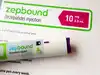
GLP-1 drugs for weight loss Ozempic, Wegovy linked to vision loss: What is NAION, who is at risk and what symptoms should users watch for?
Side effects of weight loss drugs: The makers of GLP-1 weight loss drugs such as Ozempic, Wegovy and Mounjaro must add a warning label about a possible link to permanent vision loss, the US Food and Drug Administration has said. Older age people, those suffering with diabetes, high blood pressure are at a higher risk. NAION typically causes sudden, painless vision loss, often affecting one eye.

US FDA adds rare vision-loss warning to popular GLP-1 drugs
The US FDA will add a warning about a rare eye condition that can cause permanent vision loss to the labels of all GLP-1 drugs, including Ozempic, Wegovy, Mounjaro and Zepbound. The condition was found in around 6 per 100,000 patients taking the drugs for at least a year.

India, US vow to jointly act against emerging drug threats
India and the US have agreed to strengthen cooperation against emerging narcotics threats, including illicit drug trafficking and the diversion of synthetic drugs and chemical precursors. At a bilateral meeting in New Delhi, both sides discussed intelligence sharing, coordinated enforcement, precursor control, pharmaceutical supply chains and measures to reduce drug demand.

Front-of-pack labelling: Food CEOs rush taste tweaks as new rules loom
Packaged food companies in India are responding to regulatory pressures by introducing no-added-sugar and low-salt alternatives. Executives recognize the challenge of maintaining taste while making these healthier options. The Food Safety and Standards Authority of India plans a major change in food packaging regulations. These changes could significantly impact the sale of everyday packaged products. Companies will likely expand their product variants to meet health demands.

Over 1,300 anti-cancer drugs to get cheaper
India's National Pharmaceutical Pricing Authority is set to cap trade margins on anti-cancer drugs starting November 2026. The initiative aims to save around ₹2,500 crore annually for cancer patients. The list includes 1,366 drug brands, with substantial price reductions for several high-cost medications. However, some patented drugs will maintain their prices despite the changes. Patients and medical institutions are directed to display revised prices prominently.

Cancer drug prices revised from today; patients may save Rs 3,540 crore annually
The government has revised the prices of 1,364 anti-cancer medicine formulations effective from November 9. This decision aims to limit trade margins and reduce consumer costs for cancer drugs. According to official reports, this measure is expected to save consumers Rs 3,540.38 crore each year.

FDA suspends 43 food business licences across Maharashtra during Diwali inspections
Maharashtra FDA took action during a special Diwali enforcement drive by suspending 43 food business licenses. Inspections were conducted across seven divisions in the state, which included major cities like Mumbai and Nashik. Violations of food safety requirements led to the suspensions and the seizure of food articles worth Rs 63.09 lakh.

Pharma industry steps up API investments to cut import dependence, move up value chain
India's pharmaceutical sector is shifting towards high-value medicines and reducing reliance on imports through local manufacturing. Investments in active pharmaceutical ingredients and advanced therapies are on the rise to meet new healthcare demands. Industry leaders highlight the significance of supply-chain resilience and advancements in manufacturing capabilities. Recent data indicates strong domestic market growth and increasing pharmaceutical exports.

Centre proposes 10 new entry points for drug imports into India, Noida airport included
The Centre has proposed expanding India's authorised import network for pharmaceuticals and medical devices by adding ten new locations. These include Noida International Airport and several inland container depots across industrial hubs in India. This expansion aims to simplify the import process and reduce transportation costs for companies. The health ministry has invited public feedback on the draft amendment to Drugs Rules, 1945.

Govt plans instant ban on manufacturing of drugs failing key quality tests
Pharma companies could have their drug licenses suspended immediately if quality tests indicate failure. The health ministry's proposed changes aim to protect public health by enforcing swift action on substandard medications. Regulators would take action upon receiving a government analyst's report declaring a drug not of standard quality. Manufacturers would need to perform a root cause analysis and implement corrective actions to lift the suspension.

NPPA updates list of reduced MRP of 1,085 anti-cancer drugs
The National Pharmaceutical Pricing Authority updated the maximum retail price for 1,085 anti-cancer medicines. This revision follows a previous decrease of prices for 543 anti-cancer drugs announced on October 28. The updated list contains prices based on information submitted by pharmaceutical companies up to November 3. The NPPA will continuously update this list as more manufacturers submit revised prices.

Wockhardt seeks 14-year data shield for India-made drugs
Mumbai-based Wockhardt has struck success in its innovative research on a range of antibiotic drugs, bridging a global pipeline gap for difficult-to-treat infections. In May this year, the company secured approvals from Indian and US drug regulators for a breakthrough drug, Zaynich (cefepime + zidebactam), to treat complicated urinary tract infection, including acute pyelonephritis or severe kidney infections. Wockhardt has showcased six drugs to treat antimicrobial resistance (AMR).
Load More

