
DOCTOR ON PLAGUE


Russian Plague scare: Did a broken test tube lead to a researcher’s death? Why is the White House watching and are Americans at risk?
Russian Plague is not the medical name of a newly discovered disease. The term is being used in connection with concerns over an incident at an anti-plague research facility near Irkutsk. Plague itself is an infectious disease caused by the bacterium Yersinia pestis.

All about the Russian anti-plague research center in Siberia from where an unknown and dangerous infection got leaked
Last week, a laboratory technician at a Russian anti-plague research institute succumbed to pneumonia of unknown origin, prompting worldwide alarm. This unsettling event took place at the Anti-Plague Research Institute in Shelekhov, Irkutsk. Rospotrebnadzor indicated the infection's source remains a mystery while assuring the public that local conditions are stable. In response, strict safety protocols have been enhanced, with nearly 200 individuals placed under medical observation.

Russian plague lab researcher dies of pneumonia of ‘unknown’ origin, nearly 200 under observation
A 28-year-old worker at an Anti-Plague Research Institute in Shelekhov, Siberia, died from unknown pneumonia. Russian authorities are investigating the incident, and special measures have been implemented in the region. Although there are concerns about pneumonic plague, officials emphasize that there is no outbreak. Close contacts of the deceased worker are under medical supervision and show no symptoms of illness.

Plague bacteria Yersinia pestis breaks free of lab in Russia, White House monitoring suspected outbreak after laboratory worker dies: Here is what happened
The woman who died worked at an anti-plague research facility in Russia's Irkutsk region. Russian authorities took precautionary measures after her death. Nearly 200 people who had contact with her were placed under medical observation. Quarantines were also imposed at several medical facilities in the region.

Built from 1837 to 1842, New York's Croton Aqueduct carried water 41 miles on gravity alone, dropping 13 inches a mile; it supplied the city for 113 years
Since the launch of the Croton Aqueduct in 1842, the landscape of clean water access has evolved significantly, tackling severe health crises. The project showcased the city's dedication to public health through extensive labor and financial commitment. Today, however, aging infrastructure, plagued by insufficient funding, faces daunting obstacles, such as lead pipes and frequent breaks.
- Go To Page 1

‘No choice’: 'Embarrassed' reality TV star Brandi Glanville fights back tears on podcast as she opens up about health crisis and GoFundMe response
Brandi Glanville is facing serious health challenges, including resistant bacteria and a facial fungal ball. As she undergoes extensive IV treatments and multiple surgeries, her hefty medical bills are making it difficult for her to continue working. To alleviate some of this financial burden, she has started a GoFundMe campaign aimed at gathering support from the community.

Around 1600, a pioneering English physician and natural philosopher invented versorium, the first electroscope, and detected the presence of static electric charges
Around 1600, William Gilbert invented the versorium, the first electroscope, to detect static electric charges. The English physician and natural philosopher studied electricity and magnetism through experiments. His work helped separate magnetism from static electricity. He also argued that Earth is a giant magnet and used a terrella to demonstrate how magnetic behavior works.

Buying a house in a big gated society? Check these 4 key things before your dream home turns into a nightmare
India’s cities cannot accommodate their rapidly growing urban populations without greater density. The trend towards large residential projects is expected to strengthen further. Density is not the trap. The trap is density without adequate infrastructure, professional management and an honest accounting of what it will cost to live there. Water shortages, elevator breakdowns and rising maintenance bills—the reality of what happens after you move into a mega gated society.

Tim Curry death cause: How did the ‘Rocky Horror Picture Show’ and ‘Home Alone 2’ star die?
Tim Curry, the legendary actor renowned for his unforgettable performances, has passed away at the age of 80. His manager confirmed he died at his home in Los Angeles on Tuesday night. After suffering a stroke in 2012 that limited his mobility, Curry resiliently ventured into voice acting, maintaining his presence in entertainment. His extensive career across stage, film, and television has left an indelible mark on the industry.
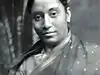
At 11, she was ordered to return to her husband. She chose jail and went on to become colonial India’s first practising female doctor
At 11, Rukhmabai was married to a 19-year-old relative but refused to live with him, choosing education and independence instead. Her husband took her to court, where she chose imprisonment over returning to him. Her landmark case influenced India’s 1891 Age of Consent Act. She later studied medicine in England, returned to India in 1895 and became a pioneering practising female doctor and public health worker.

NTA: From elixir for all exam ills to everyone's punching bag!
The National Testing Agency is under intense scrutiny following multiple exam cancellations and alarming paper leaks. These incidents have caused considerable mental distress among students. The situation escalated to protests, resulting in the resignation of the education minister and prompting legislative changes. To rectify the underlying issues, a specialized task force was formed, though doubts about the NTA's structure and effectiveness remain.

Deadly plague ravaged this Italian island, thousands died and were burned, with ashes rumoured to make up 50% of the ground before it became home to a haunted mental hospital
Poveglia island, once a place of quarantine, is shrouded in a chilling tapestry of disease and demise. Its forsaken hospital stands as a testament to ghostly tales of mass graves and the sorrowful fate of a physician. With roots tracing back to antiquity and a flourishing fishing community, the island played a critical role in Venice's health protocols.

Iran war renews concerns about lasting toll of traumatic brain injuries to US troops
US service members face lasting traumatic brain injuries from recent conflicts. Many soldiers experience symptoms like headaches and memory loss for years. Doctors cannot predict who will suffer long-term effects from these injuries. The military has improved screening and treatment for these signature wounds. Early intervention and therapies offer hope for recovery and adaptation.

In 1518, hundreds of people in France danced uncontrollably for weeks until they collapsed; historians still cannot solve this mystery
In the summer of 1518, hundreds of people in Strasbourg danced uncontrollably for days and even weeks, with some reportedly dying from exhaustion. More than 500 years later, historians continue to debate what caused the bizarre outbreak, with theories ranging from mass hysteria and religious beliefs to ergot poisoning, but no definitive answer has ever been found.
More than 500 dead in DR Congo Ebola outbreak
The Ebola outbreak in the Democratic Republic of Congo has now claimed over 500 lives. World Health Organization figures show 1,561 confirmed cases and 506 deaths in the DRC. Two deaths have also occurred in neighboring Uganda, with 16 patients recovering there. This outbreak is driven by a rare Ebola species lacking approved vaccines or treatments.

Mystery solved: Scientists find what caused world’s first pandemic 1500 years ago
Pandemic origins: Scientists have successfully identified the genome of 'Yersinia pestis' from a mass grave in Jerash, Jordan, confirming it as the cause of the Justinian Plague. This discovery provides definitive proof of the bacterium's role in the devastating pandemic that reshaped the Byzantine Empire. The findings highlight the recurring nature of pandemics.

Portrait Of A Lady: At the age of 19, Anandi Gopal Joshi, the first female doctor of India, obtained an MD in US
On this National Doctor's Day, let us get to know India’s first female doctor Anandi Gopal Joshi. She was also the first Indian woman to obtain a two-year medical degree (MD) in the United States!

Lonzo Ball injury: Everything we know so far about Chicago Bulls star
Lonzo Ball has suffered multiple injuries throughout his career, preventing him from playing in 65 or more games in a single season.

From Black Death to Covid-19: Pandemic historian says recurrent outbreaks push people to embrace life & death in newer ways
The Black Death ended, but plague carried on, making periodic return visits through the centuries.

Rashtriya Janata Dal to provide 10 lakh government jobs if voted to power: Tejashwi Yadav
"It is not just a vaada (empty promise). We will do what we have promised with mazboot iraada (firm resolve). If the RJD is able to form its government, filling up of 10 lakh posts all permanent, government jobs will be sanctioned in the very first cabinet meeting," said the former deputy CM.

Doctors' protest against National Medical Commission Bill continues
They also threatened to continue their strike for an indefinite period if their concerns regarding the bill were not addressed.

Modi 'best doctor' to cure India of major 'diseases': Arjun Ram Meghwal
Meghwal said cleanliness, corruption, poverty, communalism, casteism and terrorism are the six diseases, identified by the prime minister, that gripped the country.

Manipur governor moots 'Flying Doctor" scheme
The scheme is one of its kind and will be very useful for other hill areas in the NE region as the neighbouring states in the area share similar topographical features," the governor said

Practo launches customized app for specialist doctors
The app, Practo Ray, also includes a database of nearly 1 lakh commonly prescribed medicines so doctor can search for and prescribe the right medicine.

Tourist arrivals in Kashmir this year below expectations: CM
Welcoming the initiative taken by ITC Group to foray into the elite hospitality sector in the valley, Sayeed said high-end tourism would get a huge fillip if the state.

After floods, Srinagar now faces epidemic threat
As flood waters start to recede in Srinagar, the region is faced with yet another challenge-- threat of an epidemic outbreak.

Harsh Vardhan files nomination papers from Chandni Chowk
BJP's Delhi unit president Harsh Vardhan today filed his nomination papers from Chandni Chowk parliamentary constituency.

Indian-American scholar headed to India to study Ayurveda
Bhaswati Bhattacharya, 37, would be based at the holy city of Varanasi to explore various fields of Ayurveda at its prestigious Banaras Hindu University.
Load More

