
DEVICES

'Temple is not made for India': Deepinder Goyal responds to criticism in Diwali posts, promises to publish ‘detailed note’
Goyal said the company did not want people to support Temple simply because it was an Indian startup, adding “We don’t need/want nationalist support.”

TheLiverDoc, Deepinder Goyal spar again as doctor dubs Temple’s ‘Entropy’ ‘scienceploitation’
This is the latest in a run of exchanges between the two over the past few days. Philips has led mounting criticism from doctors, while Goyal has publicly defended the product, saying Temple is a fitness and wellness device rather than a medical one.
Eyewear regulation Bill may come up in Parliament's winter session; MP Gopchade seeks national vision-care board
Rajya Sabha member Ajeet Gopchade has proposed a private member's Bill for regulating eyewear products and vision-care services. He has urged the Prime Minister to direct the Ministry of Health and Family Welfare to assess creating a National Optical/Vision Care Board. The proposal aims to ensure consumer protection and quality standards in vision-care. The existing Medical Devices Rules, 2017, may need strengthening for better oversight.

Deepinder Goyal unveils Temple’s long-term vision, apologises for remarks on doctors
Goyal said Temple is designed to work without a microphone, camera, or screen for privacy reasons. Instead, it uses motion sensors to pick up vibrations generated by the wearer's voice and convert them into text. The company is calling this technology “roomdeaf audio”, arguing that it allows the device to hear its wearer without listening to conversations around her.

Deepinder Goyal unveils Temple, calls it ‘humanity’s last personal device’; AI wearable to ship in 2027
Deepinder Goyal has unveiled Temple, a screen-free, microphone-free AI wearable he calls “humanity’s last personal device”. Using motion sensors to detect the wearer's voice through vibrations, the device combines AI companionship with health tracking. Temple 01, featuring AI and health capabilities, is expected to ship in early 2027.

Deepinder Goyal, TheLiverDoc trade barbs over Temple's scientific claims
The debate began after Cyriac Abby Philips, who goes by the social media handle TheLiverDoc, questioned the science underpinning Temple, calling the device “a scam” and accusing the company of making unsubstantiated claims about its capabilities.
- Go To Page 1

Deepinder Goyal teases big reveal on Temple, will explain 'why I left $35 billion Eternal for Temple'
Deepinder Goyal has revealed his upcoming departure from Eternal to pursue Temple, a health wearable startup. He plans to provide a detailed note explaining his decision and the vision for Temple. Goyal's message will also address the startup's objectives and what it aims to achieve for humanity's betterment. Additionally, he has expressed his discontent towards certain doctors who criticize the health sector. Goyal is expected to share this information shortly.

Temple's most groundbreaking features are not public yet, Deepinder Goyal says as doctors question the product
Goyal said $20 million of the $30 million invested in building Temple came from his personal funds. He added that selling a few thousand devices would recover only a small part of the investment.

Ex-Ultrahuman executive launches AI ring startup Aina for agentic interactions
The startup said it is positioning the device as an alternative interface to smartphones for everyday interactions with AI systems. It has spent the past 15 months developing the product and is now opening pre-orders globally, with prices starting at $399 (about Rs 36,000), the startup said in a statement.

TRAI moots satellite network-as-a-service model, bars infra providers from directly serving users
TRAI has recommended a new framework for satellite communications, which includes authorising satellite network providers. These providers can offer infrastructure and capacity services to eligible telecom operators without directly serving consumers. The framework also enables potential direct-to-device connectivity using satellite and terrestrial mobile spectrum. Authorised providers will have an authorisation period of up to 20 years, with possible renewal.

Planning to buy smartphone? Prices to rise 30% soon, says Jefferies report
Smartphone prices could rise by nearly 30%, particularly in the budget segment, as surging demand for memory chips from AI companies pushes up manufacturing costs. A Jefferies report warns that higher component prices could force consumers to delay purchases, choose second-hand phones or spend more on expensive models. Global smartphone shipments are also expected to decline in 2026 and 2027.

Centre proposes 10 new entry points for drug imports into India, Noida airport included
The Centre has proposed expanding India's authorised import network for pharmaceuticals and medical devices by adding ten new locations. These include Noida International Airport and several inland container depots across industrial hubs in India. This expansion aims to simplify the import process and reduce transportation costs for companies. The health ministry has invited public feedback on the draft amendment to Drugs Rules, 1945.

Carl Pei teases Nothing’s first AI-native product; says it 'couldn't have been an app'
Nothing will launch its first AI-native product in December with a focus on productivity. The chief executive, Carl Pei, provided limited details about the product’s functions. It is suggested that the product may help users capture conversations and take notes. Other companies are also exploring wearable AI devices that focus on companionship or productivity.

From lab to farm: How Proximal Soilsens is developing a ‘glucometer’ for soil testing
Developed over nearly a decade of research at IIT Bombay, Proximal Soilsens’s patented NutriSense X aims to make laboratory-grade soil testing portable, faster and accessible. The device tests multiple soil parameters in seconds, without requiring electricity or elaborate laboratory infrastructure.

Beyond ‘no subscription’, NeoSapien sees a paid future for advanced AI features
The Bengaluru-based AI wearables startup is exploring another funding round in early 2027 but its CEO said there was no pressure to raise capital because its cash burn remained low and capital from earlier round was still in the bank.

AMD forecasts fourth-quarter revenue above estimates on strong AI chip demand
Advanced Micro Devices estimates its fourth-quarter revenue will hit about $17 billion, driven primarily by robust demand for AI chips. Although the company's forecast for adjusted gross margin stands at 55%, it falls slightly short of analyst expectations. A remarkable 97% year-on-year increase in data-centre revenue showcases AMD's growth. However, the company currently faces challenges in sourcing high-bandwidth memory, essential for its AI processors.

ETtech Explainer: Why SIM-binding is a concern for consumers and businesses
A new study raises alarms about the Department of Telecommunications' proposed SIM-binding requirement for messaging applications. The mandate could severely disrupt operations for consumers and businesses alike, especially impacting international travelers who depend on local SIMs or Wi-Fi. Businesses are bracing for heightened costs and difficulties tied to limited device accessibility.

Stop the price scam in our hospitals
A recent investigation in Maharashtra has shed light on concerning price hikes for medical supplies charged to patients. Items such as IV infusion sets have seen astronomical price increases, exceeding 2,800% over wholesale prices. Regulatory agencies have recognized that they lack jurisdiction over the pricing of medical disposables, amplifying worries about the potential for patient exploitation.

Warsaw-Modlin airport closed after unplanned landing of plane from London
Warsaw-Modlin Airport was closed until further notice on Tuesday after a London-bound flight made an unplanned landing following information about a possible explosive device on board. Security agencies are investigating the reported threat.

Here's how two major AI companies are limiting usage of their AI models
OpenAI has enacted new rules that disallow the stacking of paid ChatGPT subscriptions on a single device or payment card. Users hitting subscription caps will encounter an error message, preventing them from activating more subscriptions. Many users have complained about GrokBot's rapidly declining usage allocations. Elon Musk admitted the rising costs are contributing to Grok user dissatisfaction.

Smart fridge, security camera, video doorbell, router, car, thermostat: Everyday devices hackers can exploit and how to protect them
Cyberattacks involving supermarket refrigerators and freezers have raised concerns about the security of everyday internet-connected devices. From smart appliances and security cameras to routers, thermostats and connected cars, several products could be vulnerable to hacking. Here is what cybercriminals could do after accessing these devices and the precautions users can take to protect themselves.

Refurbished iPhones gain popularity in India as new smartphone prices rise; iPhone 13, 14 and 15 lead demand
India's refurbished smartphone sector is booming as shoppers lean towards affordable options. With skyrocketing prices on new models, older favorites like the iPhone are gaining traction. Retailers such as ControlZ and Cashify are witnessing a sales surge, notably among premium devices. This upward trend is observable in both urban hubs and smaller towns, with trade-in values on the rise.

This startup is selling a Rs 94,835 mosquito trap that uses a powerful blue laser and sensors similar to those in self-driving cars to track and kill mosquitoes while detecting people, pets and nearby surfaces to prevent accidental firing
Photon Matrix has introduced a laser device that identifies and eliminates mosquitoes effectively. The products are priced at around $1,000 each, with a delivery estimate of 120 days. Both the indoor and outdoor models utilize advanced A.I. for mosquito detection and targeting. The system is designed to be safe for humans and pets, although independent safety testing is pending. This technology aims to revolutionize traditional mosquito control methods.
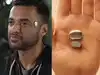
Temple beats Apple Watch: Deepinder Goyal says his wearable device delivers better heart rate accuracy
Deepinder Goyal, founder of Temple, claims their wearable outperforms other devices in heart rate tracking accuracy. The company’s device reportedly excels during intense workouts compared to others like Apple Watch and Garmin. Temple's testing utilized the Polar H10 chest strap as a reference for comparison against five flagship wearables. Goyal attributes the device's performance to its adhesive design and unique placement on the temple.

Drug-free treatment for diabetes and obesity may become possible as scientists develop a wireless device that detects high blood sugar levels and removes excess sugar from bloodstream
Diabetes treatment news: A team of scientists from France and Switzerland developed a wireless electronic device to manage diabetes. This device removes excess glucose from the bloodstream, potentially providing a drug-free treatment option. In studies, the device effectively regulated glucose levels in diabetic mice while promoting fat usage for energy. Researchers connected it to a continuous glucose monitor, ensuring automatic activation. Further human trials are necessary to ensure safety and effectiveness in patients.

A Nobel-winning chemist's device pulls drinking water out of dry air with no power needed
A machine that can produce drinking water from the air could offer a new way to tackle water shortages. Developed by Nobel Prize-winning chemist Omar Yaghi and his company Atoco, the technology is designed to collect moisture from the atmosphere, even in dry regions. The company says a container-sized unit could produce up to 1,000 litres of clean water a day.

AI is driving up memory prices. So why is Sam Altman questioning your PC's RAM?
OpenAI CEO Sam Altman has questioned the need for large amounts of RAM in personal computers, arguing that much of the memory remains unused and could be utilised more efficiently through centralised cloud infrastructure. However, his remarks come at a time when the AI industry's growing demand for computing power is contributing to rising memory prices, making smartphones, PCs and other consumer devices more expensive.

Amazon unveils new lineup of Alexa devices including redesigned Echo Show
Amazon.com on Wednesday unveiled five new Alexa-powered devices including a redesigned Echo Show 16 smart display and a photo frame with built-in Alexa, as it pushes its latest

Detecting heart attacks beyond hospitals: Sunfox is making ECGs more accessible
Dehradun-based Sunfox Technologies brings a smartphone-powered ECG device that provides portable, clinical-grade heart monitoring beyond hospitals, reaching remote communities and healthcare centres across India.
Load More

