
DEVELOPMENTAL FLIGHT

"Success comes to those who wait": Gaganyaan astronaut designate Angad Pratap on human spaceflight mission timeline
Gaganyaan astronaut designate Group Captain Angad Pratap on Saturday noted that the Gaganyaan human space flight mission is a prototype developmental program which is bound to take some time before it fructifies.

In 2020, NASA put seeds from 11 crops aboard an experimental spaceplane; after months in orbit, scientists brought them back to test whether they could still grow
In 2020, NASA put seeds from 11 crops aboard an experimental spaceplane; after months in orbit, scientists brought them back to test whether they could still grow. The research examined how microgravity and space radiation affect seed viability, germination, plant development and molecular changes. The study used the X-37B Orbital Test Vehicle-6 and included ground controls to compare space exposure with radiation simulations and Earth conditions.
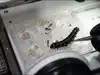
In 1997, Japanese researchers flew silkworm eggs on STS-84 to study spaceflight effects; developmental abnormalities were more frequent in the flight samples
Silkworm eggs revealed developmental abnormalities in early space experiments. Later, the Rad Silk investigation examined cosmic radiation's long-term effects on the ISS. Ground-based trials showed that radiation during early embryonic development caused higher mutation rates. Visible white spots on larvae indicated radiation exposure levels inside spacecraft. These findings offer insights into radiation's impact on developing organisms beyond Earth.
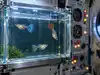
In 1983, three pregnant guppies flew on Cosmos 1514 for five days; one later gave birth to 25 healthy fry and produced six more healthy broods after returning to Earth
In 1983, three expectant guppies journeyed aboard the Cosmos 1514 biosatellite as part of a Soviet experiment exploring the effects of microgravity on reproduction. Remarkably, one guppy gave birth to 25 healthy fry following the mission, demonstrating that later generations also thrived without any developmental issues. This groundbreaking research offered vital insights into the possibilities of reproduction in extraterrestrial environments.
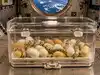
On a 12-day Russian biosatellite flight, seven silkworm varieties spun silk, built cocoons, mated and laid eggs; some developmental stages occurred 2-3 days faster than ground controls
Chinese silkworms have successfully navigated their life cycle during an impressive twelve-day mission in space. Notably, their eggs hatched two to three days quicker in orbit, and dormant eggs revealed an increased hatching success in microgravity. Yet, certain breeds showed shortened lifespans and genetic variations, indicating that the effects of space travel can vary significantly between silkworm breeds.
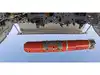
DRDO, Indian Navy conducts in-flight release trials of 'ADC-150' from P8I Aircraft
The Defence Research and Development Organisation and the Indian Navy have successfully tested a new indigenous Air Droppable Container, the ADC-150. These trials took place off the Goa coast using a P8I aircraft. The container is designed to deliver critical supplies to naval vessels at sea. This development significantly enhances naval operational logistics.
- Go To Page 1

Woman on FBI's 'Top 10 Most Wanted' list arrested in India for killing son
Cindy Rodriguez Singh, a woman on the FBI's '10 Most Wanted' list, has been apprehended in India for allegedly killing her six-year-old son. She fled to India in 2023 to evade prosecution after lying about her son's whereabouts during a welfare check. Singh will be extradited to Texas to face charges of capital murder and unlawful flight to avoid prosecution.

Partially-reusable Next Generation Launch Vehicle gets Cabinet nod
The Union Cabinet has approved the development of a partially-reusable Next Generation Launch Vehicle (NGLV) with three times the payload capability of ISRO's Launch Vehicle Mark III. With an allocation of Rs 8,240 crore, this project aims to support India's goals for a space station and moon landing by 2040.
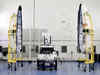
Countdown begins for ISRO's third and final developmental flight SSLV-D3-EOS8 mission
The countdown commenced on Friday for ISRO's launch of an earth observation satellite onboard the third and final development flight of the Small Satellite Launch Vehicle-03 (SSLV-D3-EOS-08). This follows the successful SSLV-D2-EOS-07 mission in February 2023. This marks ISRO's third mission in 2024, following the PSLV-C58/XpoSat in January and GSLV-F14/INSAT-3DS in February.
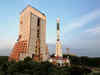
ISRO successfully launches third and final developmental flight SSLV-D3-EOS8 mission
Isro EOS8 Satellite Launch: The Indian Space Research Organisation (ISRO) launched an earth observation satellite on Friday, marking the third and final development flight of the Small Satellite Launch Vehicle-03 (SSLV-D3). The mission joins the previous SSLV-D2-EOS-07 launch in February 2023 and is ISRO's third mission of 2024, following the PSLV-C58/XpoSat mission in January and the GSLV-F14/INSAT-3DS mission in February.

Isro successfully launches earth observation satellite aboard SSLV-D3
Isro said in a statement on X, "The third developmental flight of SSLV is successful. The SSLV-D3 placed EOS-08 precisely into the orbit. This marks the successful completion of ISRO/DOS's SSLV Development Project." The smallest SSLV rocket, which measures about 34 metre in height, was launched from the first launch pad at 9:19 am with a one-hour window period.
Isro to launch third developmental flight of SSLV on August 16
From environmental monitoring to disaster management and technological demonstrations, EOS-08, weighing approximately 175.5kg, is set to contribute valuable data and insights to various scientific and practical fields.
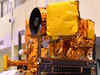
ISRO to launch its latest earth observation satellite on August 15
ISRO will launch the EOS-08 earth observation satellite on August 15, 2024, aboard its Small Satellite Launch Vehicle. The mission aims to enhance microsatellite technology and includes payloads for infrared imaging, GNSS-Reflectometry, and UV dosimetry. The satellite’s advanced systems signify a notable improvement in satellite mainframe technology.

Six PSLVs, three GSLVs and Gaganyaan programme part of ISRO's roadmap for 2024
In addition, multiple sub-orbital missions using a test vehicle have also been planned to validate the Gaganyaan Crew Escape System under various abort conditions. One mission of SSLV, which is the third developmental flight that will also launch a technology demonstration satellite, has also been planned.

India successfully flight tests naval anti-ship missile
The Indian Navy carried out the test in association with the Defence Research and Development Organisation (DRDO).

Earth Observation Satellite 03 scheduled for launch on August 12
The first developmental flight of the Small Satellite Launch Vehicle, SSLV- D1, is scheduled to launch EOS-02 in the fourth quarter of 2021. PSLV-C53 is also scheduled to launch EOS-06 in the fourth quarter of 2021.

India's indigenously developed anti-tank guided missile 'Dhruvastra' test-fired
India has successfully conducted three flight tests of its indigenously developed anti-tank guided missile 'Dhruvastra' from the Integrated Test Range at Chandipur in Odisha, defence sources said on Wednesday.
ISRO’s GSAT-29 launch in October
The Indian Space Research Organisation (ISRO) which has embarked on an ambitious plan to have a rocket launch every second week from now on will launch the GSAT-29 next month.

Five launches in 5 months, our hands full: ISRO chief
The missions planned in the first half of 2018 from Sriharikota spaceport are: GSLV-FO8 (GSAT-6A satellite), GSLV -MkIII, Chandrayaan-2 and PSLV (IRNSS-1I navigation satellite), he said.
GSAT-17 to be launched from French Guiana tomorrow
GSAT-17 carries equipment for meteorological data relay and satellite based search and rescue services being provided by earlier INSAT satellites.

GSLV-Mk III breaks Isro jinx of failed debut rocket launches
Overcoming initial hurdles, the PSLV rocket has emerged as the most reliable workhorse launch vehicle with 38 consecutive successful missions since October 1994.

ISRO set for first developmental flight of "game-changer" rocket
ISRO rockets (launch vehicles) at present have the capability to launch satellites up to 2.2 tons; it depends on international launchers to orbit satellites heavier than that.

Agni-V to undergo 3 months trial now
This marks the fourth time the missile has been tested successfully since its first flight in 2012.

Indigenous GSLV engine faces key test, to propel rocket with heavy payload on September 7
Cryogenic engines use liquid hydrogen as fuel and liquid oxygen as oxidizer to burn the fuel. It can produce 1.5 times the thrust compared to liquid rocket engines.

NASA concludes test of developmental RS-25 engine for next-generation rocket
NASA has completed the first developmental test series on the engines that will power the US space agency's next-generation mega rocket.

Government approves additional Rs 464.78 crore for GSLV Mark-III programme
overnment today approved the revised allocation of Rs 2962.78 crore for completing the heavy-duty GSLV Mark-III and executet LVM3-X.

ISRO launches indigenous cryogenic engine-powered GSLV-D5
ISRO launched the GSLV-D5, powered by an indigenous cryogenic engine and carrying the GSAT-14 satellite from the Satish Dhawan Space Centre in Sriharikota.
Tejas aircraft takes off after 27 years and 3000% cost hike
After 27 tortuous years, more than 1,500 flight tests and an almost 3,000% jump in overall developmental costs, the much-touted Tejas Light Combat Aircraft has finally taken the first step towards induction as a supersonic fighter into IAF.
Funding of six GSLV operational flights approved
Funding of six GSLV operational flights at an estimated cost of Rs 1281 crore was on thursday approved by the Union Cabinet.
Load More

