
DEEP SPACE MISSIONS

India progressing towards sending its first human deep-sea mission to depth of up to 6,000 metres by 2028: Jitendra Singh
Union Minister Jitendra Singh outlined India's plans for deep-sea exploration and human spaceflight during the Indo-Pacific Regional Dialogue 2026. India intends to conduct its first human deep-sea mission by 2028, reaching depths of up to 6,000 metres. The country focuses on enhancing its capabilities through collaboration among various scientific fields. The initiative reflects India's commitment to exploring and utilizing ocean resources strategically for economic benefits.
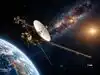
Voyager 1 lost? Where is NASA's spacecraft right now, and how long will it last?
As NASA's Voyager 1 and Voyager 2 traverse the vast reaches of interstellar space, they confront various power and communication obstacles. Recently, Voyager 1 encountered a setback, losing contact momentarily when its fault protection system triggered due to inactive thrusters. Thankfully, engineers swiftly restored communication and introduced power-saving strategies to prolong the mission.

US Midterms 2026: Cost of living and government corruption are top issues, AP Voter Poll says
Voters are participating in Election Day to influence control of the U.S. House and Senate. Many electorate members express dissatisfaction with the current economic situation attributed to Trump's policies. Polls indicate a significant desire for checks and balances on the presidency from Congress. Various gubernatorial candidates, along with major ballot measures, also shape the election landscape. Early voting statistics show heightened engagement compared to previous elections and reflect voter concerns.

From Dhirubhai Ambani’s Rs 10 crore IPO to Akash Ambani’s Rs 12.5 lakh crore Jio debut: Reliance’s biggest wealth story
Jio Platforms’ Rs 12.5 lakh crore debut marks a new milestone in the Ambani family’s wealth creation journey, tracing Reliance’s evolution from its Rs 10 crore IPO in 1977 to a digital technology giant.

In 1982, NASA engineer George Alcorn invented an imaging spectrometer designed to analyze high-energy sources
George Edward Alcorn's groundbreaking invention of the X-ray imaging spectrometer has revolutionized the field of space exploration, allowing for in-depth analysis of celestial phenomena. This innovative device merges imaging with energy detection, yielding essential data from various X-ray sources. His contributions significantly advanced astronomy, enabling detailed mapping of planetary surfaces and stellar charts. Recognized for his achievements, Alcorn was inducted into the National Inventors Hall of Fame in 2022.

Forget the Moon’s south pole: 4 other lunar sites could help humans build a base and prepare for Mars, new report suggests
The southernmost region of the Moon has emerged as a crucial focus for contemporary lunar exploration, particularly in the quest for water ice. Other notable sites, such as Bhabha Crater and Orientale Basin, are also under consideration for study. These areas promise to offer vital information about the Moon's past and feasible locations for human settlement.
- Go To Page 1

Indian-origin author, broadcaster to judge Women's Prize of Non-Fiction in UK
The prestigious annual prize, which also includes a Fiction category worth the same prize money, celebrates exceptional narrative non-fiction written by female thought-leaders, changemakers and experts.
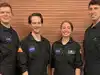
Four crew members spent 365 days in a 1,700 sq ft, 3D-printed Mars habitat in isolation. How could it help NASA prepare for living on the Moon?
NASA's CHAPEA mission, which simulates living on Mars, involves four crew members in a controlled environment. The study focuses on how humans manage isolation and limited resources during long-duration missions. Insights gained could inform the design and functionality of future lunar habitats. Participants will undergo evaluations after their mission to assess their health and performance. Findings will help NASA prepare for sustained human activity on the Moon.

India to take a leap in quantum, NM-ICPS 2.0 in works: DST Secy Waghmare
India aims to become a leader in quantum technology among Global South countries. The Centre is preparing for NM-ICPS 2.0, building on the first phase ending December 2027. Efforts include developing quantum-resilient encryption techniques for critical database systems. Research and development spending has increased significantly, with a target of reaching 2% of GDP by 2035. The government is focusing on partnerships with industries to further support technological advancements.

Restrictions expose Ukraine's Starlink dependency in Russia war: Observers
As Ukraine faces significant constraints on the use of Starlink satellite internet amid its ongoing conflict with Russia, military operations are increasingly jeopardized, especially in terms of drone communication effectiveness. With winter approaching, the pressure mounts on air defense systems to address rising Russian drone threats. Ongoing discussions among officials regarding the reasons behind these limitations highlight concerns about the future of U.S.

Groww Q2 profit jumps; Hocco eyes big funding scoop
Groww reported strong quarterly earnings in the July-September period. This and more in today’s ETtech Top 5.
From sewer to space: Genrobotics bags ISRO robotics development contract
The company has secured the project from the U R Rao Satellite Centre (URSC), a key centre of the ISRO, marking a significant step in its journey from ground-level challenges to the demands of space engineering.
A US spacecraft accidently found evidence of ice on moon while taking a complete look at lunar surface in 1994
A US spacecraft known as Clementine was the first to get a complete view of the Moon and its pole regions. The ice on the bottom of a shadowed crater near the south pole of the Moon was found during the spacecraft's lunar survey mission. It was managed by the Ballistic Missile Defense Organization and NASA.

Off Gulf coast of Florida, giant concrete domes were dropped more than 200 feet underwater to help restore corals and sea life. All corals outplanted in 2025 survived and even grew
Scientists have deployed specially designed concrete domes off Florida’s northern Gulf coast to help restore coral habitats. The project targets mesophotic corals that were affected by the 2010 Deepwater Horizon oil spill. In a follow-up mission, researchers found all corals placed in 2025 survived and grew successfully. The restoration efforts involve multiple organisations, including NOAA and the University of Rhode Island.
World Space Week 2026: India’s moon shot was built one rocket at a time, from PSLV to LVM3
India's space journey illustrates a significant evolution in rocket technology from Polar Satellite Launch Vehicle to Launch Vehicle Mark-3. PSLV played a crucial role in launching various satellites and missions including Chandrayaan-1. LVM3 facilitated the launch of Chandrayaan-2 and the successful soft-landing of Chandrayaan-3 near the Moon’s south pole. This progression demonstrates India's growing capabilities in launching heavier payloads and future missions.

Want to do NASA research? 24 new US projects backed by $23 million will let citizen scientists hunt comets, study space weather and explore Earth data — all you need to know
NASA has selected 24 organizations to partake in a new Science Activation portfolio aimed at public engagement. This initiative will provide hands-on opportunities in scientific research across various fields, such as astronomy and Earth sciences. Communities nationwide, particularly underserved groups, will gain access to authentic NASA experiences. Participants can analyze data, conduct experiments, and observe astronomical events through robotic telescopes.

Anthropic's IPO pitch embraces AI's promise and peril
To pull off a successful offering that values it at $2 trillion, Anthropic, whose name means "human-centered," will need plenty of mortal investors to help build a world where mankind will soon take a back seat to far more capable artificial intelligence systems.

Epigamia cofounder launches Kokasa to build defence tech systems
The deep-tech venture is developing electromechanical, electrohydraulic, sensing and control systems for defence, aerospace and space.
Meet Chinyere Ukeje, the 25-year-old Philadelphia computer scientist who won $300,000 NASA prize for Mars food system
Chinyere Ukeje, an innovative computer scientist hailing from Philadelphia, has emerged victorious in NASA's Deep Space Food Challenge with her groundbreaking idea of Adaptive Nourishment Infrastructure. This pioneering concept is designed to assist in food production for astronauts on Mars, establishing a modular ecosystem that meets half of the necessary nutritional requirements for extended missions. By prioritizing familiar meals, Ukeje seeks to mitigate psychological challenges faced during long space journeys.

SpaceX Starship Flight 14: When and where to watch historic launch, 3 major firsts including Starlink V3 debut
SpaceX's Starship Flight 14 is set to attempt orbital insertion and deploy next-generation Starlink V3 satellites. The mission will also involve testing the spacecraft's heatshield during atmospheric reentry. Starship will work in conjunction with the Super Heavy booster to complete multiple objectives. The launch window opens later today and lasts for about 75 minutes. Successful execution of the mission is essential for future SpaceX operations in space.
NASA’s $1.2 billion plan to explore the history and evolution of the universe enters Phase B
NASA has progressed the PRIMA mission into Phase B, concentrating on the creation of essential technologies and designs. This innovative space telescope is intended to perform detailed far-infrared surveys of our universe. With a scheduled launch in 2033, it aims to operate for five years, allowing scientists to delve into the formation and evolution of diverse cosmic phenomena.

Dextr AI raises $6.7 million led by Elevation Capital to build AI workforce for hospitality
Dextr sells AI agents to hotels, resorts and spas, with its platform handling voice AI, guest management, back-office operations, staff management, sales and marketing. The company operates across the US, Canada, UK and Europe, including properties under Hilton, Wyndham, Best Western and IHG. It processes more than one million interactions a month and handles tens of millions of dollars in payments through phone reservations each month, it said.

ET Business Growth Summit Chennai: Innovation and R&D key to unlocking MSME potential
The ET Business Growth Summit in Chennai saw industry leaders emphasising stronger collaboration among businesses, policymakers, and institutions to realise the region’s true potential.

India globally competitive in chips: Ashwini Vaishnaw
Speaking to the press on the sidelines of the annual Semicon India Summit 2026 in the capital, Vaishnaw said the growth of the ecosystem in India has given the government confidence that more than 100,000 new jobs will easily be created in the semiconductor industry in the near future.

India globally competitive in chips: Vaishnaw
India's electronics minister has asserted the country's competitive edge in the global semiconductor market. Currently, five chip packaging facilities are operational and adhere to international export standards.

India globally competitive in semiconductor sector, says IT minister Ashwini Vaishnaw
India’s semiconductor industry has become globally competitive in quality and cost, with products from five operational facilities meeting export standards, Electronics and IT Minister Ashwini Vaishnaw said Friday.
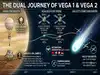
In 1985, Soviet engineers sent two balloons floating through Venus for 46.5 hours. Their motherships then used the planet’s gravity to chase Halley’s Comet
Soviet spacecraft Vega 1 and Vega 2 undertook a dual mission to Venus and Halley's Comet. These probes deployed landers and balloons onto Venus before flying past the comet. Vega 1 and Vega 2 successfully transmitted data from Venus's atmosphere and surface. The spacecraft then gathered crucial information about Halley's Comet during close encounters.
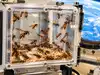
In 1992, scientists sent 230 hornets into space to see if they could build a nest without gravity; after 8 days, they returned without building one
During a 1992 space mission, the Endeavour shuttle became home to 230 hornets, prompting scientists to investigate how these insects build nests without the constraints of gravity. Sadly, a humidity crisis within their habitat led to many casualties, undermining the experiment’s goals. Despite the setbacks, this mission revealed significant difficulties that living organisms encounter in outer space.
In 2020, NASA put seeds from 11 crops aboard an experimental spaceplane; after months in orbit, scientists brought them back to test whether they could still grow
In 2020, NASA put seeds from 11 crops aboard an experimental spaceplane; after months in orbit, scientists brought them back to test whether they could still grow. The research examined how microgravity and space radiation affect seed viability, germination, plant development and molecular changes. The study used the X-37B Orbital Test Vehicle-6 and included ground controls to compare space exposure with radiation simulations and Earth conditions.
Load More

