
CYBERWARFARE
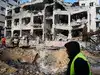
World War II still has lessons for today’s wars
World War II offers four lessons for modern warfare: technology can rapidly transform battlefields, strong leadership requires strategic judgement, industrial capacity is vital to military strength, and war carries a heavy human cost. As conflicts in Iran and Ukraine reshape warfare, the US must invest in AI, defence production and shipbuilding while remaining united behind its military personnel.
Drones are critical for future warfare: Rajnath Singh
India is set to become a global drone manufacturing hub by 2030. Defence Minister Rajnath Singh emphasized the need for complete self-reliance in drone technology. This includes all components like engines and software. Future warfare will heavily involve drones and counter-drone systems. India plans to integrate these advanced systems into its armed forces, boosting national security and strategic independence.
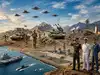
AI moves to the frontline as India backs killer robots, drone swarms and cyberwarfare
As the landscape of warfare evolves, India's military is pioneering the use of artificial intelligence to redefine battle tactics. A newly unveiled policy focuses on cutting-edge developments such as self-operating weapon systems, coordinated drone swarms, and intelligent cyberattack strategies.

Australia must deploy 'unconventional' means to deter China, Russia: think tank
Australia needs an "unconventional deterrence" policy to counter threats from China and Russia, according to a leading think tank. The Australian Strategic Policy Institute suggests learning from past guerrilla insurgencies and adopting "poisonous shrimp" or "porcupine" strategies to address modern "grey-zone" tactics and fill a defense gap before new submarines arrive.

From short battles to five-year war, be ready for anything: Defence minister on why India must prepare for conflicts of any duration
Defence Minister Rajnath Singh has urged the Indian armed forces and defence industry to prepare for a wide spectrum of security challenges, ranging from short conflicts to prolonged wars. He stressed the importance of technology, strategy, and adaptability in modern warfare, drawing lessons from past operations as well as current geopolitical realities.

Who hacked Russia’s Aeroflot servers, grounding flights and causing mayhem - did a US-backed group sabotage the carrier?
Aeroflot cyberattack triggered travel chaos on July 28, 2025, after a major IT system failure grounded over 40 flights at Moscow’s Sheremetyevo Airport. Passengers were left stranded without refunds or rebooking help. A pro-Ukraine hacker group called Silent Crow claimed responsibility, saying they breached Aeroflot’s systems for a year, accessing and destroying data. The Russian government launched a criminal probe, calling the incident “alarming.” As summer travel peaks, this cyberattack highlights growing threats to aviation. The Aeroflot system hack not only exposed digital weaknesses but also sparked global concerns over cybersecurity in air travel and modern warfare tactics.
- Go To Page 1

Special Ops Season 2 released on OTT: When and where to watch Kay Kay Menon's thriller series
Special Ops 2 will release on July 18. Kay Kay Menon returns as Himmat Singh. He will tackle cyberterrorism. The show features returning cast members. Prakash Raj and others join the series. The new season promises high-stakes action. It will explore the world of cyberwarfare. All episodes will be available at once. Get ready for a binge-worthy experience.

Countries shore up their digital defenses as global tensions raise the threat of cyberwarfare
Russian hackers targeted Texas water plants in a 2023 cyberattack, testing US infrastructure vulnerabilities. Experts warn of rising global cyberthreats amid geopolitical tensions. With AI-driven threats growing, calls for stronger US defenses intensify, though Trump-era cuts to cybersecurity programs have sparked concern. China, Iran, and others also expand cyber efforts.
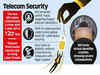
Cybersecurity agency on anvil to safeguard telecom networks
The Indian government is planning to establish a national cybersecurity agency to safeguard telecommunication networks and services from rising cyber threats. While the timeline and specific details are yet to be determined, the agency will serve as a nodal body focused on addressing cyber threats in the telecom sector. The move comes in response to the increasing frequency of cyberattacks globally.

Bengaluru Tech Summit to begin on Wednesday, to host participants from 30 countries
The summit, with the theme 'Breaking Boundaries’, will have more than 75 sessions, more than 400 speakers, 350 startups, 600 exhibitors, and 20,000 business attendees.

BEL ties up with Globals for developing cyberwarfare, cyber defence systems
"The two parties shall work in close coordination, providing all the key assistance to each other for R&D as well as joint go-to-market for cyber security solutions," it was stated.

North Korean hackers stole $400 mn in crypto in 2021: Chainalysis
Pyongyang is under multiple international sanctions over its atomic bomb and ballistic missile developments but analysts say the North has also built up its cyber capabilities with an army of thousands of well-trained hackers who extract finances to fund the state's weapons programs.

Taiwan says China seeking to degrade its military and morale
Taiwan's Defense Ministry said in a biennial report that Beijing is employing "gray zone" tactics to ratchet up pressure on the self-governing island republic which China claims as its own territory. China has been stepping up its threats to use force to against Taiwan by holding military exercises and sending planes close to the island.

Cyber-attacks: what is hybrid warfare and why is it such a threat?
Over the past two decades, many cyber-attacks targeting western state institutions and businesses have been far more sophisticated than a couple of tech-savvy individuals operating as “lone wolves” and bear the hallmarks of actions taken with the support or approval of a hostile government.

View: Covid crisis can help correct wealth disparity & income inequality
To call the Covid-19 crisis a Black Swan or an “unknown unknown” would be inappropriate.

Army holds meet to take on terrorists in cyber world
An important discussion will be to understand the capabilities of using technology in counter-terrorist operations.

Army conducts major cyber warfare workshop
An important discussion will be to understand the capabilities of using technology in counter-terrorist operations.

Why US should only be happy about the Chinese spies in its territory
China’s leadership is isolated and suspicious already. The US shouldn’t want to add to that insularity.

Indian-American first South Asian to serve on US national security body
Born into a Tamil-speaking family in New Delhi, his family moved to Buffalo, New York when he was three months old. Krishnamoorthi attended Princeton University, where he earned a bachelor's degree in mechanical engineering. He also attended Harvard Law School.

Ex-IAF chief seeks integrated cyber security system for military and civilian sectors
"Cyber is the worst kind of terrorism because here you do not need trained people with bullets and weapons to fire and kill lots of people. There will be no violence, but it will result in lots of death and devastation without firing," Former Chief of the Indian Air Force, Air Chief Marshal (Retd) Arup Raha said.

UN Security Council needs to be reformed without delay
Participating in a GA session on 'Report of the Secretary-General on the Work of the Organisation', Syed Akbaruddin said the 15-nation council is all about primacy but with little purpose.

Lack of robust IT security system key reason behind rising cyberattacks: Report
According to US-based Software Company Symantec's Internet Security Threat Report, India is the second worst cybercrime affected country in the world after the US.

RBI working on measures to further beef up cyber security in FY19
The central bank's agenda for 2018-19 include, enhanced level of protection against cyber risks to ensure continuous protection against the changing contours of internet based security threats.
Intelligence agency heads should be selected on performance: Ex-R&AW chief
He feels that it is necessary to have periodic reforms to ensure that the country has the best intelligence apparatus it can afford.

ET Defence Bulletin: Pungent smelling CS shells to aid pellet guns in Kashmir
Pungent smelling CS shells to aid pellet guns in Kashmir, Shot 9 times, CRPF commandant Chetan Kumar Cheetah talks again, and more stories in today's defence bulletin.
PLA plans war games instead of military parade on 90th anniversary: Report
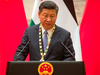
Xi Jinping has ordered war games over military parade to mark the 90th anniversary of the founding of the PLA on August 1, Hong Kong-based South China Morning Post reported.
Pentagon to expand its cyber force to defend and attack
The report said the move is part of a push by Defence Secretary Leon Panetta to bolster the Pentagon's cyberoperations.
UK says it gets hit by 1,000 cyber attacks monthly
The chief of Britain's eavesdropping agency says there are an average of 1,000 cyber attacks launched against U.K. government networks monthly.
'Unease in China over emerging India'
A Pentagon report has said that China was concerned about strategic ramifications of India’s rising economic, political, and military clout.
Load More

