
CROP PRODUCTION REPORT

Asia Rice: Vietnam, Thai rice prices hit near two-year highs as India slips
Vietnam and Thailand are experiencing a dramatic rise in rice export prices, reaching their highest levels in almost two years. This surge is predominantly fueled by supply uncertainties and increasing demand, notably from the Philippines.

USDA to launch AI tool to check crop production data after errors
After the USDA discovered errors in its corn data from September, officials determined the AI tool would have flagged the problem and decided to use it on the crop production report due on November 10, USDA Under Secretary Scott Hutchins said in an interview.

Go Digit says IRDAI's EoM rules led to unintended rise in commission
Goyal said that the existing Expense of Management (EoM) framework had failed to achieve its intended objective of reducing expenses, with some insurers using savings from large government and crop insurance businesses to increase commissions in retail segments.

Sebi eases KYC norms for NRIs, OCIs, allows digital onboarding from December 3
SEBI has relaxed KYC requirements for NRIs, OCIs and foreign nationals, allowing eligible overseas clients in FATF-compliant countries to complete onboarding digitally. The revised framework introduces video verification, electronic documents and simplified repeat KYC, effective December 3, 2026.

Scientists mixed just 3% volcanic ash into forest soil in a UC San Diego experiment; coleus plants grew roughly three times as much as plants in untreated soil
At UC San Diego, researchers have made an exciting discovery: adding volcanic ash to soil can significantly enhance plant growth. Their study revealed that incorporating just 3% basaltic ash not only boosts the biomass of coleus plants but also positively influences beneficial soil microbes. This finding showcases volcanic ash as a viable solution for rejuvenating poor agricultural soils, making it an effective tool for sustainable practices and carbon capture initiatives.

Bayer CropScience Q2 profit rises 9% to Rs 166 crore despite 19% decline in revenue
Bayer CropScience Ltd has announced an impressive 8.84% growth in net profit, totaling Rs 166.2 crore for Q2 FY27. However, total income saw a 19.4% decline year-over-year, attributed to ongoing market challenges. Factors such as unpredictable monsoon patterns have disrupted both sowing and crop protection demand. In response, the company emphasizes efficiency improvements and portfolio enhancements, while the board has declared an interim dividend of Rs 90 per share.
- Go To Page 1

From lab to farm: How Proximal Soilsens is developing a ‘glucometer’ for soil testing
Developed over nearly a decade of research at IIT Bombay, Proximal Soilsens’s patented NutriSense X aims to make laboratory-grade soil testing portable, faster and accessible. The device tests multiple soil parameters in seconds, without requiring electricity or elaborate laboratory infrastructure.

No water to sow, no respite at the grocery store: India's prolonged food inflation worry
Indian farmers face challenges in sowing winter crops amid dwindling water supplies from a weak monsoon. Amarsingh Gushinge's village experiences a significant rainfall deficit, impacting crop planting decisions. Food inflation could worsen as key staples see rising prices, aggravating the economic strain on households. The Reserve Bank of India may respond with interest rate hikes to combat rising inflationary pressures.

Who sent $2 bn military equipment to Iran past US blockade? More than 5,000 agencies
Iran has developed a clandestine network involving over 5,000 agencies to import military equipment and evade sanctions. This network functions despite ongoing US naval blockades and sanctions since the war began. Extensive investigations reveal significant transactions and military logistics supporting their activities. The secretive agencies have been linked to the Islamic Revolutionary Guard Corps and elite controlled businesses.

Finmin pegs Q2 expansion at 7.35%,flags capital pressure over US yield
India’s economy is estimated to have grown 7.35% in the September quarter, supported by strong industrial output, GST collections, energy use, port traffic and auto sales, the finance ministry said. It expects domestic demand and investment to sustain momentum, while warning that high crude prices, food inflation, rupee pressure and elevated US bond yields could pose risks in the second half.

These large-, mid- and small-cap stocks can give more than 20% return in 1 year, according to analysts
Here’s one thing that is worth clarifying, because it is in the headlines. Large global technology companies have been announcing heavy spending on AI, and there has been some correction in those stocks because of it. It is natural to worry that this will spill over into the Indian market. It most likely will not.

What’s haunting Halloween chocolate? The climate pressures behind Halloween’s sweetest tradition
Halloween chocolate connects American shoppers with cocoa-growing communities in West Africa. Heat and crop disease can disrupt harvests, but climate change is only one influence on candy prices.

Ladakh becomes India’s first fully organic Union Territory, individual farmer certification next
Ladakh has been declared India’s first fully organic Union Territory, promoting chemical-free agriculture practices. The administration aims for individual farmer certification to enhance market opportunities for organic produce. Efforts include a ban on chemical fertilizers and distribution of organic fertilizers to support farming transitions. The goal is to strengthen market linkages and improve farmers' incomes while safeguarding water and soil resources.

VCs go deep on single-specialty healthcare with orthopaedics, pain relief bets
The trend is reflected in several recent funding deals. Bengaluru-based Lumov, which makes orthotic products, is in talks to raise Rs 32 crore in a round led by Peak XV Partners, according to people familiar with the matter. The round will likely include the founders of Minimalist and Mokobara, as well as early-stage VC firm Panthera Peak Ventures, sources said.

Uttar Pradesh turns to cattle to beef up rural incomes; ₹40,000 subsidy on offer per animal
Under UP State Livestock Mission, farmers buying eligible indigenous cows will receive a subsidy of Rs 40,000 per animal. The government will also pay 85% of the livestock insurance premium, leaving owners to bear the remaining 15%.

Sugar stocks: Short-term pain is real; has the long-term case broken? 7 stocks from the sugar-ethanol ecosystem
Though this year's ethanol tender leaves sugar out, the long-term blending roadmap still points to rising ethanol use. The move is aimed at a short-term sugar-supply problem, not at ethanol itself. Check out Stock Reports Plus, powered by Refinitiv, for price targets of over 4,000 listed stocks along with detailed company analysis focusing on five key components – earnings, fundamentals, relative valuation, risk, and price momentum – to generate standardized scores. SR+ Reports is a complimentary offering to ETPrime members.

Karnataka DyCM Parameshwara urges Centre to release relief funds as crop losses reach 80 pc due to drought
Karnataka is facing a critical drought, leading to alarming crop losses approaching 80%. In response, the government has begun processing compensation to support the devastated farmers. Deputy Chief Minister G Parameshwara urged for immediate action to tackle food grain production challenges and called for unity among political figures to request further aid from the central government.
How rice husks are helping protect American homes from wildfires, rot and costly repairs as builders turn farm waste into wood siding alternatives
Homeowners are considering rice husk panels as a viable alternative to conventional wood siding due to their durability. These building materials are designed to resist moisture, decay, and fire, making them suitable for various climates. Their use is already expanding in regions prone to wildfires and severe weather, showing versatility for other applications. However, initial installation costs may be higher than traditional materials, which could affect widespread adoption.

Teenager from South Africa turned orange peels into cheap, biodegradable product that can help plants survive drought by 84%. She used just ‘electricity and time’
Typically, orange peels are thrown directly in the trash. Nonetheless, a girl from South Africa transformed kitchen waste into a solution for water shortages that could spell disaster for farmers. As reported by the BBC, Kiara Nirghin, a South African girl, tested kitchen waste to assess how well it can absorb and hold water.

Link fertiliser subsidies to area & crop productivity: ICRIER
India is recommended to shift from product-based fertiliser subsidies to direct support for farmers to improve soil health. It involves integrating digital records of cultivation and crop-specific nutrient requirements for more effective subsidy targeting. The reports emphasize the necessity of incorporating tenant farmers and sharecroppers in these digital systems. Improved targeting of subsidies could lead to better investment in soil health and sustainable practices.

In 2019, Purdue began growing corn and soybeans around solar panels in Indiana; after 4 years, even the most shaded corn plots lost only 7.7 percent of their yield
Purdue University researchers have been examining how solar panels affect crop production since 2019, particularly focusing on corn and soybeans, two key crops in America. Their experiments show that significant crop yields are still possible despite shading from solar arrays. The study aims to refine solar panel designs that provide energy while also benefiting agriculture, paving the way for solar energy to support irrigation and farming operations.

Union agriculture minister launches campaign to promote sustainable farming
Union Agriculture Minister Shivraj Singh Chouhan has inaugurated the 'Khet Bachao Abhiyan,' a campaign dedicated to advancing sustainable farming techniques across the nation. Its goals include enhancing soil health and encouraging efficient resource use.
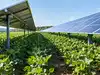
In 2024, Rutgers planted soybeans between solar panels in New Jersey; the first harvest found no significant yield difference between two solar panel designs
Rutgers University recently performed a groundbreaking experiment on agrivoltaics to assess soybean yield productivity beneath solar panels. The results were promising, as both single and double-panel systems outperformed non-panel plots. However, given the preliminary data, ongoing research is crucial. The unique dry conditions experienced in 2024 required additional irrigation, influencing the experiment's results. Continued evaluation will uncover the long-term potential of integrating agriculture with solar energy.

Chapter Home raises Rs 63 crore from Bessemer, Stride Ventures, others
The startup plans to use the capital to strengthen product development, expand into new categories, invest in technology and brand building, and scale up distribution.

These mid-caps have ‘strong buy’ & ‘buy’ recos and an upside potential of over 25%, according to analysts
The last few weeks have made one thing clear. Oil prices, US bond yields, corporate earnings, and the state of the world – all point the same way. So, the market is more likely to stay in this jumpy and uncertain mood for quite some time. But then there is something called history, and it provides some interesting lessons.

Why is Trump giving farmers $8 billion as diesel hits $6.53 a gallon? Can one-time aid cover harvest costs before the midterms?
Trump announces $8 billion aid package for farmers: American farmers are heading into harvest with diesel costs putting fresh pressure on their budgets. Donald Trump has announced $8 billion in one-time aid to help cover the expense. But with diesel reaching $6.53 per gallon in September and midterm elections approaching, how much relief will farmers actually receive?

Fertiliser stocks: Combination of strong headwinds and structural repair. Who will win? 9 stocks, 4 with upside potential of up to 31%
For the better part of a decade now, every time this critical sector has run into trouble, the government has stepped in. The clean-up began with small steps. The mandatory coating of urea with neem was an early one. It was a measure that was not financial on the face of it; but it changed the sector’s economics by stopping the diversion of subsidised fertiliser to other uses.
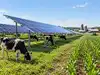
In 2024, a New York dairy farmer wanted solar income without losing his fields; the 6.5-megawatt project was designed around crops and cows
A pioneering dairy farmer in northern New York is merging the realms of agriculture and solar energy by partnering with a solar developer on a transformative agrivoltaics initiative. This groundbreaking design features ample spacing between solar panels, enhancing operational efficiency for farming tools. Expected to generate consistent revenue, the project aims to sustain existing agricultural work.

India’s soybean output seen falling 2.1% to 107.93 lakh tonnes in Kharif 2026: Farmers' body
India's soybean production forecast indicates a slight decline to 107.93 lakh tonnes during the ongoing Kharif season. Drought-like conditions in Maharashtra, Karnataka, and Telangana are contributing to this reduction in output. However, increased production in Madhya Pradesh and Rajasthan is expected to compensate for these losses. The area cultivated with soybean increased by approximately 5 lakh hectares compared to the previous season.
Load More

