
CRITICAL MINERALS INDIA

Mundra to Chile, Adani amps up the volume of its heavy metal rock
Adani Group has signed an agreement with Codelco to explore a copper project in Chile. This partnership aims to ensure a secure supply of copper for its operations in Mundra, Gujarat. The agreement comes amid rising copper demand in India and a need for more imports.

Use FTAs to build joint ventures, explore investment opportunities: CII President to industry
R Mukundan, the CII President, stressed the crucial role of Free Trade Agreements (FTAs) in fostering joint ventures and enhancing investment prospects. He noted India's resilient economic growth, even faced with global challenges like geopolitical tensions and elevated energy prices. The broadened scope of India's FTAs promises to enrich economic interactions and spur advancements in emerging technologies such as AI and biotechnology.

Adani eyes Chile's copper riches: Kutch Copper and Codelco sign MoU to explore Kaburkaala project
Adani Group's Kutch Copper Ltd has signed an MoU with Chile's state-owned Codelco to explore the Kaburkaala copper project in northern Chile. The partnership aims to combine Adani's investment and technical capabilities with Codelco's geological expertise, potentially securing long-term copper supplies for the group's Mundra smelter as India seeks to strengthen its domestic copper supply chain.
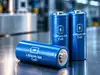
Centre bans export of Li-ion battery waste, scrap to boost domestic recycling and critical mineral recovery
India has imposed an immediate ban on the export of lithium-ion battery black mass to strengthen its local recycling ecosystem. This decision aims to enhance domestic recovery of critical minerals, such as lithium and cobalt, which are vital for technology and energy sectors. The prohibition will ensure that battery waste generated in India is processed locally and improves utilization of recycling capacities.
India blocks battery waste exports to recover more lithium, nickel and cobalt at home
India has enforced a ban on exporting lithium-ion battery black mass to promote local recycling initiatives. The prohibition aims to ensure that valuable materials from battery waste remain accessible for domestic refiners. This regulation will help reduce reliance on imported materials essential for battery manufacturing. Furthermore, the decision addresses the capacity issues faced by local recycling facilities in processing battery waste.

Global credit conditions to weaken next year: Moody's
Moody’s Ratings expects global credit conditions to weaken in 2027 as higher financing costs and elevated energy prices create pressure across sectors, even as major economies continue to grow. The agency said tariffs, regulation, export controls and strategic government investment will increasingly shape credit risks, trade and capital allocation. Higher refinancing costs are likely to weigh on highly leveraged borrowers and those facing near-term maturities, while banks and life insurers could benefit from higher rates.
- Go To Page 1

NMDC in talks with Russia's Rosatom over lithium investments, sources say
Indian state-run miner NMDC Ltd is in talks with Russia's Rosatom to invest in lithium projects. These discussions are part of India's strategy to secure supplies for battery and EV industries. NMDC aims to enhance its global mineral diversification strategy and has formed a team for due diligence. The Indian government is investing in domestic processing of critical minerals to reduce import dependence.

A blue brake on Trump's red agenda: Tariffs, spending and debt face a 'Democratic' reckoning in the US
Democratic control of Congress from January 2027 could constrain President Donald Trump's legislative agenda, increase scrutiny of his tariff policies and complicate fiscal decisions, Fitch's BMI said. While Trump retains executive powers over trade and immigration, prolonged funding negotiations and a potential debt-limit confrontation could raise financial market volatility.
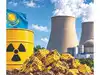
Kazakhstan inks new deals to supply Uranium to Indian cos
Kazakhstan plans to supply natural uranium to major Indian energy companies beginning in 2026. These contracts are part of Kazakhstan's strategy to diversify its uranium export markets. Discussions regarding this uranium supply deal intensified after the previous contract expired a few years ago. Additionally, both countries are exploring potential collaboration in critical minerals found in abundance in Kazakhstan.

Rare earth magnet scheme: Coal India, IRP seek no sops; other contenders include ReNew, Prozeal
The scheme will run for seven years from the date of award, including a two-year gestation period for setting up an integrated manufacturing facility, and five years for incentive disbursement on the sale of REPM. These magnets are among the most powerful in the world and are widely used in electric vehicles, wind turbines, high-end electronics, aerospace and defence systems.

Centre launches ninth auction tranche for 20 critical mineral blocks, third round of exploration licences
The mines ministry has launched the ninth tranche of auctions for 20 critical and strategic mineral blocks, alongside the third tranche for exploration licence blocks. Of the 100 unique blocks offered in the first eight rounds, 64 have been auctioned. The move aims to strengthen mineral security and attract private exploration investment.

Centre proposing parity in mineral taxation, states' rights to remain intact: Union Mines Secretary
Proposed amendments to the Mines and Minerals (Development and Regulation) Act are intended to create tax parity across states. This initiative aims to reduce reliance on imports by fostering local production and processing of critical minerals. The Indian government has introduced significant subsidies to support industries establishing lithium and nickel processing facilities. Approximately 58 entities are now registered under a recycling program for electronic waste.

Battery component makers may get up to 50% capital subsidy
The ministry of heavy industries is evaluating various subsidy models to enhance domestic battery component manufacturing capacity. Proposed support includes capital subsidies and sales-linked incentives to promote local production. India aims for sufficient manufacturing capacity to support 50 GWh of annual battery cell production by 2032. Current costs of battery materials are significantly higher compared to those from China.

Cabinet approves VGF plan for grid-scale energy storage with Rs 14,500 crore support
The Union Cabinet has approved a significant ₹14,500 crore funding scheme to develop 92 GWh of energy storage capacity. This initiative supports both hydro pumped storage and battery energy storage systems aimed at accelerating renewable energy. Additionally, a scheme has been approved for processing critical minerals like lithium and nickel to reduce import dependency. The government aims to modernize its statistical system with a ₹4,371.10 crore scheme.
Cabinet approves ₹2,814-crore scheme to promote critical mineral processing
The Union Cabinet has approved a ₹2,814-crore capital expenditure support scheme to promote critical mineral processing and strengthen India’s critical mineral ecosystem. The scheme will be implemented over five years, from FY 2026-27 to FY 2030-31.

India needs indigenous technologies to ensure energy security: Union Minister G Kishan Reddy
At the NIT Raipur convocation, Union Minister G Kishan Reddy emphasized India's need for innovations in energy, mining, and healthcare. He noted significant growth in higher education infrastructure and international rankings over the past decade. Reddy mentioned government initiatives aimed at supporting research and development in technology sectors. He encouraged graduates to tackle real-world challenges in their fields over the next three years.

EAM Jaishankar urges Quad to focus on freedom of choice
External Affairs Minister S Jaishankar emphasized freedom of choice and resilient supply chains during the Quad meeting. He highlighted countering non-market practices as a key priority for discussions with partner nations. The Quad aims to enhance cooperation in maritime security and counter-terrorism measures. Additionally, over USD 85 million will be extended for AI access across the Indo-Pacific region.

G20 foreign ministers end Atlanta meeting without consensus on key issue, group photo cancelled
Top diplomats from the G20 met in Atlanta, but they could not agree on important global security issues. Tensions, particularly regarding Russia's war in Ukraine, overshadowed the talks and affected the outcomes. The meeting concluded without a joint communique, only a chairman's statement summarizing their discussions. Despite the lack of consensus, efforts were made to strengthen cooperation on supply chains and mineral resources.
Global oil sanctions and chokepoints a means to hold prices hostage: Jaishankar
Addressing the G20 foreign ministers' meeting in Atlanta on Friday (US time), he said the world was facing an energy crisis driven not by a lack of production but by unpredictability, supply disruptions, unaffordable costs and difficulties in access.

Jaishankar calls for deeper Quad cooperation on energy security, counter-terrorism, maritime issues
Participating in the Quad Foreign Ministers' Meeting in Atlanta, Jaishankar said he spoke about countering non-market practices and increased economic stresses in the Indo-Pacific region.
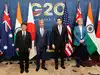
Quad to step up cooperation in AI, critical minerals
US Secretary of State Marco Rubio met External Affairs Minister S Jaishankar, Japan's Foreign Minister Toshimitsu Motegi and Australian Foreign Minister Penny Wong on the sidelines of the G20 Foreign Ministers' Meeting in Atlanta.

"Discussing ACITI": EAM Jaishankar holds trilateral meeting with Australian, Canadian counterparts
External Affairs Minister S Jaishankar held a trilateral meeting with Canadian and Australian counterparts in Atlanta. They discussed the Australia-Canada-India Technology and Innovation Partnership focused on green energy and supply chains. Jaishankar emphasized the need for diplomatic solutions to global challenges and highlighted issues impacting the Global South. He noted the adverse effects of military actions on civilian shipping and emphasized market access issues.

EAM Jaishankar slams sanctions, chokepoints disrupting global energy trade, holding prices hostage
S Jaishankar highlighted the challenges posed by disruptions in global oil supplies during the G20 meeting. He pointed out that the current energy crisis results from unpredictability and significant disruptions. Jaishankar emphasized the need for the G20 to ensure that energy markets remain open and predictable. He also mentioned India's efforts in critical minerals and the necessity for reliable energy supplies.

Jaishankar's Atlanta diplomacy: Quad meeting and several bilaterals on G20 sidelines
External Affairs Minister S Jaishankar has a busy schedule during the G20 Foreign Ministers' Meeting in Atlanta. He is expected to engage in discussions with multiple foreign ministers on trade, defense, and energy. Meetings with Canada and Brazil are crucial for redefining relationships and securing resources. Jaishankar will also address India's partnerships with European and East Asian nations.

India-Brazil bilateral trade set to reach $20 bn with focus on critical minerals, AI, defence: Envoy
Brazil's Ambassador to India highlighted growing trade relations, expecting bilateral trade to reach USD 20 billion soon. The partnership encompasses critical sectors such as defence, energy, and pharmaceuticals, promoting economic engagement. Both nations aim to deepen cultural ties, celebrating the centenary of musician Antonio Carlos Jobim in 2027. Recent political visits strengthened commitments toward technological and economic cooperation in multilateral forums.

'2026 resembles 1991': CEA Nageswaran says India is at a critical economic inflection point
Chief Economic Advisor V Anantha Nageswaran emphasized that 2025-26 could be a significant inflection point for India's economy. He mentioned the challenges posed by global shocks and supply-side disruptions in recent years. The reliance on imported crude oil adds to India's vulnerability to fluctuating international energy prices. Strengthening resilience to external disruptions is crucial for managing such risks effectively.

Amid supply chain issues, India's strategic mining in critical state
India's mining sector remains underdeveloped due to high import dependence and severe execution bottlenecks. Challenges include land acquisition difficulties, uncoordinated state-level regulations, and environmental concerns related to mining activities. The Centre has urged states to improve the operationalisation of mines, with only a fraction currently active. Various stages of clearances have delayed the progress of numerous mining projects in different regions.
NAN GreenMet, Chile's Enaex collaborate to set up Rs 750-cr explosives manufacturing facility
NAN GreenMet has partnered with Enaex to create an integrated explosives manufacturing plant in India. This venture involves an investment of Rs 750 crore and aims to begin commercial operations in 2027. The facility will cater to the rising demand in India's explosives market, projected to grow significantly in the coming years. The joint venture plans to provide a range of advanced blasting solutions for mining and infrastructure projects.
Diversification plan: NMDC scouts for mining assets across four continents
NMDC is actively seeking mining assets worldwide, including critical minerals to support various industries. The company aims to earn 20 percent of revenues from minerals other than iron ore. This expansion aligns with government initiatives to secure raw material supplies and decrease import dependency. NMDC's strategy is expected to enhance its role in India's manufacturing sectors. Industries such as automotive, renewable energy, and electronics will benefit from these efforts.
Load More

