
COYOTES

Looney Tunes voice actor cause of death: What led to the sudden death of Emmy-winning voice actor Eric Bauza at just 46 years old?
Eric Bauza, a renowned Emmy-winning voice actor known for his iconic roles in Looney Tunes, tragically passed away at the age of 46. His family shared that he succumbed to cardiovascular disease. With an impressive portfolio featuring over 400 acting credits, Bauza brought beloved characters to life and delighted fans across generations. Warner Bros.

Who was Eric Bauza? Emmy award-winning voice actor behind Bugs Bunny, Daffy Duck and more dies at 46
Canadian voice actor Eric Bauza has passed away at the age of 46, leaving behind a legacy of characters. His family announced the news on Instagram, providing no details regarding the cause of death. Bauza achieved significant success throughout his 25-year career, voicing many iconic characters in various programs. He won three Emmy Awards in recent years for his exceptional voice work.

USDA scientists fenced 1 hectare of aspen against elk but allowed deer, bears and other animals through; within 1 year, protected trees gained 14.5 cm more height
Research on a ranch in Colorado highlighted the effectiveness of a unique fence in fostering the growth of young aspens. It successfully kept elk at bay for four years while still allowing smaller creatures like deer and bears access. This resulted in a notable increase in the height of protected aspens, indicating that successful ecosystem preservation can be achieved without entirely excluding larger wildlife, ensuring that biodiversity thrives.
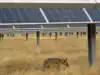
California’s endangered fox is surviving inside solar farms; how a small gap in the fence could help save them
The San Joaquin kit fox has adapted to residing alongside solar panels in California’s San Joaquin Valley. Researchers discovered that a purposely designed gap in the fencing permits safe access for the foxes while keeping larger predators at bay. Their studies indicate that the survival rates and home ranges of these foxes are comparable to those in nearby habitats, highlighting the viability of renewable energy coexistence with wildlife.

In 2021, a North Carolina farmer struggling to expand his sheep business found 33 acres beneath solar panels; then landed a second solar grazing contract
Alex Greer strategically utilized a program that links farmers with solar developers to enhance his sheep business. By securing grazing contracts across 38 acres in Asheboro and Rowan counties, he faced hurdles like controlling vegetation and installing predator-proof fencing. Interestingly, studies indicate that sheep grazing can bolster soil health and remain financially viable compared to mechanical mowing over time. Greer's journey exemplifies the promising intersection of solar farming and agriculture.

In 2010, scientists used electric fencing to protect Montana’s black-footed ferrets; coyote sightings in fenced areas fell from 42% to 7%
In Montana, scientists implemented portable electric fencing to reduce coyote predation on endangered black-footed ferrets. The fencing successfully decreased coyote sightings from 42 percent to 7 percent, protecting ferrets during their vulnerable stages. All ferrets monitored within the protected area survived, highlighting the fence's effectiveness. The project demonstrated that temporary measures can significantly aid conservation efforts while minimizing predator interactions.
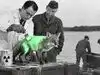
World War II's strangest plan: US spies wanted to use radioactive foxes against Japan but then an experiment went completely wrong
During World War II, American spies came up with an unusual plan to scare Japan using radioactive foxes. The scheme involved secret experiments, glowing animals and an attempt to exploit Japanese folklore. But when one test produced an unexpected result, the bizarre strategy ran into a problem its creators had not anticipated.

Coyote vs Acme OTT release date update: When and where to watch the courtroom comedy featuring Looney Tunes characters. Check streaming details
Coyote vs. Acme is finally moving beyond its theatrical run after a long and unexpected journey to the big screen. The Will Forte and John Cena starrer brings Wile E. Coyote into a courtroom battle against the company behind his famously troublesome gadgets. As the Looney Tunes movie heads towards its home release, here is what viewers need to know about its digital rollout, streaming plans and where they can watch it.
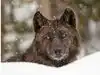
In 1995, 31 grey wolves returned to Wyoming's Yellowstone Park; decades later, 9 beaver colonies are thriving as willow forests recover and erosion risks fall
In 1995, wildlife experts decided to reintroduce the grey wolf in Yellowstone Park, Wyoming. What followed was nothing short of a miracle. It did not just have a positive impact on the beaver population but also transformed the vegetation and the ecosystem altogether. Waterways changed, vegetation sprouted again, and long-struggling species found new chances to flourish.

Savannah turned 160,000 cubic yards of mud removed from its harbor into an 8-acre island; birds built more than 300 nests there in the first season
Nestled in Georgia, a harbor island crafted from dredged mud has become a refuge for over 300 bird families. This artificial sanctuary serves as a critical nesting area for shorebirds, compensating for the loss of their natural coastal habitats. Although these islands play a vital role in avian conservation, they demand continuous upkeep.

Coyote vs. Acme OTT release details: When and where will the Looney Tunes live-action-animated movie stream after theatres
Coyote vs. Acme has finally made its way to theatres after one of the more unusual release journeys in recent Hollywood history. The live-action and animated Looney Tunes comedy was completed years ago but was later shelved by Warner Bros., leading to a major backlash before Ketchup Entertainment stepped in and secured distribution rights. Now starring Will Forte, Lana Condor and John Cena alongside Wile E. Coyote, Road Runner and other familiar Looney Tunes characters, the film is getting its long-awaited theatrical release.

In the late 1800s, California introduced red foxes for hunting and fur farms; at Seal Beach, they drove light-footed Ridgway's rails down to just 5 pairs in 7 years
In the late 1800s, non-native red foxes wreaked havoc on the population of Ridgway's rails, bringing them perilously close to extinction. Fortunately, wildlife managers acted to eliminate the invasive foxes, resulting in a notable rebound for the rail population. The return of coyotes also played a crucial role in managing the fox population, further supporting the rails.

In the mid-1920s, William R. Angell brought nine white-tailed deer to North Manitou Island for hunting; by the early 1980s, the herd was estimated at 2,000
Six deer introduced to North Manitou Island in 1926 dramatically altered its ecosystem. Without predators, the deer population grew to two thousand by the 1980s. This overpopulation caused significant browse damage, changing forest composition. The island's vegetation shows a distinct browse line from decades of grazing. This event serves as a lesson on human impact on natural balances.

Quote of the Day by Peter Coyote: “I spent ten years de-educating myself to learn to live by...” — Inspiring lessons on de-educating the mind, authenticity, inner resilience and how counterculture icon, actor, and narrator abandoned societal expectations to discover true personal autonomy, providing timeless guidance for navigating modern complexity
Quote of the Day by Peter Coyote: Peter Coyote's famous quote, “I spent ten years de-educating myself...” challenges conventional assumptions about security and success. Drawing from his time in the 1960s counterculture movement, Coyote examines the tension between institutional conditioning and authentic independence. He argues that external safety nets can obscure innate resourcefulness, trapping people in comfortable compliance.

California casino stabbing leaves 5 co-workers wounded: What we know about 22-year-old suspect
A dramatic scene unfolded at Dos Coyotes restaurant within Thunder Valley Casino in California when a staffer allegedly stabbed five restaurant workers. The injuries sustained by the victims are not life-threatening. Deputies promptly arrested the suspect following the incident, confirming that casino guests were not implicated in this violent occurrence.
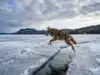
A wildlife photographer’s 4-year quest ended with a coyote image that looks like a glitch and defies physics
Coyote jumping ice photo: A photographer captured a remarkable image of a coyote leaping over a crack in frozen Lake Superior after a four-year wait. This moment, achieved through patient observation of animal behavior and understanding of winter conditions, highlights the adaptability of coyotes and the dramatic winter landscape of northwestern Ontario.

Why Coyotes Defy Urban Odds: How They Thrive in Cities Despite Risks
Coyotes are now a common sight in cities like LA and Chicago. They have slowly adapted to urban life, learning to navigate new surroundings and find food. This transformation is gradual, with memory playing a key role. While they adjust, urban coyotes experience higher stress levels. Their presence highlights nature's resilience and ability to thrive even in human-dominated spaces.

What Happens When Wild Coyotes Start Playing With Domestic Dogs?
Coyotes and domestic dogs in US parks are exhibiting playful behaviors like play bows and chasing, challenging the notion of them being natural enemies. These interactions, observed in locations like Central Park and California, suggest a shared behavioral system and adaptability to urban environments. While these encounters are rarely aggressive, experts caution about potential disease transmission.

‘Coyote vs. Acme’ could be sold to other studios after Warner Bros shelves film
In the aftermath of Warner Bros. deeming "Coyote vs. Acme" unworthy for traditional release, the film is now in limbo as the studio seeks a new home for its completed project. With screenings arranged for potential buyers like Amazon Prime Video, Apple, and Netflix, the fate of the movie remains uncertain, with rights expected to go to the highest bidder.
Load More


