
CORNELL
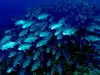
Cornell scientists studied how 2,839 fish species swim together; their analysis found group swimming evolved around 60 times but disappeared about 320 times
A comprehensive study on fish collective movement has found that this behavior has independently evolved across numerous species over time. Surprisingly, about 79 percent of fish utilize collective movement, while others favor solitary habits. However, certain species have abandoned collective traits, likely due to the challenges of heightened food competition and disease risks. This research highlights the intricate evolution of social behavior within marine ecosystems.
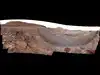
NASA Curiosity Gediz Vallis discovery: What do the yellow crystals found by Curiosity on Mars tell us about the planet's ancient history?
NASA's Curiosity rover has made a groundbreaking discovery on Mars, uncovering pure elemental sulfur in a rock formation. This unexpected find has prompted scientists to explore its ancient origins, with two studies offering intriguing theories. One suggests that volcanic gases from billions of years ago contributed to sulfur's formation, while another points to non-biological processes occurring in acidic water. Such findings deepen our understanding of Mars' complex geological past.

Study estimates magnitude of US data center pollution as climate talks unveil clean AI pledge
The pledge also calls for focusing the power of artificial intelligence on solving the so-far intractable problem of climate change and reflects burgeoning concerns about AI's ever-expanding environmental footprint. The political backlash has played out in U.S. elections and major local objections for new sites.

Anthropic's IPO: How do you price the future of AI?
Speculation over Anthropic' trying to put a price on the future of artificial intelligence. That figure would put the young company among the largest stock market debuts on record, though it falls short of the $2 trillion some estimates had floated until a few weeks ago.

From Carnegie to Claude: AI wealth could reshape philanthropy
Anthropic is launching a Public Benefit Fund to allocate a significant portion of its shares for charitable purposes. The fund's establishment reflects a trend in American philanthropy following wealth generation from AI companies. Founders have committed to donating substantial equity and matching employee contributions for charitable giving.

Anthropic promises to pursue humanity's benefit. Its IPO filing gives it wiggle room
Anthropic's decision to go public raises significant concerns over its dedication to humanity's interests. Despite its stated intention to reconcile profit with social good, the complexities of measuring this equilibrium emerge. With the establishment of a Long-Term Benefit Trust, there are attempts to enforce accountability, though its influence is inherently limited. As AI competition intensifies, the integrity of Anthropic's values faces increasing scrutiny.
- Go To Page 1

Healthy Food Labels: The Cream Cheese had less fat, but what is it hiding? New research reveals the truth
Cornell University researchers studied nearly 150,000 packaged foods and drinks launched in the U.S. from 2015 to 2024.Products with health claims often scored better, but some drinks with sodium claims contained more sugar and scored worse.

In 1927, railroad engineer Olive Dennis invented a train window vent that brought in fresh air without cold drafts, helping make American rail journeys more comfortable
In 1927, engineer Olive Dennis made a lasting impact on train travel with her innovative window ventilator. By traveling thousands of miles on trains, she closely analyzed passenger feedback and needs, which inspired her improvements in seating, lighting, and restroom cleanliness, responding to competition from cars and buses. Dennis's pioneering contributions also included air-conditioning systems for railroad cars, defying gender norms in engineering of her time.

Cornell University rocked by another sexual assault scandal involving more than 10 potential victims, accused of ignoring reports
Cornell University is being sued in connection with allegations of sexual assault involving former student Esat Braveboy. Two former female students accuse Braveboy of continuous sexual abuse during different time periods while at the university. They allege that there may be five to ten more potential victims who experienced similar abuse. Cornell denies the claims and states that it properly investigated the complaints received.

Quote of the day by Carl Sagan: 'We are like butterflies who flutter for a day and think it is forever' - A thought-provoking lesson on human life, mortality and our place in the universe by the American scientist
Carl Sagan’s famous quote from his 1980 book Cosmos compares human life to the brief existence of butterflies, highlighting how small our time on Earth is compared with the vast age of the universe. The American astronomer used his work to explore humanity’s place in the cosmos, the evolution of life and the possibility of extraterrestrial existence. Understand the meaning behind his observation and how his scientific work still shapes our understanding of the universe.

In 2024, Cornell researchers grew radishes and radicchio between solar panels near Albany; shade reduced light and crop biomass, with radishes more affected
In a groundbreaking study, Cornell University researchers evaluated agrivoltaics in Albany, New York, focusing on crops like radishes and radicchio. Their findings revealed that solar panel shading led to considerable reductions in light and biomass. With agrivoltaic land usage in the U.S. having more than doubled since 2020, they advocate for strategic adjustments in planting schedules and crop choices to optimize synergy between agriculture and solar energy.
US midterm elections: What a Democratic Congress could mean for Indian H-1B visa holders
The potential shift towards a Democratic majority in Congress may reshape the discourse on immigration law. Nevertheless, specialists indicate that immediate adjustments for Indian tech workers concerning H-1B visas are improbable. The lingering impact of the previous administration on immigration policy remains prominent.
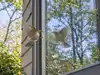
Cornell tested window-safety messages on nearly 5,000 people in the US and Canada; bird lovers preferred proof, while others were more moved by emotional appeals
Birds face alarming mortality rates due to window collisions, with songbirds being particularly hard hit in urban settings. A recent study from the Cornell Lab of Ornithology highlights that emotional messaging has more impact in encouraging bird-friendly window solutions. Practical approaches, such as window coverings, can help mitigate reflection. By fostering awareness and education, we can inspire more people to take protective measures for these vulnerable birds.
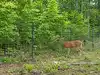
Cornell fenced deer out of 6 plots in New York and watched them for 18 years; every protected plot grew trees, while nearby open plots had almost none
A long-term study by researchers at Cornell University revealed that deer populations are affecting eastern forests significantly. These deer have decreased the number of woody plants by half in open plots over 18 years. In contrast, fenced plots, which excluded deer, retained a sustainable number of trees. Furthermore, deer have caused an increase in seed diversity, resulting in a more varied plant community.

His grandfather died of pancreatic cancer: This Hyderabad startup founder is using AI to develop a personalised cancer vaccines
Hyderabad-based biotech startup PopVax, founded by Soham Sankaran, is developing AI-powered personalised cancer vaccines using mRNA technology. Inspired partly by his family's experience with pancreatic cancer, he aims to help the immune system identify and attack cancer cells using treatments designed around individual patients' tumour genetics.
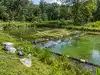
Cornell scientists divided 3 ponds into different plant plots; some had more methane in the water, yet gas escaping into the air did not increase as expected
Recent findings from Cornell University reveal the crucial role freshwater plants play in regulating greenhouse gas emissions in pond ecosystems. The composition of these plants significantly influences levels of methane, carbon dioxide, and nitrous oxide. Notably, floating plants such as duckweed can trap these gases, inhibiting their escape. This research underscores the importance of pond management for homeowners, offering effective strategies to combat climate change.

Meet Austin Hickman and Reet Chaudhuri, who raised $4 million for Soctera; how their semiconductor startup aims to change radar technology
Hickman is Soctera's co-founder and chief executive officer (CEO), while Chaudhuri is its co-founder and chief technology officer (CTO). They were both researchers at Cornell University's Jen-Xing Laboratory. Soctera emerged from their Cornell research and licensed the technology developed at the university. Their challenge was to address a longstanding limitation of high-power semiconductor devices.
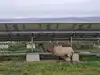
In 2019, Cornell began testing sheep grazing beneath New York solar panels; the project examined vegetation control, shade, and forage for the animals
Cornell University researchers have launched an innovative solar grazing initiative aimed at optimizing vegetation management in solar farms. Their experiment evaluates the potential of using sheep to graze beneath solar panels, fostering a dual benefit for energy production and farming. This sustainable method enhances biodiversity and diminishes reliance on traditional vegetation management practices, presenting a promising opportunity for harmonizing agriculture with renewable energy advancements.

Cornell faculty to vote on no-confidence motion against president over rape case handling
Cornell University faculty will hold a meeting to discuss a no-confidence resolution against the administration's response to a rape case. This follows widespread criticism of President Michael Kotlikoff's handling of the situation involving a student. The faculty previously confronted Kotlikoff during a private meeting, where he acknowledged some administrative missteps. Following the meeting, many faculty members expressed a lack of confidence in the administration.
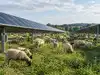
In 2016, a North Carolina solar company began using 80 sheep alongside mechanical and chemical methods; the operation later grew to 590 sheep across 300 acres
North Carolina has employed sheep for vegetation management in solar farms to reduce mechanical maintenance. This strategy began as an experiment in 2016 and has expanded significantly since then. A study showed higher organic matter and soil health in grazed areas, though longer-term data is needed. Grazing costs can be competitive with mechanical methods over extended periods. The solar energy sector is growing, necessitating sustainable management solutions like sheep grazing.

Lula’s Brazil election win: How he thwarted Trump’s Latin America ambitions
Luiz Inácio Lula da Silva won Brazil’s presidential election against Flávio Bolsonaro, stopping a conservative streak in Latin America. This victory challenges U.S. influence in the region and complicates President Trump's strategies. Lula's administration may seek collaboration with Washington while maintaining Brazil's independent foreign policy. Domestic congressional dynamics present challenges for Lula as he pursues reforms amidst conservative opposition.

Physical AI needs strict safety boundaries and interpretability: TorqueAGI founder Ashutosh Saxena
The Palo Alto based physical AI startup counts Rackhouse Venture Capital and Trucks Venture Capital as early backers and has active collaborations with firms like Nvidia. According to Saxena, the challenge is to make robots reason through their decisions while ensuring that mistakes do not cause physical harm.
From Carnegie to Claude: AI wealth could reshape philanthropy
A wave of American wealth created by artificial intelligence companies could produce some of the largest charitable sums since the era of Andrew Carnegie and John D. Rockefeller, raising questions about where the money goes. Nan Ransohoff of payments firm Stripe has described the moment as a "third wave" of American philanthropy, after the industrial fortunes of the late 19th century and the internet billionaires of recent decades.

In 2019, New York farmer Erica Frenay sent 59 sheep to graze at a solar farm for five months; she earned $2,325 while allowing her own pasture to recover
At Shelterbelt Farm in New York, Erica Frenay has taken a creative approach by leasing her sheep to graze beneath solar panels. This arrangement not only provides her with additional income but also helps manage her livestock while reducing overcrowding. Moreover, solar grazing curtails the need for fuel-powered mowers, showcasing a harmonious relationship between agriculture and renewable energy.

Jane Doe in Cornell University gang rape case allowed to remain anonymous, judge warns against threats: Know why the court granted her request and what it means
In a bid for justice, Jane Doe, a Cornell University student, has been granted confidentiality in her rape lawsuit against seven male peers. She accuses them of drugging and assaulting her at a fraternity house in 2024, and reports experiencing frequent threats. Her attorney highlights her constant state of fear and incidents of online harassment, including doxxing.
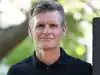
Meet Dennis Woodside, who began his career as M&A lawyer in 1990s; decades later, he became CEO of Freshworks after leadership roles at Google and Dropbox
Woodside went to Cornell University and studied industrial relations. Later, he earned a law degree from Stanford Law School. He started his professional career as an M&A lawyer in the 1990s. He later moved into management consulting at McKinsey & Company. He joined Google in 2003. There, he spent more than a decade in sales and strategy leadership roles.
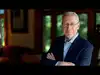
Who is Michael Kotlikoff and how much does he earn as Cornell president while facing backlash over alleged handling of the gang rape case
The handling of a sexual assault case by Cornell University President Michael Kotlikoff has drawn serious criticism. Jane Doe, a former student, has accused seven fraternity members of assault, yet Kotlikoff's lack of appropriate follow-up has raised questions about his leadership. In a bid to respond to community outrage, Cornell has decided to suspend fraternity events until 2027.
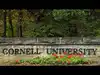
Cornell University Gangrape Case: Lawyers of frat brothers hit back at Jane Doe's attorney over media leak claims
New insights have surfaced in the gang rape case linked to seven students from Cornell University. Defense attorneys for Diego Sarabia have strongly rejected accusations from the victim's representative, alleging misconduct and media disclosures. They contend that the victim's lawyer had prior communication with a news source before initiating the lawsuit.

Cornell University President Michael Kotlikoff faced backlash over multiple incidents on campus before facing heat over the ‘gang rape’ incident; all you need to know
Cornell University President Michael Kotlikoff faces criticism regarding his handling of a 2024 gang rape incident. During a recent faculty meeting, members voiced their dissatisfaction with the administration's response. The victim, Jane Doe, has since filed a lawsuit in September 2026 alleging the university's negligence. Responding to the fallout, Kotlikoff condemned the allegations as incredibly disturbing and appointed a task force to investigate.
Load More

