
CONSTRUCTION EQUIPMENT MANUFACTURING

Cabinet approves Rs 11,000 crore scheme to boost construction equipment manufacturing
The Union Cabinet has approved an ₹11,000 crore scheme aimed at improving India's construction and infrastructure equipment manufacturing ecosystem. This scheme will run for eight years, from FY27 to FY34, focusing on enhancing self-reliance. It has two key components, including a sales-linked incentive program for original equipment manufacturers. Moreover, the initiative also includes support for a dedicated CIE testing facility.


Kawasaki commits about Rs 800 crore for Karnataka expansion, to create 600 jobs
Kawasaki Heavy Industries has announced plans to invest Rs 800 crore in Wipro Kawasaki Precision Machinery. This expansion is expected to create 600 manufacturing jobs at the Harohalli Industrial Area. The investment will be made over a ten-year period and will occur in two phases. Karnataka's government will facilitate necessary approvals and incentives for this project. The partnership with Japan highlights the state's growing industrial capabilities and attractiveness.


Tata Electronics begins discussions to find partner for Phase 2 buildout at OSAT
Being developed under Tata Semiconductor Assembly and Test Pvt Ltd (TSAT) with a total outlay of Rs 27,000 crore (over $3 billion), the greenfield plant in Assam’s Morigaon district represents India’s first indigenous semiconductor assembly and test facility. The project is situated on a 592-acre site that previously housed the defunct Nagaon Paper Mill, featuring a 171-acre manufacturing campus designed with over 1 million square feet of cleanroom space.

Construction equipment makers seek fiscal support for domestic manufacturing
China imposed curbs on export of certain equipment, including tunnel boring machines (TBMs), walking excavators, plateau-type wet shotcrete machines and certain dredging components used in projects in hilly, high-altitude and border areas, effective November 18. India largely depends on China for these machines.
- Go To Page 1
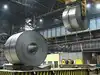
India's steel demand to touch 250-280 million tonnes by 2035; capacity expansion to require USD 350-400 billion investment: McKinsey
India's steel demand is projected to reach 250-280 million metric tonnes per annum by 2035, driven by expanding infrastructure, construction, transportation and manufacturing sectors, while building the capacity envisaged to meet the country's 2047 target could require investments of USD 350-400 billion, according to a McKinsey report.

These large-caps have ‘strong buy’ & ‘buy’ recos and an upside potential of over 20%
Over the last few quarters, despite high oil prices and disrupted supply chains, a good number of companies, as well as the overall economy, have shown they can absorb pressure and keep going. That resilience is more important for taking a long-term view on India than any three-week rally could ever be.

Indian Navy gets second anti-submarine warship 'Ashank' in 18 days, boosting coastal defence
The Indian Navy has received Ashank, its second Anti-Submarine Warfare Shallow Water Craft from GRSE in 18 days, following the delivery of Amini on November 5. The vessel is designed to detect and engage submarines in coastal waters and features 88% indigenous content.

AI’s hunger for turbines is sucking in entire industries
The increasing demand for energy from artificial intelligence is impacting various industries, including power and shipping. Companies are facing delays due to shortages of essential components like gas turbines and compressor systems. General Electric is undertaking significant acquisitions to secure alternative suppliers amidst rising competition. Moreover, the surging costs of gas-fired power equipment are reshaping the market dynamics for energy generation.

India, Russia & five other international partners mark 20th anniversary of ITER in France
India and Russia, along with five other partners, have marked 20 years of the ITER agreement, the global effort to demonstrate whether fusion can become a viable source of low-carbon energy. India is contributing nine major systems to the experimental reactor in France, giving domestic researchers and engineering firms exposure to areas such as cryogenics, plasma physics, superconductors and advanced manufacturing.

Trump's data centre threat can throw a spanner in India's AI ambitions
American companies like Google and Microsoft have committed significant investments to expand data centres in India, highlighting its market potential. Trump's proposal to impose a tax on such overseas investments raises concerns about future American projects in India. This could complicate India's goal of becoming a global AI infrastructure center while attracting substantial foreign investments. Local Indian companies may gain market share if American investments decline due to new restrictions.

Rs. 4,700 crore on the books, and an auditor who couldn’t say how much was real and how much was fake
A road may stop collecting tolls. A government agency may cancel a contract. A contractor may finish most of its work but wait years to be paid. Yet the company can continue to show the money spent on these projects as assets in its financial statements. Some of that money may eventually return. Some may not. The challenge is to determine how much money can still be recovered, how much may have been lost, whether the accounts reflect these losses, and what warning signs investors can identify in the financial statements.

Track trials of India's indigenous bullet train expected by mid-2027; first service begins late 2027
India's first indigenous B28 bullet train is being manufactured for the Mumbai-Ahmedabad corridor and track trials are scheduled. The train, designed for a speed of 280 kmph, is expected to improve travel time significantly. Construction began in 2021 after delays caused by state permissions and the COVID-19 pandemic. The first service is anticipated to commence by the end of 2027.

India eyes $12 billion trade with Egypt, but exporters flag tariff and payment hurdles
From cotton yarn, pharmaceuticals and speciality chemicals to engineering goods, EV charging and digital infrastructure, Indian businesses see growing opportunities in Egypt. But tariff disadvantages, regulatory hurdles, payment delays, logistics costs and Chinese competition could determine how much they gain.

These large-, mid- and small-cap stocks have upside potential of up to 32% in 1 year, according to analysts
The market has risen these past weeks partly because money was leaving the AI trade and looking for a new home. The real test comes now, if that trade revives and the money flows back to it. If the Indian market now trends up, it will be proof that the rise is its own, and not borrowed.

For long-term investors, with some patience: 5 large-cap stocks from different sectors with upside potential of up to 24%
There comes a point in the stock market when it is more important to manage risk than to take it. It is a lesson that is often forgotten when the market mood turns good, as it has now. The way to participate in such a market without getting hurt is to focus on businesses that earn well and have seen bad times before.

Aluminium, copper price crash: Which stocks could be the biggest winners on Dalal Street?
Copper and aluminium prices have slumped to multi-month lows after a stellar rally, raising concerns for metal producers but offering potential cost relief to several industries. Automakers, air-conditioner makers, cable manufacturers and electrical equipment companies could benefit from lower input costs. Which stocks stand to gain from the commodity price correction?

Japan's Nikkei reverses gains to fall as AI concerns outweigh Nvidia outlook
Japan’s Nikkei fell 0.72% after reversing early gains as AI investment concerns and uncertainty over Nvidia’s leadership weighed on sentiment. Despite stronger-than-expected revenue forecasts, technology stocks declined. Concerns over data-centre spending, Anthropic’s IPO and broader market risks further pressured Japanese equities, with banking stocks also retreating.

Bain-backed RSB Group plans Rs 4,000 crore IPO; DRHP likely in December
In the run-up to the proposed issue, five new investors collectively bought less than 10% in the company. These investors include White Oak Capital, promoted by former Goldman Sachs executive Prashant Khemka, JM Financial, 360One Asset, Abakkus Four2Eigth opportunities fund and Novaa One. The Behera family, promoters of RSB Group, also participated in the round, providing additional capital to the company.

Tata Electronics adopts AI-first approach for chip plants, working to build local supplier ecosystem
The company’s expansion nationally had involved overcoming challenges related to geopolitics, talent, infrastructure and technology, Srinivas Satya, president, components business and supply chain, Tata Electronics, said in his keynote address at the Bengaluru Tech Summit.
Mining, industrial construction to fuel construction equipment demand recovery in H2
Construction equipment demand is projected to rise due to increased mining activity and industrial construction. The Indian Construction Equipment Manufacturers’ Association estimates sales of 126,500 to 133,500 units in FY2026-27. Infrastructure capital expenditure is expected to significantly increase over the coming years. Road construction equipment sales are predicted to remain stable despite a decline in highway construction. Overall, the medium-term outlook for infrastructure investment appears promising and supportive.

India keeps growth engine humming, but weak monsoon may slow GDP to 7.5%: ICRA
India's GDP growth is projected to ease to 7.5% in Q2 FY27, a five-quarter low, from 7.8% in the previous quarter, ICRA said. Weak monsoon conditions are expected to drag agricultural output, while industrial and services activity remain resilient. The rating agency sees full-year growth moderating to 7.1%.

IPO-bound RSB raises fresh capital from five institutional investors
Bain Capital-backed RSB Group has raised fresh capital from five institutional investors and its promoter family to pursue strategic acquisitions, strengthen precision engineering capabilities and expand its automotive components business across domestic and international markets.

Auto sector stocks: Time to look at them without bias? 9 auto stocks from different segments with upside potential of 4% to 23%
Auto companies were supposed to struggle in the shift to EVs. Most have not, handling the transition better than expected, and moving into new areas while doing so. That is a strength. So, with the market turning, will a sector that has already proved itself attract attention once again? Stock Reports Plus, powered by Refinitiv, is a comprehensive report that evaluates five key components of 4,000+ listed stocks – earnings, fundamentals, relative valuation, risk, and price momentum – to generate standardised scores. The simple average of the above-mentioned five component ratings is normally distributed to reach an average score.

India's data centre boom to generate 30–35 million sq ft of warehousing demand by 2030: Savills
India’s data centre capacity is expected to reach over 7 GW IT by 2030, creating a significant opportunity. Projections indicate 30 to 35 million sq. ft. of warehousing demand as facilities grow around major hubs. Hyderabad and Mumbai are likely to benefit the most from this expansion and subsequent requirements. Additionally, this growth is expected to enhance domestic manufacturing of critical equipment and infrastructure.

Stock picks of the week: 5 stocks with consistent score improvement and upside potential of up to 31% in 1 year, according to analysts
The impact of rising oil prices is felt differently by different sectors. In some, it takes a while to show up. In many cases, the impact was expected to be visible in the Q2 results, but the way a number of companies have handled the crisis has given the street confidence that things are far better than expected.

India has strengthened indigenous defence ecosystem: Rajnath Singh calls for quality assurance in defence manufacturing
Rajnath Singh addressed the 36th Annual Conference on Non-Destructive Evaluation and highlighted India's progress in defense capabilities. He urged a proactive approach in preventing defects in defense manufacturing rather than merely identifying them. Singh stressed the significance of quality and reliability in maintaining operational effectiveness in defense systems. He recognized the achievements in various strategic sectors as a source of national pride and responsibility.

Budget Wish: Downstream aluminium companies seek basic customs duty scrapped
Downstream aluminium manufacturers and traders have urged the finance ministry to remove the 7.5% basic customs duty on primary aluminium in the 2027-28 Union Budget, citing high raw material costs and pressure on domestic competitiveness. The current effective import duty is 8.25%, including the social welfare surcharge.
Load More

